Weekly Bangla Mirror | Bangla Mirror, Bangladeshi news in UK, bangla mirror news

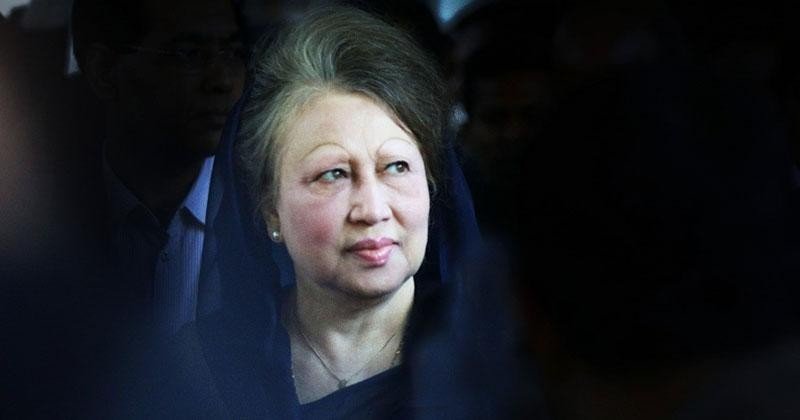
BNP Chairperson and former Prime Minister Begum Khaleda Zia has passed away while undergoing treatment at Evercare Hospital in Dhaka early Tuesday (December 30).
She breather her last ataround 6:00am, confirmed BNP media cellin a Facebook post.
Begum Khaleda Zia had been admitted to hospital on November 23 with breathing difficulties caused by a lung infection. Her condition later worsened as she developed pneumonia, alongside longstanding complications related to kidney, liver, arthritis and diabetes. As her health deteriorated, she was moved to the hospital’s intensive care unit (ICU).
President Mohammed Shahabuddin and Chief Adviser of the interim government Professor Dr Muhammad Yunus had earlier sought prayers from the nation for her recovery. Leaders from across the political and social spectrum had also been enquiring about her condition and praying for her recovery.
Khaleda Zia, the first female prime minister of Bangladesh, has left a strong political legacy that started through the journey of democracy in 1991.
Khaleda assumed the office through popular vote in the 1991 national election. She introduced the parliamentary form of government, and caretaker government system to oversee a free and fair election.
Although she was in prison since 2018, her party and family members repeatedly urged the then Awami League government to allow Khaleda to go abroad for better treatment but the pleas were rejected.
She left behind her only surviving son Tarique, his wife, and their daughter. Tarique Rahman returned to Bangladesh on December 25 after 17 years in exile. Khaleda’s younger son Arafat Rahman Koko died a few years ago in Malaysia.
The former premier was sent to jail on February 8, 2018, in a corruption case. Due to the coronavirus pandemic, she was given temporary release on certain conditions on March 25, 2020. Since then, she had been hospitalised several times.
Born in Jalpaiguri in 1945, Khaleda initially attended Dinajpur Missionary School and later did her matriculation from Dinajpur Girls’ School in 1960.
Khaleda’s father Iskandar Mazumder was a businessman and mother Tayeba Mazumder was a housewife. Nicknamed “Putul”, Khaleda was the second among three sisters and two brothers.
In 1960, she got married to Ziaur Rahman, then a captain in Pakistan army, and continued her education at Surendranath College of Dinajpur until 1965 when she moved to West Pakistan to join her husband.
When the Liberation War started in 1971, Ziaur Rahman revolted and participated in the war.
After the assassination of Ziaur Rahman on May 30, 1981, BNP faced a serious crisis. At this critical juncture, Khaleda Zia, who was never in politics, joined the party and became its vice-president on January 12, 1984. She was elected BNP’s chairperson on May 10, 1984. She was reelected chairperson of the party in January 2010.
Under the leadership of Khaleda Zia, BNP formed a 7-party alliance in 1983 and launched a movement against the autocratic regime of Ershad.
The Ershad government restricted her movement and she was detained several times. Undaunted, Khaleda Zia continued to provide leadership in the movement for ousting Ershad. She became known as the “uncompromising leader”.
In the parliamentary election held in 1991, BNP emerged victorious as a single majority party. Khaleda Zia contested from five constituencies in three consecutive parliamentary elections and won in all the seats.
On March 20, 1991, Khaleda Zia was sworn in as the first female prime minister of Bangladesh. She took oath as the prime minister under the new system on September 19, 1991.
Khaleda Zia became the prime minister for a second consecutive term — through the national election on February 15, 1996. All major opposition parties, however, boycotted the election.
In the face of the demand of the opposition parties, the then government brought amendment to the constitution for making the provision of a neutral caretaker government for conducting parliamentary elections.
The parliament was dissolved after introduction of the caretaker provision and Khaleda handed over power to a caretaker government on March 30, 1996. In the polls that followed under the caretaker government headed by Justice Muhammad Habibur Rahman on June 12, 1996, BNP was defeated by Awami League.
During the 1996-2001 tenure of the Awami League government, Khaleda was the Leader of the Opposition in the Jatiya Sangsad.
In the next parliamentary election held under a caretaker government headed by Justice Latifur Rahman on October 1, 2001, the BNP-led four-party alliance won more than two-thirds of the seats in the Jatiya Sangsad.
On October 10, 2001, Khaleda Zia was sworn in as the country’s prime minister for the third time.
In 2007, when the army-backed caretaker government assumed the office, Khaleda was sent to jail along with many other political leaders including Awami League President Sheikh Hasina.
Later, she was released from jail and participated in the 2008 parliamentary election but her party could not win.
In 2014’s parliamentary election, BNP did not participate and for the first time since 1991, the party went out of the parliament as did she.
She was sent behind bars on February 8, 2018, after a special court in Dhaka sentenced her to five years in prison in the Zia Orphanage Trust corruption case.
On October 30 that year, the High Court increased her jail term to 10 years. Later, she was convicted in the Zia Charitable Trust corruption case.
Amid the coronavirus outbreak, the then Awami League government on March 25, 2020, temporarily freed Khaleda through an executive order. Her sentence was suspended on the conditions that she would stay in her Gulshan home and not leave the country.
The BNP chief was completely freed on August 6 this year after President Mohammed Shahabuddin exempted her from her punishment under the presidential power stated in Article 49 of the constitution.