Weekly Bangla Mirror | Bangla Mirror, Bangladeshi news in UK, bangla mirror news

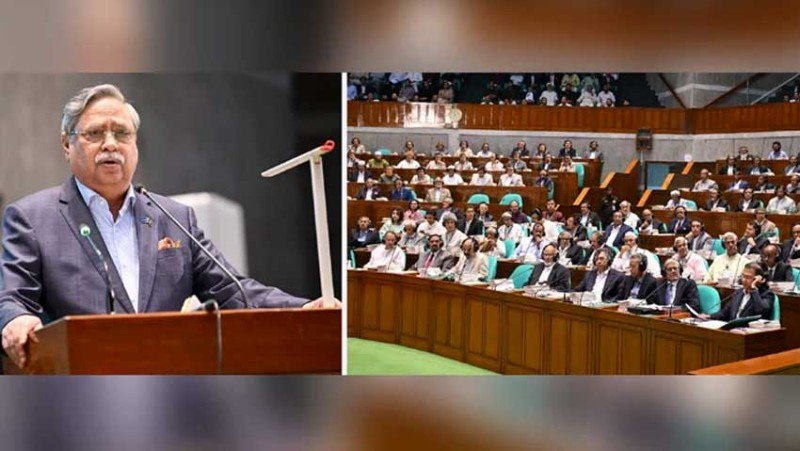
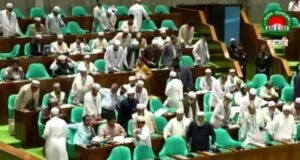
President Mohammed Shahabuddin on Thursday urged all political parties to work together with a shared commitment to build a secure and prosperous Bangladesh for future generations.
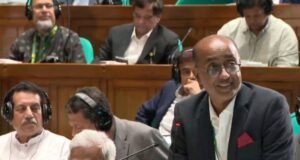
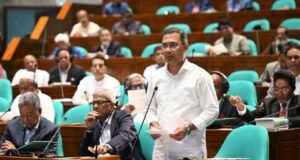
Delivering his address at the inaugural session of 13th Jatiya Sangsad, the President said members of parliament from both the treasury and opposition benches are accountable to the nation for ensuring progress and development.
“If we work together in unison and with a common purpose, we shall be able to build a secure Bangladesh for future generations,” he told the House.
He said sustainable development cannot be achieved without the political and economic empowerment of the people, adding that the government is committed to ensuring democratic rights in every aspect of state governance.
Despite inheriting a fragile economic situation, the President said the government led by Prime Minister Tarique Rahman is moving forward with determination to build a just, humane, self-reliant and democratic Bangladesh.
The President noted that the newly formed government faces major challenges, particularly in reducing poverty, combating corruption and maintaining law and order, but expressed optimism that with genuine political will those obstacles could be overcome.
He said the opening of the new Parliament marks a significant moment in the country’s history, as representatives have taken their seats following what he described as a peaceful, free and fair election.
The President congratulated Prime Minister Tarique Rahman, Speaker Hafiz Uddin Ahmed, the Deputy Speaker and all members of parliament. He also thanked the Election Commission of Bangladesh, law-enforcement agencies and public officials involved in organising the polls.
At the beginning of his speech, he paid tribute to Ziaur Rahman and acknowledged the contributions of former prime minister Khaleda Zia to the development of parliamentary democracy in the country.
The President also recalled the mass uprising of July and August 2024, saying the movement by students and people from all walks of life led to the fall of the previous government on August 5, 2024, and paved the way for a new democratic chapter in the country.
Highlighting governance priorities, he said the government is working to strengthen the rule of law by ensuring judicial independence, reducing case backlogs, modernising court services and introducing legislation related to judicial appointments and the formation of a Judicial Commission.
He added that the government will maintain a zero-tolerance policy against terrorism, extremism and militancy while building national consensus to eliminate such threats through legal and social measures.
On the economic front, the President said the global economy remains unstable, but Bangladesh’s macroeconomic situation has shown relative stability in the 2024-25 fiscal year.
According to the Bangladesh Bureau of Statistics, the country’s GDP growth rate for FY2024-25 stood at 3.49 percent, while per capita national income reached 2,769 US dollars. The government expects further improvement in FY2025-26.
He said exports increased by 8.60 percent to reach 48.30 billion US dollars, while remittance inflows rose by 26.83 percent to 30.329 billion US dollars during the same period. As of February 19, 2026, foreign exchange reserves stood at 34.78 billion US dollars.
To strengthen economic governance, the President said the government plans to establish an Economic Reforms Commission and undertake measures to restore discipline, transparency and public confidence in the banking sector.
He also announced plans to form a Capital Market Reforms Commission and a special investigation commission to probe irregularities in the capital market over the past 15 years.
The President concluded by highlighting ongoing and planned initiatives in sectors including agriculture, education, health, business, innovation, digital economy and information technology to support the country’s development trajectory.