Weekly Bangla Mirror | Bangla Mirror, Bangladeshi news in UK, bangla mirror news
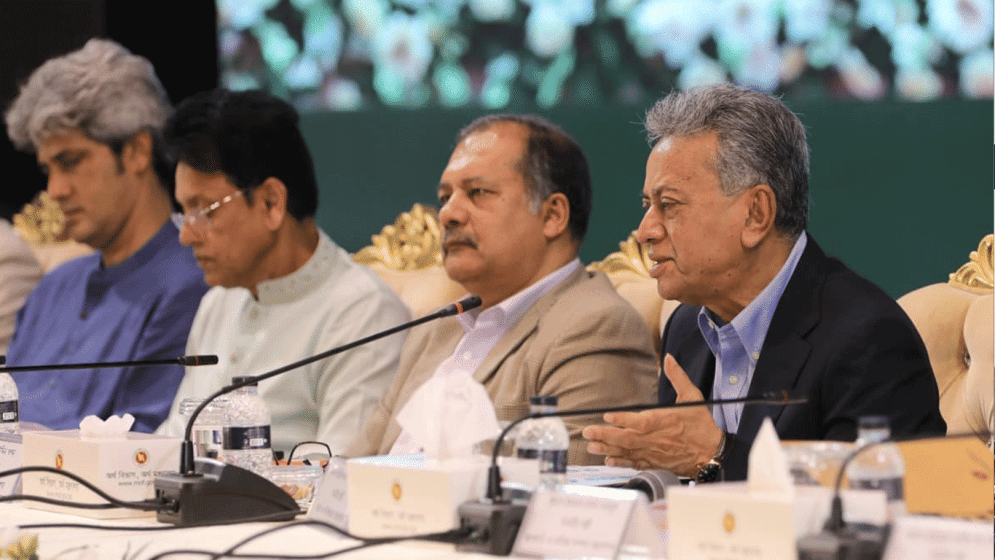
Finance Minister Amir Khosru Mahmud Chowdhury has unveiled an ambitious tourism roadmap centred on culture, heritage and the creative economy, arguing that Bangladesh can unlock significant economic opportunities by transforming its artistic and cultural assets into tourism products.
Speaking at a post-budget press conference at the Osmani Memorial Auditorium on Friday, the finance minister said the government intends to position the creative economy as a key driver of domestic tourism, employment generation and economic growth under the FY2026-27 budget.
He said Bangladesh has long overlooked the economic potential of its cultural industries, including music, theatre, arts, crafts, design and heritage, despite their ability to attract visitors and generate income.
“Foreign tourists are important, but if we can properly cater to our domestic tourists, the impact on our economy will be enormous,” Chowdhury said.
Creative economy at the centre of tourism strategy
The finance minister said the government’s new tourism strategy goes beyond traditional attractions such as beaches and forests and seeks to create vibrant cultural destinations across the country.
As part of the initiative, the government has allocated Tk800 crore to launch a range of creative economy projects aimed at developing cultural infrastructure and supporting artists, performers and creative entrepreneurs.
The proposed cultural hubs will bring together theatres, music venues, art galleries, designer outlets, cultural performances and entertainment facilities, creating integrated destinations where visitors can spend entire evenings engaging with arts and culture.
According to Khosru, such centres could replicate the success of cultural districts found in major global cities, where creative industries contribute significantly to tourism revenue and local economic activity.
Heritage and religious tourism to get boost
The new roadmap also places strong emphasis on heritage and religious tourism.
The finance minister said Bangladesh possesses numerous archaeological, historical and religious sites capable of attracting both domestic and international visitors. However, many of these locations have remained underdeveloped due to inadequate infrastructure and limited investment.
The government plans to restore heritage sites, improve visitor facilities and develop supporting infrastructure to make these destinations more attractive and accessible.
Particular attention will be given to sites with potential for faith-based tourism, including locations of significance to Buddhist and other religious communities.
‘One Village, One Product’ tourism model
A key element of the strategy is the introduction of a “One Village, One Product” model, linking tourism with local crafts, traditional industries and rural entrepreneurship.
Under the initiative, visitors will be encouraged to explore villages known for specific products, ranging from handicrafts and handloom goods to traditional food and cultural heritage.
The finance minister said a pilot project has already been identified in Barishal, where local products and cultural experiences could be integrated into tourism circuits.
Officials believe the approach could generate new income streams for rural communities while preserving traditional skills and cultural heritage.
Building Bangladesh’s soft power
Khosru also highlighted the role of culture as an instrument of soft power, noting that countries around the world successfully promote their global image through music, film, theatre and other creative industries.
He said Bangladesh has yet to fully harness the international appeal of its cultural assets, despite possessing a rich heritage of music, literature and performing arts.
The government hopes that greater investment in creative industries will not only strengthen tourism but also enhance Bangladesh’s cultural presence on the global stage.
New growth opportunities
Tourism experts view the initiative as one of the most significant policy shifts in recent years, broadening the sector’s focus from destination-based tourism to a more comprehensive model that integrates culture, creativity, heritage and local enterprise.
If implemented successfully, the strategy could create new jobs, support artists and cultural workers, stimulate domestic tourism spending and generate economic opportunities in regions that have traditionally remained outside the mainstream tourism economy.
“We want culture to become an economic asset,” the finance minister said. “This is about creating opportunities, supporting creative people and opening a new chapter for tourism in Bangladesh.”