Weekly Bangla Mirror | Bangla Mirror, Bangladeshi news in UK, bangla mirror news
Collected Photo
Humanitarian actors in Bangladesh have called for at least 25 per cent direct funding for local non-governmental organisations (NGOs), equitable partnerships and effective implementation of localization commitments under the Grand Bargain, expressing concern over the limited role of local organisations in the Rohingya response.
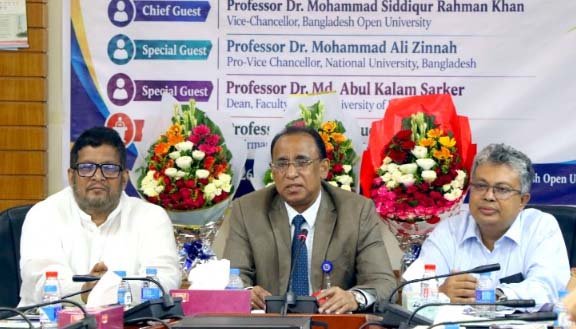
The concerns were raised at an online seminar titled “Grand Bargain beyond 2026: Locals’ Perspective”, organised on Saturday by COAST Foundation, BDCSO COAST and the Cox’s Bazar CSO-NGO Forum (CCNF).
Presenting the keynote paper, Md Iqbal Uddin of BDCSO COAST said UN agencies lead all eight major sectors in the coordination structure of the Rohingya response, with one sector co-led by an international NGO. No sector is led by a national or local NGO.
Citing the 2026 Joint Response Plan (JRP) funding figures, he said 87.96 per cent of the funds had been allocated to UN agencies, 7.78 per cent to international NGOs and 4.26 per cent to national NGOs, with no allocation reported for local NGOs.
The funding distribution raises serious questions about progress in fulfilling localization commitments, he said, adding that direct funding continues to reach only a limited number of local NGOs.
Netai Chandra Dey Sarkar, director (MIM) of the Directorate of Disaster Management, attended the seminar as chief guest. He stressed the need for capacity exchange rather than blaming local organisations and called for stronger capacity development and at least 25 per cent direct funding for local NGOs.
Rezaul Karim Chowdhury, executive director of COAST Foundation, chaired the session, while Mustafa Kamal Akanda of EquityBD moderated it.
Clarence Sutharshan, country director of Tearfund, reaffirmed the organisation’s commitment to locally led humanitarian responses and strengthening the capacities of local actors.
Rezaul Karim Chowdhury said UN agencies and international NGOs should focus on facilitation, while local NGOs should take the lead in implementation.
Md Abdul Alim of ActionAid Bangladesh said some UN agencies channel funds through intermediary organisations and describe the practice as localization. He called for a country-level definition clarifying the respective roles of UN agencies, international NGOs and local organisations.
Md Zahangir Alam raised concerns over the concentration of funding in a single NGO in Cox’s Bazar, reportedly involving 34 projects, and called for an end to preferential funding practices.
Other participants called for sustained civil society advocacy, greater donor accountability, district-level mapping of local NGOs and simplified, harmonised due diligence procedures. Mujibur Rahman, adviser to Shushilan, identified the mindset of UN and international NGO leadership as a major barrier to localization.
Adopted at the World Humanitarian Summit in Istanbul in May 2016 and signed by around 71 parties, the Grand Bargain is approaching its 10-year milestone amid discussions about its future. Speakers urged humanitarian agencies and donors to translate their commitments into meaningful changes in funding and decision-making.