Weekly Bangla Mirror | Bangla Mirror, Bangladeshi news in UK, bangla mirror news
Collected Photo
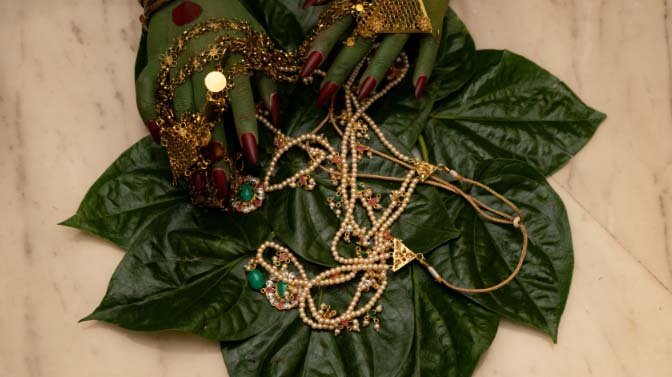
Traditional jewellery is more than an accessory; its designs reflect craftsmanship, aesthetics, and cultural identity. However, maintaining a connection with Bengali traditions does not necessarily require wearing heavy gold ornaments. It may also mean appreciating distinctive designs and adapting them to contemporary tastes.
Shulogna Barua, 26, expressed her love for deshi ornaments. “I love traditional jewellery because I feel Bangladeshi traditional pieces are unique. It stands apart even from that of other South Asian countries. But I would not wear heavy ornaments. I absolutely love the minimal versions, the smaller pieces with intricate detailing.”
Barua added, “Take the mukut, for example. It used to be very popular, but hardly anyone wears it now. People no longer want to wear ornaments to make them the centre of attention.”
For Raka Islam, 28, tradition has taken a different meaning. She loves gold ornaments but more as a financial asset than a piece of fashion accessory.
“I really like designs in muted, matte finishes rather than that bright, shiny gold colour. I want to have gold in my collection, but when it comes to wearing jewellery, I prefer something that can be matched with different outfits.”
Many from this generation can relate to her preference immensely. The distinction between ownership and appreciation is worth exploring. Gold can be both an ornament and a financial asset, but the jewellery someone wants to own may differ from what they prefer to wear daily. With the metal becoming increasingly expensive, silver, copper-toned metals, and imitation jewellery offer accessible ways to enjoy traditional designs.
Sharmin Akhter, 24, shared a different perspective. Although she prefers simple jewellery for everyday wear, she believes elaborate ornaments have their place at weddings.
“I feel heavy jewellery looks best at weddings. For everyday wear, I prefer something simple. But I have no problem wearing heavy traditional jewellery at my wedding. Mantasha, haattana, haatpasha, kanpasha, kantana, and a large nose ring can all enhance the beauty of a bridal look.”
The experiences of a few young people cannot represent an entire generation, but they raise an important question: Does cultural connection depend on how much traditional jewellery young people own, or can it also be expressed through the designs they appreciate and choose to wear?
Perhaps traditional jewellery is not losing its place among young people so much as finding new ways to remain relevant. For a tradition to survive, it does not always have to remain unchanged. Sometimes, it evolves with the people who carry it forward.