Weekly Bangla Mirror | Bangla Mirror, Bangladeshi news in UK, bangla mirror news

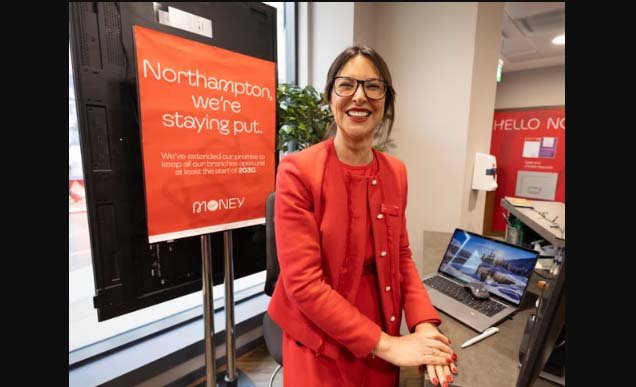
On a crisp Friday morning in early December, Abington Street in Northampton is starting to stir. Despite having lost high street stalwarts like Marks & Spencer, Moss Bros and H&M in recent years, it is drawing in locals for one end-of-week errand: banking.
Along the pedestrianised road, customers are streaming in and out of HSBC, Barclays, Metro Bank and the building society Nationwide. But it is a rare scene that defies a wider trend: more than 6,000 bank branches in the UK have closed since 2015 as bosses try to cut costs and push millions of customers towards online services.
Relief for customers may be at hand, however, with banks now pausing closures and opening new sites, in what appears to be a mini renaissance for bricks-and-mortar branches.
HSBC UK pledged to keep all of its remaining 327 branches open until at least 2027, while Barclays – which has been one of the most aggressive in shutting sites – has extended opening hours at 87 of its 200 or so branches.
Challenger banks are bucking the closure trend, too. Among smaller lenders, Metro Bank has launched three new locations in Gateshead, Chester and Salford, while Newcastle Building Society poured millions of pounds into a Grade II listed building to open a new branch in Newcastle city centre.
“It’s interesting how the commercial decisions are starting to change,” Nikhil Rathi, the chief executive of the Financial Conduct Authority told MPs this month. “You’re starting to see more of the major financial institutions actually seek to make a virtue of the fact that they’re going to keep branches open for a certain period, and that is a shift.”
Nationwide has made one of the biggest commitments, promising to keep 696 branches open until at least 2030. That news was a relief for Jatish and Sudha Shah, a couple in their 70s, who were worried that their local Virgin Money branch in Northampton would be under threat following Nationwide’s £2.9bn takeover of the rival bank in 2024.
Jatish, who is hard of hearing, often needs a private space to discuss his accounts. He visits the Virgin branch, which is just 300 metres from a Nationwide site, every few months to check on the couple’s ISAs.
“I know we could do it online and I’m quite capable, but I prefer face to face,” he said. Had the branch closed, he added, the couple would have considered jumping ship to another bank.
By and large, however, decisions to keep branches open do not reflect a reversal in customer behaviour. The move to digital banking has led to an overall decline in the number of branch visits, according to KPMG research, which found that a fifth of UK customers had not visited a branch in the last two years.
But banks are seeing the benefit of connecting with customers in person, albeit through a much smaller and cheaper network. “There is a sweet spot where you try and push as many customers on to digital channels as possible, but it is still constructive to have physical locations,” said John Cronin, the head of research and analysis firm SeaPoint Insights.
Some of the shift is about serving older, and less technologically capable account holders, but it is also helping banks compete for small and medium business customers who need advice or help with paperwork.
The trend is even drawing in digital natives, the younger generations that have long had access to online-only services such as Monzo, Starling and JP Morgan’s Chase brand. More 18– to 24-year-olds visited a bank branch last year than those aged over 65, with younger customers representing 72% of customers visits.
“It’s a misconception that younger customers only care about digital banking,” said Peter Rothwell, a partner and head of banking at KPMG UK. “While they appreciate seamless apps, many still value having a local branch, whether it’s to deposit cash from a side job or a birthday gift.
“At the same time, older customers remain some of the most loyal and financially significant clients, expecting not just convenience but also competitive rates and attentive service from their traditional banks.
“To succeed, banks must deliver on both fronts, offering digital innovation without losing sight of the personal touch that matters to every generation.”
Back on Abington Street, most of the customers streaming into Nationwide on a Friday morning were simply looking to make withdrawals at indoor cash machines. But some, like Diana Yates, 73, had bigger fish to fry, having made the trip to cash in her bond investments.
“I have got internet banking. But because of my age and because I live on my own, I’m not confident doing things with large amounts of money on my own. I haven’t got anyone to sit with me and say, ‘Is this OK?’ They’ll do it all in the branch with me.”
Gary Greenwood, a banks analyst at Shore Capital, said most banks were trying to morph into “hubs for advice rather than day-to-day processing”. That has meant providing more advice and support around investments and life events such as getting a mortgage or securing power of attorney when a loved one can no longer manage their own finances.
That is where banking hubs – where lenders share a single location to make up for local branch closures – have been falling short. Many hubs offer only simple transactions and lack the personal touch, leaving many underused. KPMG said 72% of UK individuals have never visited a banking hub.
Threats such as online scams and digital service outages are also making branches seem more attractive. While they are usually tied in to the same systems as the online service, it can provide a sense of security to know problems can be discussed in a physical branch with its own dedicated staff.
Over time, Greenwood predicts, branches will become even more focused on narrow support functions, especially as older generations pass on. “Day to day transactions will be processed via self-service terminals while staff will be focused on providing value-added advice and resolving more complicated issues,” he said.
Cronin believes artificial intelligence may also turn out to be a boon for branches, despite fears about the technology. Bank bosses hope it can replace many manual operations in back offices, potentially increasing scope for face-to-face contact.
“That’s where the efficiency focus is,” Cronin said. “It was branches 10 years ago, and that has now largely played out. Maybe there is another wave of branch closures [coming] in a few years’ time [though]. I suspect that’s how it will play out: this is a pause rather than an end state.”