Weekly Bangla Mirror | Bangla Mirror, Bangladeshi news in UK, bangla mirror news
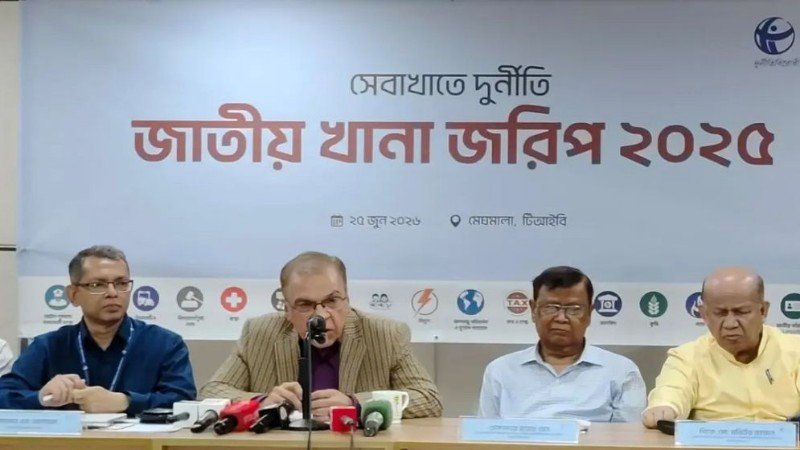
Households paid total Tk12,633 crore bribes in different public and semi-public service sectors in a year under the interim government, said the Transparency International Bangladesh (TIB) on Thursday.
TIB presented the findings of a citizen survey at a press conference held at its Dhanmondi office.
The survey covered 1,149 randomly selected urban and rural areas across the country over the period between November 2024 and October 2025.
The survey reported titled “Corruption in the Service Sector: National Household Survey 2025” revealed corruption in 18 specific service sectors with passport services topping the list for attracting most bribes in terms of value, said TIB Executive Director Dr Iftekharuzzaman at the press conference.
Second came the driving and vehicle-related services provided by the Bangladesh Road Transport Authority (BRTA). Then came, law enforcement agencies, agriculture, land services, and judicial services.
The same survey was conducted in 2023, where passport and BRTA services also came first and second.
However, household payment of bribes fell 10% in 2025 compared with 2023. In November 2024-October 2025, each household on average had to pay Tk5,124 to avail public and semi-public services.
As per the latest survey, 61.3% people did not report corruption despite being a victim of it as they believed the whole process, including the accountability mechanism, was “corrupt.”
About half of the respondents did not even know how and where to submit corruption allegations.
TIB noted that the digitalisation of various services were partly aimed at curbing corruption but failed to yield the expected results. In many a time, service seekers still had to rely on middlemen, leaving scope for corruption and bribery intact.
The survey also found that 29.5% people were aware of the Anti-Corruption Commission, and 1.4% knew about the Government Redress System (GRS) against potential corruption.
However, very few approached these services, and even when complaints were filed, these were either not accepted or were not addressed after acceptance.
The respondents pinpointed three main reasons behind unabated corruption: absence of justice and penalties, sometimes offering rewards after offences instead of penalties, and lack of awareness among the service seekers.
The survey found that rural people faced more corruption incidents, but urban residents paid more in terms of value.
The situation was alarming for vulnerable groups like women, differently-abled people and people from indigenous communities.