Weekly Bangla Mirror | Bangla Mirror, Bangladeshi news in UK, bangla mirror news

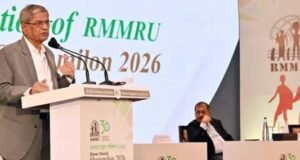
Collected Photo
Humayun Kabir’s rise from a London-based BNP leader to a key figure in Bangladesh’s policymaking circles is an unusual political journey. After spending years in the United Kingdom and playing a role in the BNP’s international outreach and diplomatic strategy, he returned to Bangladesh and became increasingly active in party politics.
His rise within the party was swift. In October 2025, he was appointed BNP Joint Secretary General for International Affairs. After the formation of the government led by Tarique Rahman in 2026, he was appointed an adviser to the prime minister with the rank and status of a state minister. On Thursday, he moved directly into the Cabinet as a state minister.
A major part of Kabir’s political profile has been shaped by international affairs. During his time in London, he worked as an adviser to BNP Acting Chairman Tarique Rahman and played an active role in the party’s international communications. While living abroad, he was involved in presenting the BNP’s political positions to the international community and maintaining contacts with political and diplomatic circles in different countries.
His professional experience outside politics has also played an important role in shaping his career. In the UK, he worked as a strategic adviser at the office of the Mayor of London. He later served as a Cabinet adviser at the office of the Executive Mayor of Lewisham.
Kabir also has experience working within the British government’s administrative system. He worked with a team at the Prime Minister’s Office during Boris Johnson’s tenure and later served as a private secretary to several Cabinet ministers and special advisers at the Ministry of Justice under Rishi Sunak’s government.
These experiences have given a distinctive dimension to his political career. Unlike many BNP leaders who rose through grassroots politics or parliamentary activity, Kabir’s key strengths have been international relations, policymaking, diplomatic engagement and administrative management.
His involvement in the BNP’s international lobbying and communications while in London particularly helped establish him as a prominent figure in the party’s foreign affairs sphere.
Following the fall of the Awami League government on August 5, 2024, Kabir returned to Bangladesh and became more visible in active politics. On October 22, 2025, he was appointed BNP Joint Secretary General for International Affairs.
After taking charge of the party’s international relations, his role became increasingly prominent in discussions surrounding Bangladesh’s relations with different countries, the redefining of ties with neighbouring states and the BNP’s foreign policy positions.
After the formation of the Tarique Rahman-led government on February 17, 2026, Kabir was appointed an adviser to the prime minister with the rank and status of a state minister. His responsibilities covered three important sectors: foreign affairs, disaster management and relief, and civil aviation and tourism.
His responsibilities were formally defined in a government notification issued on February 24. Six months later, he has moved from the adviser’s position into the Cabinet as a state minister. As part of the Cabinet reshuffle on August 21, he took the oath of office.
Kabir’s new role carries considerable political significance, particularly in foreign policy. Bringing an internationally experienced politician directly into the Cabinet could signal continuity in the government’s foreign engagement. At the same time, his responsibility for two very different sectors”disaster management and relief, and civil aviation and tourism”will also test his ability to coordinate across diverse areas of government.
One of the most notable aspects of Kabir’s political journey is that he did not enter the Cabinet through conventional grassroots politics. Instead, he rose through his experience in international affairs, diplomatic engagement and the UK’s political and administrative environment.
As a state minister, his major challenge will now be to translate the political and administrative experience he gained abroad into Bangladesh’s domestic governmental context.
His journey from London’s political and administrative circles to the Cabinet in Dhaka is therefore more than a story of personal political advancement. It also reflects the rise of a key organiser of the BNP’s internationally oriented politics into a direct role in the governance of Bangladesh.