Weekly Bangla Mirror | Bangla Mirror, Bangladeshi news in UK, bangla mirror news
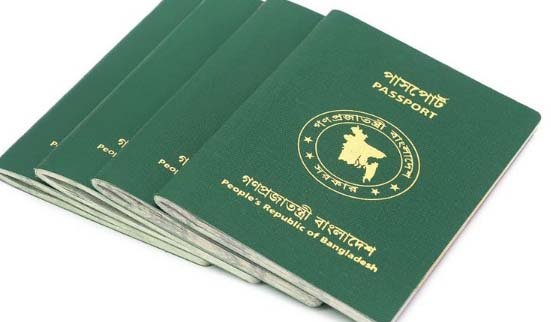
Collected Photo
The government has introduced new rules governing the entry, stay, visa renewal and investment-related privileges of foreign nationals in Bangladesh under the “New Visa Policy 2026.”
Under the new policy, foreigners who illegally remain in Bangladesh after their visas expire will face fines of up to Tk 3,000 per day. Sponsoring organisations may also be fined up to Tk 200,000 for violations of visa conditions. Foreign investors who invest at least US$5 million in heavy industries or long-term businesses in Bangladesh may be eligible for No Visa Required (NVR) facilities.
The policy also makes it mandatory for citizens of India and Pakistan holding visas valid for 90 days or more to register with immigration authorities within 14 days of entering Bangladesh.
According to government documents and senior officials at the Ministry of Home Affairs, the new policy has been approved and will take immediate effect. Previous visa-related circulars and guidelines have been cancelled, although visas issued under the previous rules will remain valid until their expiry dates.
New Overstay Penalties
The new policy introduces a tiered penalty system for foreigners who remain in Bangladesh after their visas expire.
Those staying illegally for up to 15 days will be fined Tk 1,000 per day. For overstays beyond 15 days, the fine will increase to Tk 2,000 per day, applicable for up to 90 days. For overstays exceeding 90 days, the penalty will rise to Tk 3,000 per day.
Foreign nationals staying illegally may also face legal proceedings under the Foreigners Act, 1946.
However, fines may be waived in certain circumstances, including illness or unavoidable situations. Foreign nationals of Bangladeshi origin, foreign spouses and children of Bangladeshi citizens may also be eligible for a waiver.
Foreign students may receive a waiver for up to three months. If the overstay exceeds three months, a daily fine of Tk 3,000 will apply, while stays exceeding six months may result in stricter legal action.
In cases involving illness, a medical certificate may be submitted to support a recommendation to the Ministry of Home Affairs for a waiver. Overstays caused by natural disasters, accidents or flight cancellations will not be considered illegal where the circumstances are properly established.
Registration Requirement for Indian and Pakistani Nationals
Under the new rules, citizens of India and Pakistan who enter Bangladesh with visas valid for 90 days or more must register with immigration authorities within 14 days of arrival.
The requirement does not apply to nationals of other countries.
30-Day Visa on Arrival
Citizens of selected countries will be eligible for a 30-day single-entry visa on arrival for tourism and business purposes.
The eligible countries include Singapore, Malaysia, Indonesia, China, Japan, South Korea, Brunei, Saudi Arabia, the United Arab Emirates, Qatar, Kuwait, Oman, Bahrain, Egypt, the United States, Canada, Brazil, Australia, New Zealand, Russia, Türkiye, the United Kingdom and several European countries.
NVR Facilities and Investment Incentives
The new policy seeks to simplify visa procedures for foreign investors and encourage investment in Bangladesh.
Foreign entrepreneurs investing at least US$5 million in heavy industries or long-term businesses in Bangladesh may qualify for NVR facilities. Applicants must submit certificates from the Bangladesh Investment Development Authority (BIDA), Bangladesh Export Processing Zones Authority (BEPZA), Bangladesh Economic Zones Authority (BEZA) or the relevant government investment authority.
The government will, however, conduct strict checks on the applicant’s financial sources and background before granting the facility.
NVR facilities will also be available in certain cases to foreign nationals of Bangladeshi origin, their second- and third-generation descendants, and their foreign spouses and children, subject to specific conditions.
Applicants will need to provide official documents proving their Bangladeshi ancestry or family relationship, such as dual citizenship certificates, Bangladeshi machine-readable passports or e-passports, national identity cards, online birth registration certificates or citizenship certificates.
Police verification will be mandatory for spouses and children over the age of 15.
The NVR facility will remain valid for the duration of the relevant passport’s validity, while the application fee has been set at US$80 or its equivalent in foreign currency.
Transit Visa Limited to 72 Hours
The new policy allows transit visas for passengers waiting for connecting flights. A transit visa may be issued for a maximum of 72 hours, with a fee of US$20 or its equivalent in foreign currency.
Applicants seeking to extend a visa must apply at least 15 days before its expiry. Applications submitted after expiry will be subject to the applicable overstay penalties.
Visa fees will not be refunded if an application is rejected.
The policy also allows valid visas contained in old passports to be transferred to new passports through an application process.
21 Working Days for Security Reports
Where security clearance is required for issuing or extending a visa, the Special Branch or National Security Intelligence (NSI) will have up to 21 working days to submit its report after receiving a request from the relevant visa authority.
If no report is received within the stipulated period, the visa authority may proceed on the basis that there is no objection and take an appropriate decision.
Security clearance will not be required for children under the age of 15.
Sponsors Face Up to Tk 200,000 in Fines
Employers or sponsoring organisations may face penalties if foreign nationals arriving for employment, investment, business or education conceal information in their visa applications or violate visa conditions.
For a first offence, the sponsoring organisation may be fined Tk 100,000 per person, while subsequent offences may attract a fine of up to Tk 200,000 per person.
New Rules for Foreign Journalists
Foreign journalists will face additional requirements when producing films or documentaries in Bangladesh.
A representative nominated by the Ministry of Information and Broadcasting must remain present throughout the production process.
Before leaving Bangladesh, the journalist or production team must submit a **No Objection Certificate (NOC)** from the ministry at the immigration point.
Security Clearance and Ministry Authority
The validity of security clearances issued by the Ministry of Home Affairs has been set at a maximum of five years.
The ministry will retain final authority over visa and NVR matters that are not specifically addressed in the policy, including interpretation, decisions and visa cancellations.
The government has also reserved the right to amend, revise or cancel any provision of the new visa policy when necessary.
Experts Welcome the New Measures
Security analyst Brigadier General (retd.) Sarker Mohammad Shamsuddin said a clear and updated visa policy is essential for regulating the entry, stay and activities of foreign nationals in Bangladesh.
He said the tiered overstay penalty system could encourage foreigners to comply with visa conditions and strengthen monitoring by the authorities.
However, he stressed that simply imposing fines would not be enough. Greater coordination and information sharing among immigration authorities, law enforcement agencies and security organisations would also be necessary.
Regarding the US$5 million investment-based NVR facility, he said the measure could play an important role in attracting genuine foreign investment. At the same time, he stressed the need for strict verification of investors’ identities, businesses and sources of funds to prevent money laundering and criminal activities.
On the registration requirement for Indian and Pakistani nationals, he said maintaining updated information about the purposes, addresses and activities of long-term foreign residents was important from a national security perspective. However, he added that implementation should not result in unnecessary harassment of ordinary visitors.
Lieutenant Colonel (retd.) Khairul Islam, a former intelligence chief of the Rapid Action Battalion, said the requirement for government representatives to accompany foreign journalists and filmmakers deserved careful consideration.
He said foreign journalists visiting Bangladesh was a normal part of international engagement, but appropriate permission and monitoring should be ensured when they work around sensitive installations, border areas or critical national security infrastructure.
He also said the policy should strike a balance between national interests and openness so that Bangladesh could remain attractive to foreign tourists, skilled workers and investors while protecting national security, law and order and economic interests.
Regarding the 21-working-day deadline for security agencies to submit reports, Khairul Islam said the fixed timeframe was positive because it could reduce delays in visa processing.
However, he cautioned that faster processing should not weaken security checks. He called for better integration and coordination among government databases to ensure that accurate information could be obtained quickly.
The new visa policy is intended to strengthen oversight of foreign nationals while making selected provisions more favourable for tourism, investment and long-term engagement with Bangladesh. Its effectiveness will largely depend on how the rules are implemented and whether authorities can maintain an appropriate balance between security and ease of access.