Weekly Bangla Mirror | Bangla Mirror, Bangladeshi news in UK, bangla mirror news
By Matiar Chowdhury:
25 th September 2026: Chairman of the Baloch National Movement (BNM), Dr Naseem Baloch, has said that the sacrifices of Baloch political activists must not be reduced to memories of loss, but should remain part of the continuing political struggle for the Baloch national cause.
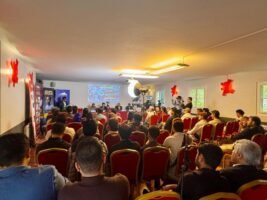
Addressing the 12th Balochistan International Conference in Geneva, Dr Naseem Baloch said that successive generations of Baloch political activists, students, doctors, teachers, lawyers and ordinary citizens had faced imprisonment, enforced disappearance, exile and death.
He said that, for decades, efforts had been made to suppress the Baloch national question through military force, political engineering, enforced disappearances, imprisonment and control over Balochistan’s resources. Despite these pressures, he said, the Baloch national question had not disappeared and new generations continued to enter political life.
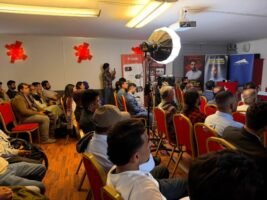
Addressing human rights defenders, representatives of different nations and organisations, members of the media and Baloch political activists, Dr Naseem Baloch said the Geneva conference was more than a political gathering.
“We have gathered here not simply to hold another conference. We are here because behind every report, every photograph and every statistic from Balochistan, there is a human being,” he said.
He highlighted the continuing suffering of families of disappeared persons, saying that behind the statistics were mothers waiting for their sons, children growing up without fathers and families searching through prisons and courts for information about their loved ones.
Dr Naseem Baloch also paid tribute to Dr Abdul Rasheed, widely known as Dr Nokaap Baloch, a member of the BNM Central Committee who, according to the BNM Chairman, was killed on 10 September.
“His killing is still very fresh for us. This is not something I can speak about merely as a political incident. He was our colleague. He was our comrade. He was someone who had spent his life among his people,” Dr Naseem Baloch said.
He alleged that Pakistani state agents were responsible for Dr Nokaap Baloch’s killing, saying that armed men posing as patients entered his medical setting and killed him. The allegation has been presented by the BNM as part of its account of the incident.
Dr Naseem Baloch described Dr Nokaap Baloch as a political activist, physician and educator who had devoted his life to serving his community, providing medical care and promoting education.
“His martyrdom is an irreparable loss for the BNM, supporters of the Baloch national movement, and Baloch refugees, for whom he was a source of hope, medical care and education,” he said.
“Today, his chair is empty. But the values he lived for remain with us.”
The BNM Chairman subsequently devoted much of his address to remembering the political life and death of Chairman Zubair Baloch.
He said the conference had not been organised simply to remember Zubair Baloch or mourn his absence, but to pay tribute to a political leader whom he said had sacrificed his life for the Baloch national cause.
“Whenever I think of Chairman Zubair, one question comes to my mind: How deeply did he love the land of Balochistan and the cause of Baloch national freedom that even holding the chairmanship of a student wing affiliated with the National Party could not change his direction?” Dr Naseem Baloch said.
He also criticised the National Party, alleging that it had entered into an alliance with the Pakistani state and supported what he described as a “puppet” provincial government intended to undermine the Baloch national movement.
According to Dr Naseem Baloch, the National Party continues to pursue a political approach that, in his view, leaves the Baloch people in a condition of permanent subordination.
Concluding his remarks, Dr Naseem Baloch said the deaths of Baloch political activists should not be remembered only through grief. Their political convictions, sacrifices and commitment, he said, should remain part of the historical record and public discussion surrounding Balochistan.
The 12th Balochistan International Conference in Geneva brought together Baloch political activists, human rights defenders, representatives of organisations and members of the media to discuss the political and human-rights situation in Balochistan.