Weekly Bangla Mirror | Bangla Mirror, Bangladeshi news in UK, bangla mirror news
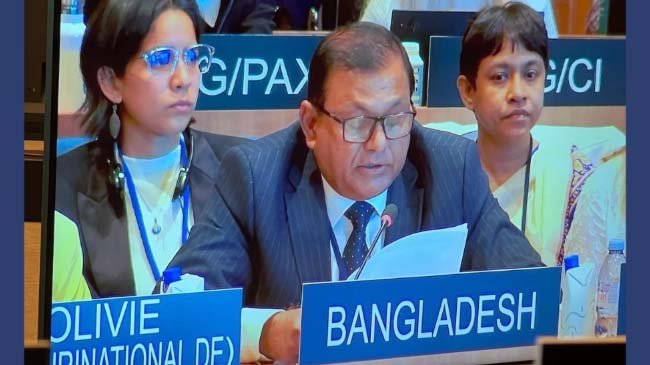
Photo: Courtesy
Abdul Khaleque, secretary of the Secondary and Higher Education Division, has said UNESCO must adopt appropriate strategies to keep pace with AI-driven systems and consider initiating a process to regulate the use of artificial intelligence within its areas of operation for the sake of future generations.
He made the remarks while delivering Bangladesh’s national statement at the 225th session of the UNESCO Executive Board at the organisation’s headquarters in Paris, France, on Thursday.
The Ministry of Education disclosed the information in a press release on Friday.
Nasser bin Hamad Al Hinzab of Qatar, president of the UNESCO Executive Board, chaired the session.
Abdul Khaleque said the government, under the leadership of Prime Minister Tarique Rahman, was taking practical steps to remove existing barriers to education.
“Increasing student enrolment in schools and ensuring their attendance and continued learning from the earliest stages of education are our top priorities,” he said.
He added that modern education helps develop students into well-rounded citizens with diverse skills and qualities.
“To this end, we have taken initiatives to introduce sports as a formal subject in the national curriculum. We have also been able to engage more than two million students through nationwide youth sports competitions,” he said.
He further said promoting multilingual education with a focus on mother tongues and strengthening the foundation of primary education were among the government’s priorities.
He said the government was also placing special emphasis on nutrition and social support frameworks, ensuring inclusive education for marginalised communities in climate-vulnerable areas, expanding technical and vocational education and training (TVET), and empowering women through free education.