Weekly Bangla Mirror | Bangla Mirror, Bangladeshi news in UK, bangla mirror news
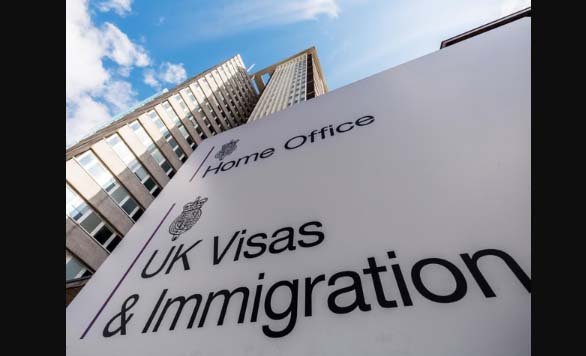
Collected Photo
Two children aged 11 and 12 have been left in Ghana without parental care for a year after the Home Office denied multiple applications for them to join their father in the UK.
Their Ghanaian father has launched a judicial review claiming that civil servants have made a series of “irrational” decisions that have resulted in the children having no parental support. Their mother died in 2019.
The government department initially accused the man of submitting false birth certificates.
After that claim was set aside with the help of the Ghanaian authorities, the Home Office claimed the family had not sufficiently established the identity of the children’s mother.
The man, who is a cleaning manager in Corby, Northamptonshire, said the two children grieving their mother had been left vulnerable and without parental support.
“At first the Home Office tried to say that the children didn’t belong to me and now they’re trying to say that the children never belonged to their deceased mother.
“I know the Home Office are trying to crack down on immigration but they’re taking it out on children. They are vulnerable, they’re grieving their mother, and they are currently facing life without their father, too.
“No one is saying that [civil servants] shouldn’t be doing their job but look at what I am faced with. If someone meets all the requirements and provides the evidence, there should be no reason to reject the application,” he said.
The man and the children’s mother were living together with their two young children in Ghana when she died of liver failure. Two years later, the man remarried a Ghanaian care worker. In December 2023, the couple came to the UK on a skilled worker and dependent visas, planning to bring his two young boys as soon as possible. The boys remained behind with relatives, attending a local boarding school in the Ashanti region.
The couple formally applied to bring the two boys to the UK in March 2025 but their application was refused on the grounds that they appeared to have provided false documents. They were also warned that their visas would be cancelled as a result.
The Home Office focused on the fact that both children had two birth certificates each, with different reference numbers on each document.
The family’s lawyers successfully argued that it was common practice in Ghana to have two different birth certificates issued for each child – one for the first year of a child’s life and one for thereafter. They provided DNA tests showing that the man was the father of the two boys and testimony from the authorities in Ghana explaining the discrepancies.
Despite conceding this point, and reinstating the couple’s visas allowing them to stay in the UK, the Home Office then challenged the identity of the boys’ late mother.
Following the rejection of a second application to bring the children to the UK, the family has spent more than a year fighting to reunite with the children, who remain under the care of a relative.
Amar Ali, the director of the applicants’ solicitors, Reiss Edwards, said he was hoping for a conclusion to the case on 1 December, but received another Home Office email last week warning that it could be another 12 months before resolution.
“This is not a one-off case and is a perfect example of how inept the immigration system is in the UK for legitimate applicants. The Home Office had to ultimately pay our costs, which will come from taxpayers’ funds. The more cases like this, the more they cost taxpayers.
“It is an unjust and completely unfair system when families, just like this one, are being kept apart for up to 12 months with no easy way to appeal a decision without legal support, especially when a sensible decision could have been reached months ago.
“This week, the Home Office sent us a standard email, warning of further delays, indicating 12 months or more. It appears completely ignorant of the fact that they had just agreed to make a decision by December 1 and further demonstrates the chaotic nature of Home Office practice.”
The Home Office declined to comment.
… we have a small favour to ask. Tens of millions have placed their trust in the Guardian’s fearless journalism since we started publishing more than 200 years ago, turning to us in moments of crisis, uncertainty, solidarity and hope. More than 1.5 million supporters, from 180 countries, now power us financially – keeping us open to all, and fiercely independent. Will you make a difference and support us too?
Unlike many others, the Guardian has no shareholders and no billionaire owner. Just the determination and passion to deliver high-impact global reporting, always free from commercial or political influence. Reporting like this is vital for democracy, for fairness and to demand better from the powerful.
And we provide all this for free, for everyone to read. We do this because we believe in information equality. Greater numbers of people can keep track of the global events shaping our world, understand their impact on people and communities, and become inspired to take meaningful action. Millions can benefit from open access to quality, truthful news, regardless of their ability to pay for it.
Whether you give a little or a lot, the support of readers like you from Bangladesh will power our reporting for the years to come.
We value whatever you can spare. Your support enables greater