Weekly Bangla Mirror | Bangla Mirror, Bangladeshi news in UK, bangla mirror news
Collected Photo
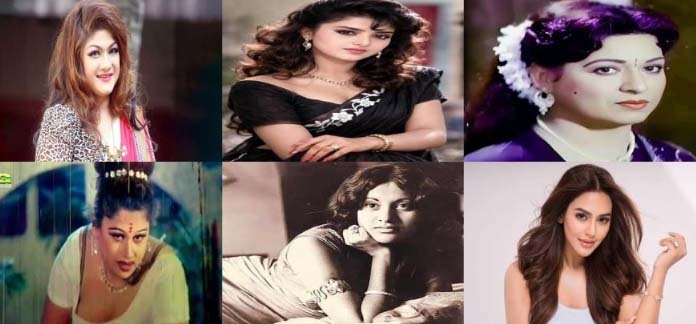
From Anju Ghosh, Babita and Shabana to Munmun, Moyuri and Nusraat Faria: Women, glamour and the debate over obscenity in Dhallywood
The debate over obscenity in Dhallywood is nothing new. Over time, film stories, filmmaking techniques, the portrayal of actresses, audience tastes and the ways people consume entertainment have all changed.
Yet questions remain about how women should be portrayed on screen, where glamour ends and allegations of obscenity begin, and who should be held responsible for the controversy.
At one time, Anju Ghosh attracted audiences to cinema halls with her screen presence. Babita and Shabana established themselves through their acting skills and portrayals of diverse characters.
In the late 1990s and early 2000s, Munmun and Moyuri became associated with debates over obscenity in the film industry. In the present era, discussions surrounding the glamour, fashion, dance performances and screen presence of stars such as Nusraat Faria also spread across social media.
But the question remains: Has the definition of obscenity really changed, or has the same controversy simply returned in the language of a new era?
Anju Ghosh: commercial appeal and stardom
Anju Ghosh established herself in Dhallywood during the 1980s. Various reports state that her film career began with ‘Saudagar’ in 1982. Later, her performance alongside Ilias Kanchan in ‘Beder Meye Josna’ brought her immense popularity. Released in 1989, the film holds a special place in the history of Bangladeshi cinema.
Anju Ghosh became a popular face in commercial cinema through her acting, dancing, expressions and screen presence. At the time, songs, dance sequences, romantic scenes and the on-screen chemistry between leading actors played important roles in attracting audiences.
However, it would be inappropriate to equate an actress’s glamorous or alluring screen presence directly with obscenity. It is also necessary to consider whether a scene serves the story, how significant the female character is to the narrative, and how the camera portrays her.
Therefore, Anju Ghosh’s popularity cannot be explained solely by her on-screen appeal. Her acting, stardom and connection with audiences were equally important.
Babita and Shabana: acting, characters and social realities
Babita and Shabana are two important names in the history of Bangladeshi cinema. Their films explored themes such as love, family relationships, social crises, women’s positions in society and personal struggles. Over their long acting careers, both actresses established distinctive identities.
Babita’s performances often reflected emotional sensitivity and an understanding of character psychology. Shabana, meanwhile, gained widespread popularity through her portrayals of women in various family-oriented and socially themed films.
Their careers demonstrate that an actress’s acceptance cannot be determined solely by her clothing or physical appearance. Acting ability, character depth and the strength of the story also play significant roles.
However, it would be misleading to portray all films of the past as models of decency and all contemporary films as examples of obscenity. Older films also tended to confine women to conventional roles. At the same time, contemporary cinema has produced powerful and multidimensional portrayals of women.
A comparison between the past and the present must therefore look beyond differences in clothing. It should also examine women’s independence, decision-making power and roles within the narrative.
Munmun: An actress at the centre of controversy
Munmun became a widely discussed name in Dhallywood in the late 1990s and early 2000s. She attracted a section of the audience through her action-oriented roles, dance performances and screen presence. During the same period, she also became associated with controversies over obscenity in the film industry.
However, placing the entire blame for this controversy on a single actress would obscure the broader realities of the film industry. It is necessary to examine the types of stories being produced, producers’ commercial expectations, directors’ approaches to staging scenes and the ways audience interest is used to generate business.
In an interview with ‘Prothom Alo’, Munmun claimed that her regular career as a leading actress lasted from 1996 to 2003. According to her, the more pronounced trend of obscenity in films emerged later, particularly around 2006 and 2007. This is her personal account and should be assessed alongside other historical information and statements from people associated with the industry.
The controversy surrounding Munmun raises an important question: When allegations of obscenity arise in cinema, should the actress appearing on screen be the sole focus of public scrutiny, or should the roles of directors, producers, screenwriters and market forces also be examined?
Moyuri: the label of obscenity and claims of change
Moyuri is another prominent name in discussions about obscenity in Dhallywood. In the early 2000s, media outlets discussed the controversies surrounding her and her continued involvement in films. However, rather than defining her solely through controversy, it is important to consider the circumstances of the film industry at the time and her own statements.
On March 10, 2002, ‘Daily Manabzamin’ published an interview-based report titled “My Workload Has Not Decreased Even Though Obscene Films Have Declined.” In the report, Moyuri discussed her work and the situation in the film industry. She claimed that her workload had not decreased despite a decline in the production of obscene films.
According to the report, the prevalence of obscenity in films began to decline following an anti-obscenity movement by the Bangladesh Film Directors Association. Although there was speculation at the time that Moyuri would disappear from the film industry, she claimed that she had maintained her workload by changing her approach to acting.
In the interview, Moyuri also said that she was not the only actress who had performed in films considered obscene; others had done so as well.
Yet, she argued, public discussion had focused disproportionately on her. She also expressed the view that a degree of revealing performance might be necessary for entertainment, provided it remained artistic.
The interview also mentioned her appearance as a guest performer in a song sequence in ‘Khomota Chai’, directed by Shahidul Islam Khokon.This indicates that contemporary media reports highlighted her continued involvement in cinema even after the anti-obscenity movement.
Moyuri’s statements raise several important questions. How does an actress become the primary focus of a debate over obscenity? How should responsibility for the story, scene direction, producers’ commercial plans and directors’ decisions be assessed? And when an artist is confined to a controversial label for years, are her subsequent works given a fair assessment?
Answering these questions requires examining not only Moyuri’s statements but also the films of that period, the anti-obscenity movement and the roles played by the filmmakers involved. A film scene is not created through an actress’s decisions alone; it is shaped by the combined influence of the screenplay, direction, production and market forces.
Nusraat Faria: A new language of glamour
Nusraat Faria is a familiar name in contemporary Bangladeshi cinema. After gaining recognition through modelling and advertising, she made her big-screen debut with the film ‘Aashiqui’ in 2015. Since then, she has remained in the spotlight not only for her films but also for her music, fashion and various aspects of her celebrity life.
The film and entertainment industry of Nusraat Faria’s era is far more visible and dependent on multiple platforms than in previous decades. Today, a film song, dance sequence or costume is no longer confined to cinema halls; it can spread rapidly through YouTube, Facebook, Instagram and other online platforms.
As a result, discussions about stars’ on-screen appearances may begin even before a film is released. Controversies can arise over costumes, dance sequences or promotional strategies. However, before presenting Nusraat Faria’s glamorous appearance or fashion choices as evidence of obscenity, it is important to examine the specific film, scene and manner of presentation.
At the same time, an important question arises: Is the same standard applied to male stars and filmmakers as to female celebrities when it comes to public scrutiny of their appearance and personal presentation?
Is obscenity only about clothing, or also about presentation?
One of the major problems in discussions of obscenity is that there is no single, universally accepted social definition of the term. What one viewer finds objectionable, another may consider artistic freedom or a necessary element of storytelling.
Therefore, in evaluating controversial scenes, it is important to consider not only personal taste but also the context of the story, the purpose of the scene, the use of the camera and whether women are being portrayed merely as objects of desire.
A scene does not automatically become obscene simply because it features revealing clothing. Conversely, a woman can be portrayed in a degrading or objectifying manner even while wearing modest clothing. In other words, the way a scene is constructed and the perspective underlying its presentation may be more important than the clothing itself.
Similarly, the presence of dance sequences or romantic scenes does not, by itself, establish obscenity. The key questions are how well the scene fits into the story and whether the dignity and humanity of the character remain intact.
The medium has changed, and so has the pace of controversy
In the past, debates about films were largely confined to newspapers, television, cinema halls and circles associated with the film industry. Today, even a few seconds of footage can trigger widespread discussion on social media. Actors and actresses are sometimes judged on the basis of isolated scenes without viewers watching the entire film.
On the other hand, digital platforms have also given filmmakers opportunities to explore new stories, characters and styles of presentation.
Therefore, viewing the present era solely as a period of increasing obscenity would overlook these multifaceted changes.
The major challenge is to strike a balance between commercial pressures, audience demand, filmmakers’ creative freedom and social responsibility.
The final question: Who is responsible, and how should we judge?
Anju Ghosh, Babita, Shabana, Munmun, Mayuri and Nusraat Faria represent different experiences from different periods of the Bangladeshi film industry. Judging them by the same standards risks overlooking the diversity of film history. At the same time, placing the entire blame for obscenity on actresses would conceal the structural problems within the film industry.
Cinema reflects society, but it also helps shape social tastes and attitudes. Therefore, discussions of obscenity should focus on specific scenes, filmmaking techniques, narrative requirements, the dignity of female characters and the industry’s responsibility-not merely on actresses’ names, clothing or popularity.
Ultimately, comparing the past and present of obscenity raises one fundamental question: Are we merely keeping track of how women’s clothing has changed on screen, or are we also examining how our own attitudes towards women have evolved?