Weekly Bangla Mirror | Bangla Mirror, Bangladeshi news in UK, bangla mirror news

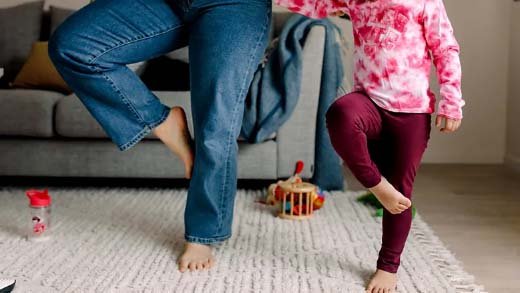
Balancing on a single limb can be surprisingly challenging as we get older, but training yourself to do it for longer can make you stronger, boost your memory and keep your brain healthier.
Unless you’re a flamingo, spending time delicately poised on one leg isn’t something you probably invest a lot of time in. And depending on your age, you might find it surprisingly difficult.
Balancing on one leg generally doesn’t take a lot of thought when we are young. Typically our ability to hold this pose matures by around the ages of nine to 10 years old. Our balance then peaks in our late 30s before declining.
If you’re over the age of 50, your ability to balance on a single leg for more than a few seconds can indicate a surprising amount about your general health and how well you’re ageing.
But there are also some good reasons why you might want to spend more time wobbling about on one pin – it can bring a range of benefits to your body and brain, such as helping to reduce the risk of falls, building your strength and improving your memory. This deceptively simple exercise can have an outsized effect on your health as you age.
“If you find that it’s not easy, it’s time to start training your balance,” says Tracy Espiritu McKay, a rehabilitation medicine specialist for the American Academy of Physical Medicine and Rehabilitation. (More on how to build a one-legged training regime into your day later in this article.)
Why care about your balance?
One of the main reasons doctors use standing on one leg as a measure of health is its link with the progressive age-related loss of muscle tissue, or sarcopenia.
From the age of 30 onwards, we lose muscle mass at a rate of up to 8% per decade. By the time we reach our 80s, some research has suggested that up to 50% of people have clinical sarcopenia.
This has been linked to everything from diminished blood sugar control to waning immunity against diseases, but because it affects the strength of various muscle groups, it is also reflected through your ability to balance on one leg. At the same time, people who practice one-legged training are less likely to be as vulnerable to sarcopenia in their latter decades, as this simple exercise helps keep the leg and hip muscles honed.