Weekly Bangla Mirror | Bangla Mirror, Bangladeshi news in UK, bangla mirror news
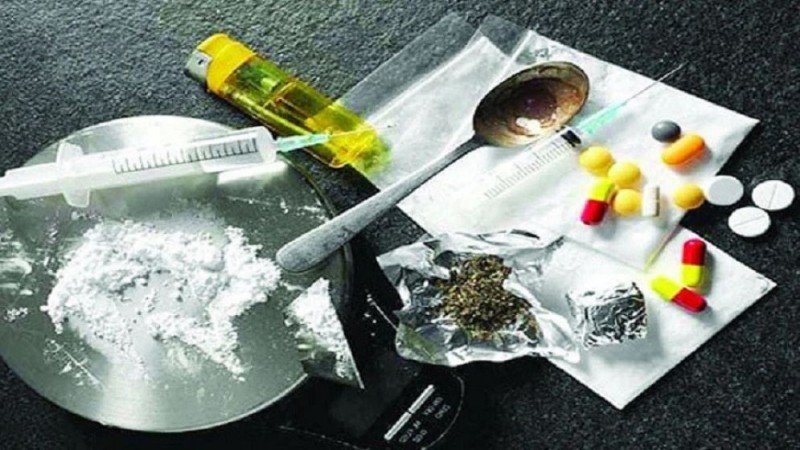
More than 1,500 members of drug mafia networks who remain at large have become increasingly dangerous, while over a hundred foreign nationals are allegedly operating drug businesses in Bangladesh under the cover of legitimate professions.
These findings have emerged from sources within the Department of Narcotics Control (DNC), the Rapid Action Battalion (RAB) and intelligence agencies.
Recently, the DNC arrested three Chinese nationals and discovered that they had been manufacturing the synthetic drug ketamine in a rented flat in Uttara, Dhaka, while posing as traders dealing in various goods.
Authorities say the issue extends beyond this case. Several African nationals have also been found involved in drug trafficking under the guise of different professions, with some already arrested. A DNC intelligence official said a new and highly organised drug network has emerged in the country, involving more than 1,500 major operators who maintain regular contact with foreign traffickers.
Law enforcement agencies are working to identify and apprehend those on the list. According to sources, the network maintains links with international “godfathers” based in countries including Sri Lanka, facilitating the introduction of new narcotics into Bangladesh.
‘My building caretaker is a drug dealer’
Field investigations in Dhaka’s Mirpur and Mohammadpur areas have revealed an alarming situation. A resident in Mirpur said: “The caretaker of my building is involved in drug dealing. I hired him for security, but he now sells drugs regularly. Even after informing the police, I could not get him arrested. Now I am afraid to speak out, fearing retaliation.”
At the Mohammadpur Geneva Camp, several shopkeepers were found allegedly involved in drug trading. In Old Dhaka and near the Ramna rail gate, many itinerant small traders were also seen selling narcotics.
Meanwhile, two young men—Md Asadul Haque and Alex Emon—were killed in Mohammadpur over the past three days. Police say the killings stemmed from disputes related to drug trading and territorial control. Asadul Haque was killed late on Wednesday night in the Sadeq Khan brickfield area, while Alex Emon was murdered publicly on 12 April in the Rayerbazar Bottola area.
Details of the Chinese suspects
DNC Director General Mohammad Hasan Maruf said the three Chinese nationals—Yang Chunsheng, Li Bin and Yu Ji—were arrested for operating an illegal ketamine laboratory in Uttara. The network used the dark web and cryptocurrency to receive orders and conduct transactions, sourcing and distributing drugs internationally.
According to DNC sources, on 25 March, 50 grams of ketamine were recovered from a parcel at an international courier service in Dhaka. The drug had been cleverly concealed inside a Bluetooth speaker. Subsequent analysis of the parcel and technical surveillance led authorities to a network operating in Uttara, where the suspects were arrested during a night raid.
Investigators found that the suspects frequently travelled between countries under the guise of business activities, using encrypted communication, regularly deleting digital data, switching mobile devices and SIM cards, and employing fake identities to evade detection.
The group relied on cryptocurrency-based transactions, primarily through the TRON network, enabling them to conceal financial trails.
The DNC noted that ketamine is a powerful dissociative drug that can cause confusion, hallucinations and loss of physical control.
Sources say many top-level traffickers are now operating from overseas while managing drug distribution inside Bangladesh. Each year, an estimated $481 million (approximately Tk5,147 crore) is smuggled out of the country due to the narcotics trade.
Enforcement challenges and statistics
Only around 10 per cent of drugs entering Bangladesh are intercepted, according to officials. Law enforcement agencies—including the DNC, police, Border Guard Bangladesh (BGB), RAB and the Coast Guard—continue regular operations to curb trafficking.
According to BGB data, in 2025 authorities seized over 14.7 million yaba tablets and 10.4 kg of crystal meth (ice), arresting 2,334 individuals in connection with drug-related offences.
DNC intelligence is currently compiling an updated database of traffickers. A preliminary list includes 1,620 major drug dealers nationwide. Police records list 19,045 suspects, while BGB has identified 3,964 individuals and RAB 3,076.
RAB’s Director of the Legal and Media Wing, Wing Commander M Z M Entekhab Chowdhury, said more than 60,000 units of various types of narcotics were seized in RAB operations.
Nationwide anti-drug drive planned
Home Minister Salahuddin Ahmed has announced that a nationwide special drive will soon be launched to combat drug trafficking. He made the remarks while speaking as chief guest at an agricultural card distribution programme at Teknaf Jahar Government High School on Tuesday.
Although there is no official figure, the private organisation Manas estimates that around 15 million people in Bangladesh are currently addicted to drugs, with annual spending on narcotics reaching approximately Tk60,000 crore.