Weekly Bangla Mirror | Bangla Mirror, Bangladeshi news in UK, bangla mirror news
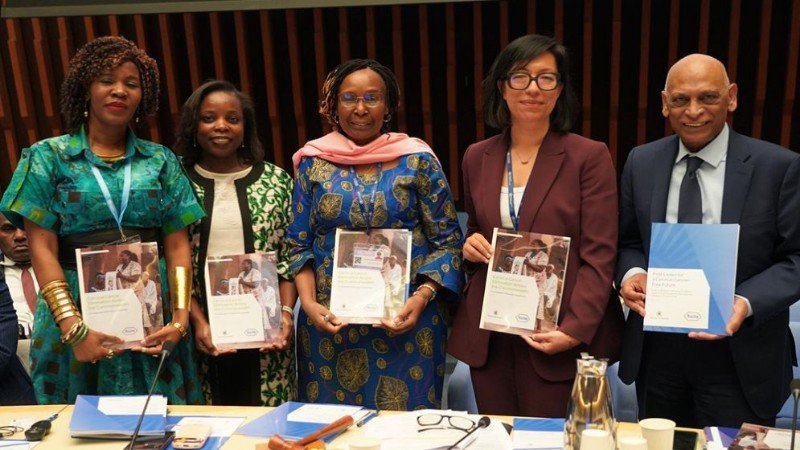
Bangladesh has been featured in a newly published report in recognition of its progress towards eliminating cervical cancer.
The Commonwealth Secretariat unveiled the report titled “Compendium of Case Studies on Cervical Cancer Elimination” at the inaugural Commonwealth Health Coordination Forum 2026 held in Geneva.
The report commended Bangladesh for launching a nationwide single-dose Human Papillomavirus (HPV) vaccination campaign aimed at protecting girls aged 10 to 14 from cervical cancer. During the first phase in October 2023, more than 1.5 million girls in Dhaka Division received the vaccine. The second phase was rolled out nationwide in October 2024, with a target to vaccinate more than 6.2 million girls across the remaining divisions.
Bangladesh was represented at the meeting by State Minister for Health and Family Welfare MA Muhit.
Prepared in collaboration with member governments and Roche Diagnostics, the report was presented before health ministers, global health experts, and development partners attending the forum. The initiative aimed to identify solutions to combat cervical cancer, one of the leading causes of cancer-related deaths among women in Commonwealth countries.
The report highlights case studies from 12 Commonwealth countries, demonstrating how they are advancing cervical cancer elimination efforts through vaccination, screening, treatment, and healthcare services despite financial constraints and evolving health disparities.
Major Progress Towards Cervical Cancer Elimination
Bangladesh successfully implemented a nationwide single-dose HPV vaccination programme in 2023–2024, reaching millions of girls. The initiative also incorporated a digital tracking system to strengthen follow-up and improve programme effectiveness.
Antigua and Barbuda demonstrated how HPV-based screening, digital systems, and phased implementation can improve coverage and programme coordination in small island settings.
Countries including Australia, Belize, Fiji, Kenya, Nigeria, Malaysia, and Zambia have also expanded their cervical cancer prevention and treatment initiatives. Zambia, in particular, showcased a successful “single-visit screen-and-treat” model integrated with HIV platforms.
In a message, President of Guyana Dr Mohamed Irfaan Ali said, “Guyana welcomes the Commonwealth’s leadership in addressing non-communicable diseases, especially the bold and urgent goal of eliminating cervical cancer by 2050. No single country can eliminate this cancer alone. Therefore, deeper collaboration across the Commonwealth and beyond is essential.”
Towards a Cervical Cancer-Free Commonwealth
Alongside the report, a “Cervical Cancer Advocacy Toolkit” was introduced to support First Ladies, spouses, and partners of Heads of Government in raising awareness about the disease.
Commonwealth Secretary-General Shirley Botchwey said, “First Ladies possess a unique ability to raise public awareness, influence national dialogue, and inspire action on critical social issues. This toolkit will support them in conducting informed, strategic, and impactful advocacy. By placing women’s health, equality, and dignity at the centre of national priorities, we can move towards a future where no woman dies from a preventable disease.”
Forum Chair and former Guyanese Health Minister and Permanent Representative to the United Nations Leslie Ramsammy said, “Our main objective today is to determine where Commonwealth cooperation can add practical value. This includes strengthening national cancer control plans, improving early detection, expanding access to treatment and palliative care, and enhancing data systems for better planning and accountability.”
Held ahead of the 79th World Health Assembly (WHA), the forum was organised under the theme “Shaping the Future of Cancer Across the Commonwealth.”
World Health Organization (WHO) Assistant Director-General Dr Jeremy Farrar stated, “To combat cancer effectively, we must view prevention, protection, and treatment as interconnected priorities. Health systems must become equitable and accessible for everyone. We need to reconnect politics, policies, and public health.”
A session on National Cancer Control Plans, co-chaired by the United Kingdom, focused on implementing recommendations based on real-world experiences and challenges faced by member states.
During discussions on financing cancer care, participants highlighted practical approaches to mobilising domestic resources and emphasised the importance of safeguarding cancer services within universal health coverage during times of financial pressure.
The forum will conclude on 20 May with a special side event on youth mental health, jointly organised by the Commonwealth Secretariat and the World Federation of the Sporting Goods Industry.
Recommendations emerging from the forum will be presented at future meetings of Commonwealth Health Ministers. Under the Commonwealth’s new Strategic Plan 2025–2030, the Commonwealth Health Ministers Meeting (CHMM) will be held every four years, while the Commonwealth Health Coordination Forum (CHCF) will serve as a ministerial-level coordination platform in the intervening years.