Weekly Bangla Mirror | Bangla Mirror, Bangladeshi news in UK, bangla mirror news

By Matiar Chowdhury:
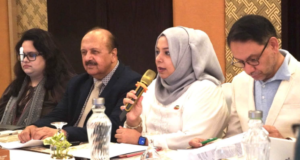
Journalists, human rights advocates, and professionals representing
national and international organisations delivered strong and urgent messages at a dialogue
on “Media Freedom for Human Rights and Democracy” held on 21 May in London.
Speakers condemned the suppression of the media and the broader violations of civil and
human rights under the interim government led by Muhammad Yunus, stressing that these
abuses continue unabated to this day. They expressed solidarity with journalists in
Bangladesh who are being detained, threatened, and intimidated on trumpedup charges, and
called on the government to immediately release all journalists held under fabricated
allegations designed to criminalise truthtelling. They also highlighted that those arrested in
the aftermath of the 2024 unrest were targeted on politically motivated and wholly
unsubstantiated accusations, leaving them deprived of their most basic freedoms.

Speakers warned that by keeping journalists behind bars, the Bangladeshi authorities are
flagrantly breaching the democratic promises made ahead of the February 2025 elections,
noting that these media professionals remain stripped of their fundamental rights.
The keynote speaker, William Horsley, a veteran UK journalist who served the BBC for 35
years and now advocates for press freedom through his work with international journalism
platforms including the Commonwealth Journalists Association, stressed that a free media is
essential for democracy to thrive. In a forceful criticism of the current administration,
Horsley stated:
“It is completely unacceptable that prominent and respected Bangladeshi journalists
including Shyamal Dutta, Mozammel Haque Babu, Farzana Rupa and Shakil Ahmed are still
being detained and their fundamental rights are being denied 18 months after their arrests on
spurious and groundless charges following the bloody events of 2024. Until they are released
and the charges against them are dropped the government will stand accused of holding press
freedom hostage and of breaching the promises it made in order to win last February’s
elections.”
Rita Payne, one of the most senior British journalists and former head of BBC South Asia for
more than three decades, expressed deep concern about the continued detention and
persecution of journalists in Bangladesh. Payne, also an executive member of the
Commonwealth Journalists Association (UK), criticised Professor Muhammad Yunus for
failing to protect journalists and press freedom despite being a Nobel Peace Prize laureate.
Barrister Tania Ameer, in her address, presented a rigorous and detailed examination of
media legislation, legal interpretation, institutional structures, and the broader socio‑political
conditions shaping journalistic practice in Bangladesh. Her intervention was widely noted for
its depth, clarity, and its ability to connect complex legal discourse with wider questions of
democratic fragility, civil liberties, and institutional accountability.
She observed that the ongoing detentions of journalists are not isolated legal matters but part
of a systematic campaign to silence opposition, free thinkers, and independent journalism,
thereby shielding those in power from scrutiny. She warned that without the establishment of
the rule of law and an independent judiciary; such repression would persist regardless of
changes in government.
Syed Badrul Ahsan, another CJA member and prominent journalist, stated that following the
2024 unrest, Bangladesh was run by an “illegal regime which systematically destroyed
structures and symbols which held the country together.” He sharply criticised the current
leadership of journalist organisations in Bangladesh for failing to demand the release of their
detained colleagues and for remaining silent in the face of intimidation. He urged journalists
and rights activists inside and outside Bangladesh to raise their voices against the continued
detention of media professionals.
Nahas Pasha, Editor of the UK’s oldest Bengali newspaper Janomot and CJA Vice President,
called for the unconditional and immediate release of all journalists detained without formal
charges or on fabricated allegations.
Joining virtually from New York, Farida Yasmin, former President of the National Press Club
of Bangladesh, described how the interim government persecuted journalists by stripping
them of professional media accreditation, freezing bank accounts, and subjecting them to
physical and psychological abuse.
One of the most emotional moments of the event came through a virtual intervention
delivered from Australia by Shushma Shashi Dutta, daughter of detained Bangladeshi media
figure Shyamal Dutta. Her testimony cut through abstract political analysis and exposed the
profound human cost of repression. She spoke of the painful transformation of her father’s
identity—from a figure of childhood admiration to a persecuted detainee whose
imprisonment has shaken the emotional and social wellbeing of the entire family. Her words
underscored that attacks on journalists do not remain confined to professional spheres; they
penetrate deeply into the private realities of family life. She appealed for urgent support for
her father, noting that he has been held without trial for more than 600 days, suffers from
life‑threatening health conditions, and is being denied urgently needed medication. Her plea
highlighted the severe humanitarian implications of prolonged, politically motivated
detention.
London‑Bangla Press Club General Secretary Md Akramul Hossain noted that while
journalists in Bangladesh have faced challenges for years, the situation has now become
significantly more complicated and alarming, with frequent reports of journalists being
assaulted while performing their professional duties.
Shafiqur Rahman Chowdhury, former Bangladeshi minister, advocate for democracy and
human rights, and lead adviser to Protect Bangladesh, delivered the vote of thanks. He called
for continued support from journalists and rights activists to raise these concerns on global
platforms, stating that the current government must heed these demands if it wishes to
demonstrate genuine commitment to democracy.
The event attracted a diverse audience of journalists, legal experts, academics, human rights
advocates, business representatives, and members of the Bangladeshi and other diaspora from
across the United Kingdom. Among them were UK-based right advocacy platform New
Dawn Initiative (NDI) President Muhammad Harmuz Ali and General Secretary Barrister
Masud Akter; business personality and Secretary, Sanatan Association UK Rabin Paul;
Ekattorer Ghatak Dalal Nirmul Committee UK President Syed Enam, community personality
and entrepreneur Syed Ehsan, prominent community organisers and businessmen ASM
Misbah and Mohammad Ali Majnu; Small Drops founder Balananthini (Nela)
Balasubramaniam; diaspora journalist Hamshika Krishnamoorthy; senior journalists Answer
Ahmed Ullah, Hamid Mahmud, Sarwar Kabir, Soeb Kabir, Afzal Hussain, and Shah M.
Rahman Belal; writer Azizul Ambia and chartered accountant Selim Ahmed.
The participants expressed strong solidarity with the speakers and commended the Protect
Bangladesh for organising the conference and drawing urgent attention to the erosion of
media freedom, democracy and human rights in Bangladesh.
Ashequn Nabi Chowdhury, a senior journalist and former Press Minister at the Bangladesh
High Commission in London moderated the dialogue. The programme was organised by
Protect Bangladesh, a UKbased advocacy platform, in association with Londonbased
television channels EyeMedia and Bridge Bangla.