Weekly Bangla Mirror | Bangla Mirror, Bangladeshi news in UK, bangla mirror news
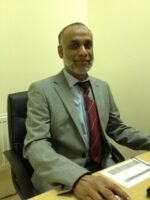
By Shafiqul Haque:
Bangladesh stands at an important economic crossroads. Over the past several decades, the country has achieved remarkable progress, lifting millions out of poverty and establishing itself as a major manufacturing and exporting economy. But the next phase of development will be considerably more demanding.
The challenges are now increasingly visible: shortages of gas and electricity, rising energy costs, persistent inflation, pressure on foreign-exchange reserves, weaknesses in the banking sector, high levels of non-performing loans, inadequate revenue mobilisation, subdued private investment and the continuing need to create productive employment.
These are problems that cannot be solved by political rhetoric alone. They require experience, technical competence, sound judgement and, above all, the courage to take difficult decisions.
It is in this context that Dr Reza Kibria, MP for Habiganj-1, deserves serious consideration as a national economic resource.
Why Dr Reza Kibria’s Experience Matters
Dr Kibria brings an unusual professional background to Bangladesh’s political landscape. He is not simply a politician who has developed an interest in economics. He has spent much of his professional life working in macroeconomics, fiscal policy and economic management at an international level.
His career has included substantial experience with the International Monetary Fund and advisory work with governments and international institutions. He has worked on macroeconomic and fiscal issues across different countries and has seen first-hand how governments confront difficult questions involving budgets, taxation, public expenditure, financial stability and economic reform.
That international experience is particularly relevant to Bangladesh today.
Economics is not an abstract exercise. Decisions about taxation, borrowing, subsidies, exchange rates, energy pricing and financial regulation ultimately affect the cost of living, employment, business investment and the prospects of ordinary families.
Bangladesh needs people who understand those connections.
Energy, Electricity and the Cost of Doing Business
Consider the country’s energy situation.
Bangladesh cannot sustain rapid industrial growth without reliable supplies of gas and electricity. Factories cannot operate efficiently when energy supplies are uncertain. Investors cannot make long-term commitments when production costs are unpredictable. And workers cannot have secure employment if industrial production is repeatedly interrupted.
The solution is not simply to produce more electricity or import more gas. Bangladesh must also make difficult decisions about pricing, subsidies, contracts, infrastructure, efficiency, domestic exploration and the wider fiscal burden of energy policy.
Every decision has consequences.
An internationally experienced macroeconomic policymaker can help examine these issues as part of an integrated economic strategy rather than treating them as isolated problems.
This is one area where Dr Kibria’s experience could be particularly valuable.
A Banking Sector Under Pressure
Perhaps even more fundamental is the condition of Bangladesh’s banking sector.
Weak governance, poor lending decisions and high levels of default have undermined confidence and restricted the ability of banks to perform their most important function: efficiently directing savings towards productive investment.
The scale of the problem is substantial. The World Bank reported that the non-performing loan ratio had reached 30.6 percent in December 2025 and warned that several banks had inadequate capital buffers.
This is not merely a banking problem. It is an economic problem.
When banks are weak, good businesses struggle to obtain finance. Investment falls. Entrepreneurs become cautious. Government resources may ultimately be required to deal with failing institutions, while ordinary depositors and taxpayers can ultimately bear the cost.
Reforming the banking sector will require technical expertise, transparency and political courage. It will also require confronting vested interests. This is precisely the kind of environment in which an independent and uncompromising policymaker can make a difference.
Inflation, Taxation and the Pressure on Ordinary People
For ordinary Bangladeshis, perhaps the most immediate economic issue is the cost of living.
Persistent inflation reduces purchasing power and makes everyday necessities more expensive. At the same time, the government must improve revenue collection, control public expenditure and protect vulnerable households without creating unsustainable fiscal pressures.
This is a difficult balancing act.
Bangladesh must improve tax collection without unnecessarily discouraging investment. It must maintain essential public services while improving efficiency. It must manage borrowing carefully while continuing to invest in infrastructure and human development.
There are no easy slogans that can substitute for competent economic management.
Investment and Jobs: The Next Great Challenge
Bangladesh also needs to revive private investment and create productive employment.
The country has a large and energetic workforce, but economic growth must translate into opportunities for young people. Businesses need access to finance, investors need confidence and domestic entrepreneurs need a predictable environment in which to operate.
Bangladesh needs investment in infrastructure, energy, technology, education and human capital. It needs stronger institutions and a regulatory environment that rewards productive enterprise rather than political connections.
This is where economic policy must move beyond managing today’s crisis and begin preparing for tomorrow.
His Vision Has Already Been Put Before Parliament
What makes Dr Kibria’s potential contribution particularly interesting is that his economic thinking is not simply theoretical. He has already begun to articulate his vision from the floor of Parliament.
During the 2026-27 budget debate, he raised fundamental questions about the health of Bangladesh’s banking system, revenue projections and the country’s reliance on borrowing. Drawing on his international experience, he highlighted the extraordinary scale of loan defaults and argued that the financial system was facing serious difficulties.
He also questioned whether government revenue targets were realistic and raised concerns about the consequences of excessive domestic borrowing.
These are not minor observations. They go directly to some of the fundamental economic problems Bangladesh faces.
His parliamentary interventions deserve to be examined not simply as political speeches, but as the beginnings of a potentially coherent economic policy approach.
Why Not Test That Vision?
This leads to an important question: why not test that vision?
If a parliamentarian with decades of international economic experience is proposing ideas about banking reform, public finance, revenue mobilisation and investment, Bangladesh should have the confidence to examine those ideas seriously.
Put them before economists, business leaders, civil servants and independent experts. Test the assumptions. Examine the numbers. Debate the alternatives. And where proposals are found to be sound, put them into practice.
This is how good policy should be developed.
Bangladesh does not need more economic debate for its own sake. It needs solutions that can withstand scrutiny and produce measurable results.
If Dr Kibria’s proposals can withstand rigorous examination, he should be given the opportunity to help implement them.
That could be through a national economic policy forum, a special reform commission, an advisory role or, ultimately, a key ministerial responsibility.
A Personal Perspective
I have known Reza Kibria personally for several decades. That gives me a perspective that goes beyond his professional CV.
I have always known him to be honest, straightforward and uncompromising when it comes to principle.
He is not someone who easily changes his position simply because doing so might be politically convenient. He speaks directly and is prepared to stand by his convictions.
In politics, these characteristics can sometimes make life difficult. But in economic policymaking, particularly during a period of serious reform, they can be valuable assets.
A country undertaking difficult banking reforms, restructuring subsidies, improving taxation or confronting vested interests needs people who are prepared to explain why difficult decisions are necessary and then stand behind them.
Technical expertise without integrity is insufficient. Political authority without economic understanding is equally dangerous.
The combination is what matters.
An Opportunity Bangladesh Should Not Miss
The argument is not that Dr Reza Kibria should be given a particular position simply because of his background or personal qualities.
The argument is that Bangladesh should make full use of the expertise available to it.
At a time of energy shortages, banking-sector weakness, inflation, fiscal pressure and inadequate investment, international economic experience is not a luxury. It is a national resource.
Having known Reza Kibria for decades, I believe he brings a rare combination of international economic experience, technical knowledge, honesty, independence and personal conviction.
His election from Habiganj-1 gives him a democratic mandate to serve his constituents. But his experience potentially gives him the ability to contribute to something larger: the economic future of Bangladesh.
The country is facing difficult choices. It needs people who understand those choices and are prepared to make them.
Dr Reza Kibria is one such person. His ideas have already been placed before Parliament. Now they deserve to be tested—and, if they prove sound, given the opportunity to be put to work for Bangladesh.
The writer is
Advocate Shafiqul Haque
Former Mayor of Tower Hamlets, Uk
Ex Solicitor, Senior Courts of England
Writer/Researcher/Political Analyst