Weekly Bangla Mirror | Bangla Mirror, Bangladeshi news in UK, bangla mirror news
By Matiar Chowdhury:
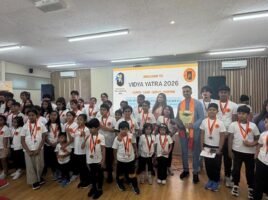
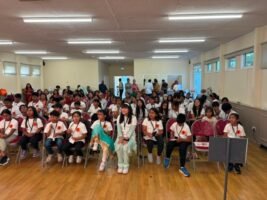
Approximately 70 Young people from across the community
came together on Sunday 6th September in Barkingside, London for Vidya Yatra
2026, a day-long youth programme designed to help the next generation explore
Hindu Dharma, strengthen their identity and develop confidence, leadership and a
spirit of seva. The day began with a welcome address from organiser Shuchishmita
Maitra (Auhona), followed by a recitation from the Bhagavad Gita by Shornil Maitra
(Shorgo). A live bhajan and aarti was then performed by Shantanu Das, Sparshiya
Das, Mr Subash Das, Shornil Maitra and Shuchishmita Maitra, bringing participants
together in prayer at the start of the programme. Children and young people took
part in a series of interactive activities. In “Who Am I? – Dharmic Edition”,
participants explored figures, traditions and festivals including Ram, Hanuman,
Saraswati, the Ganga, Holi and Diwali. They were encouraged to find out more about
their significance and present what they had learned to others, helping to build
confidence, independent thinking and public-speaking skills. Another activity, “Rishi’s
Mystery Box”, invited participants to identify Dharmic objects such as through touch
before discussing their meaning and significance within Hindu tradition.
The Khel and physical activity session was led by Mr Bikram Banerjee and Miss Ojasvi
Banerjee, engaging participants in a range of fun, energetic and interactive activities.
One of the major highlights of the programme was the return of Mr Dhruv Chhatralia
BEM as guest speaker. Dhruv ji, who also participated in last year’s Vidya Yatra,
delivered an engaging and thought-provoking session encouraging young people to
think more deeply about Hindu philosophy and to understand not only what they
believe, but why. He also spoke to parents about raising the next generation with
Dharmic values before leading the popular “Dharma Courtroom” session. Young
participants were invited to take the role of lawyers and debate different Dharmic
philosophical viewpoints, including the question of one God or many Gods. The
exercise encouraged them to think critically, construct arguments, listen to opposing
views and speak confidently in front of others. Dhruv ji concluded each debate with a
Dharma verdict, linking the different arguments back to the wider understanding and
philosophy of Sanatana Dharma.
The young people also took part in the Dharma Compass Game, where they were
presented with real-life situations and asked to decide which Dharmic principle
should guide their response. The four principles – Seva, Satya, Sangha and Shakti –
encouraged discussion about how Hindu values can be applied to everyday choices
and challenges. Participants then joined the Vidya Yatra Council: Charity Force,
where they were asked to consider what they would like to improve within their
community. The organisers plan to develop one of the strongest seva ideas from
this activity into a future youth-led community seva project, allowing the young
participants to take their discussion beyond the event and turn it into meaningful
action.
The day concluded with reflections and the collective prayer “Saraswati
Namastubhyam.” Participants were also invited to write a personal letter to Maa
Saraswati, sharing their hopes, aspirations and thoughts about the person they
would like to become in the future. The letters were placed in a Wish Box as a
symbolic reflection on knowledge, ambition and personal growth and will be returned
in the near future. Vidya Yatra 2026 aimed to show that learning about Dharma can
go beyond listening and memorising. By giving young people opportunities to
research, question, debate, speak, make decisions and propose community projects,
the programme placed them at the centre of their own Dharmic learning. The event
concluded with a strong message for the next generation: to remain rooted in
Dharma, confident in their identity, willing to question and learn, and ready to serve
the wider community.