Weekly Bangla Mirror | Bangla Mirror, Bangladeshi news in UK, bangla mirror news
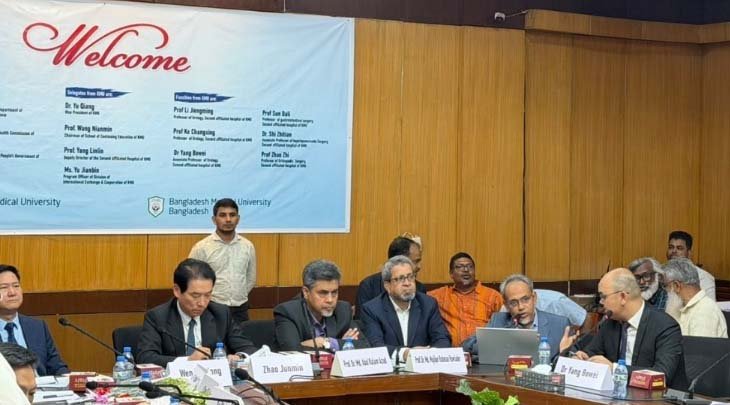
Photo: Courtesy
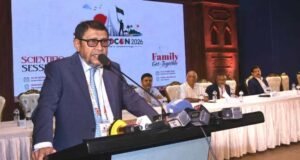
Bangladesh Medical University (BMU) has long been playing a key role as a major centre for higher medical education, specialised healthcare, physician training and medical research in the country, said Prof Dr Rafiqul Islam of the university’s Department of Urology.
He made the remarks while delivering a presentation on BMU’s role in medical education and healthcare and recent developments in Bangladesh’s medical sector during a bilateral meeting with Chinese delegates at the university.
A high-level delegation from the provincial government of China’s Yunnan and a delegation from Kunming University visited BMU as part of a three-day programme of scientific meetings and workshops.
Prof Dr Rafiqul, also the BNP’s Health Affairs Secretary, highlighted BMU’s history and contributions to postgraduate medical education, specialist physician training, clinical research and the development of modern treatment methods.
He said patients from different parts of the country seek treatment at BMU for complex and complicated diseases.
He also highlighted Bangladesh’s growing capabilities in treating complex and specialised diseases, organ transplantation, minimally invasive surgery, advanced diagnostic technologies and specialised healthcare.
Regarding recent progress in kidney transplantation, Prof Rafiqul said the country’s capacity and scope for kidney transplantation had been gradually expanding.
Advances in surgical techniques, multidisciplinary transplant care, modern immunosuppression and pre- and post-operative care had created new opportunities in kidney transplantation, he said.
He added that BMU had undertaken various initiatives to expand and modernise its kidney transplant services.
Prof Rafiqul further said the use of minimally invasive procedures, endourology, laparoscopic surgery and advanced surgical interventions in urology had increased in Bangladesh.
Skilled human resources, international training and knowledge exchange, and the use of advanced technologies were important to further developing the country’s healthcare system, he said.
He also highlighted opportunities for greater knowledge and technology exchange between Bangladesh and China, particularly in medical education, specialist physician training, kidney transplantation, advanced surgical technologies, medical research and specialised healthcare.
During the meeting, representatives of BMU and China discussed potential bilateral cooperation in medical education, research, training, advanced medical technology and healthcare.
Zhao Junmin, a member of the Standing Committee of the Communist Party of China, highlighted the longstanding friendly and cooperative relations between China and Bangladesh and expressed hope for greater cooperation in the health sector.
He said there were ample opportunities to share China’s achievements and experience with Bangladesh in healthcare, medical education, research, physician training and advanced medical technology.
Yu Qiang, vice-president of Kunming University, highlighted various aspects of the memorandum of understanding signed between Kunming University and BMU.
He said the MoU had created an important foundation for academic and institutional cooperation between the two institutions, including medical education, research, training, faculty and student exchanges, and other academic activities.
Prof Dr Md Abul Kalam Azad, vice-chancellor of BMU, highlighted the university’s role in higher medical education, specialised healthcare, physician training and medical research in Bangladesh.
He said there was scope for further developing medical education and healthcare in Bangladesh through knowledge, experience and technology exchange with Chinese universities and medical institutions.
Prof Dr Saiful Islam, chairman of BMU’s Department of Urology, moderated the event.
Both sides expressed hope for strengthening cooperation in medical education, research, training, advanced medical technology and specialised healthcare.