Weekly Bangla Mirror | Bangla Mirror, Bangladeshi news in UK, bangla mirror news


Ansar Ahmed Ullah:
Derek Cox, who died in December 2025 aged 82, spent more than half a century walking alongside young people and families in Brick Lane, Spitalfields and the wider East End. He never described himself as a hero or a leader. He described himself simply as a youth worker but to thousands, he was far more than that.
In a recorded interview in March 2006 with the Swadhinata Trust, at the age of 68 and still working full time, Derek reflected on a life shaped not by institutions but by presence, being there when people were frightened, unheard, or under attack.
Avenues Unlimited and the East End
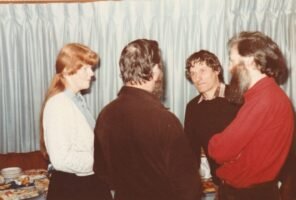
Derek was a central figure in Avenues Unlimited, a pioneering youth and community project based in Brick Lane from the early 1970s. Under his leadership, Avenues became one of the first organisations in Britain to employ a full-time Asian youth worker, Ashok Basu Dev, at a time when Bangladeshi families were only just beginning to settle in the area. As Derek recalled, the late 1970s were marked by fear and siege. The National Front openly sold newspapers outside the Avenues office on Bethnal Green Road. Racist violence was real and imminent. Rumours of attacks spread through newly arrived Bangladeshi households, many of them men living alone in overcrowded, unsafe housing. Derek did not see himself as someone who fought on barricades. Instead, he chose another form of resistance: “While some people were on the barricade, some went to play with the children… that really was mainly my function.” He protected young people through continuity and care, running play schemes, escorting families to court, writing letters for those who could not read or write English or Bengali, and ensuring that children were not left alone with fear.
Building Community, Stepping Back
One of Derek’s core beliefs, reiterated throughout his interview, was that genuine community work involved empowering people to manage their own affairs. He was instrumental in establishing the Montefiore Community Centre, which became a vital organising space throughout the 1980s. Many now-established organisations, including the Progressive Youth Organisation, began there. Derek served as vice-chair but insisted that leadership should come from the community itself. He worked closely with colleagues such as Caroline Adams, John Newbigin, and Clare Murphy, trusting strong workers, giving them freedom, and defending their independence. “If you get someone like Caroline, you don’t tell Caroline what to do. You let Caroline do things and tell you what she is doing.” That philosophy defined his leadership: trust, autonomy, and responsibility.
Youth Work as Life, Not Job
Derek entered youth work in 1961, after army service that took him across Asia and Africa and exposed him early to racism, colonial power, and inequality. From then on, youth work was not just his profession, it was his life. He organised residential holidays, camps, Lake District trips, and adventure programmes that many participants still remember decades later. He believed deeply in risk, challenge, and shared experience, long before “risk assessments” replaced trust. At times, the cost was personal. Derek spoke candidly about the breakdown of his marriage and about pouring himself into work, “I was a workaholic par excellence… I did a lot of things with other people’s kids.” Yet there was no bitterness in his reflection — only acceptance and a quiet pride in what those years achieved.
Faith and Belonging
After decades of close relationships with Muslim communities, Derek embraced Islam in 2002. His conversion was thoughtful, unforced, and deeply personal. He fasted before formally converting, studied multiple faiths, and made his decision privately before publicly declaring it at the East London Mosque. He later said people told him, “You’ve always been a Muslim — you just hadn’t embraced it.” His faith did not separate him from others; it deepened his sense of humility, discipline, and service. He prayed regularly, spoke openly about spirituality, and remained gently critical of institutions when they excluded women or young people.
A Witness to Change
Derek’s interview stands today as a historical record of Brick Lane before “Banglatown,” before regeneration, before erasure. He remembered a street of Maltese cafés, Jewish bakeries, Irish estates, rats in the malt piles of Truman Brewery, and families surviving in slum housing without toilets.
He saw communities clash, fracture, reorganise — and slowly rebuild. He never romanticised the past. He understood racism, fear, and failure clearly. But he also believed that patient, everyday work could change lives.
Legacy
When Derek died in 2025, he left no monuments — but he left people. Young men and women who found confidence because he believed in them first. Community leaders who learned to organise because he stood back. Children who were kept safe because he chose to sit with them rather than shout at the enemy. In his own words, he was “just” a youth worker. In truth, he was one of the quiet architects of modern Brick Lane.