Weekly Bangla Mirror | Bangla Mirror, Bangladeshi news in UK, bangla mirror news
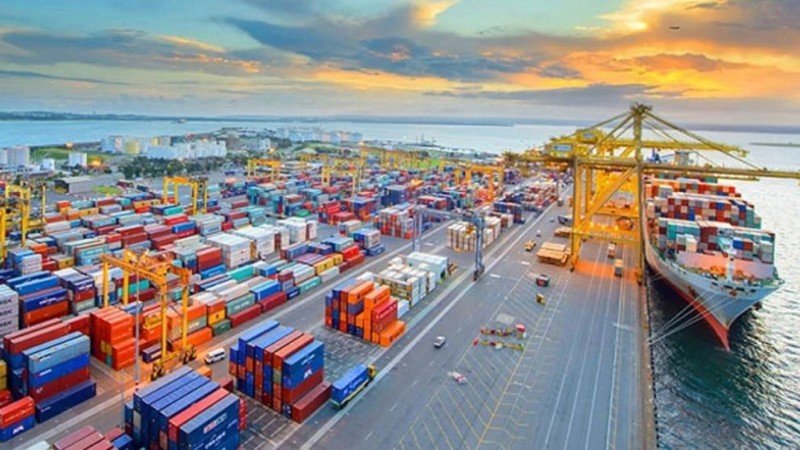
The impact of the reciprocal trade agreement (ART) signed with the United States has begun to show in Bangladesh’s import figures, with imports from the US more than doubling in the first four months of the year as part of efforts to reduce the bilateral trade gap.
Bangladesh’s imports from the US rose by 101 per cent year-on-year to Tk19,104 crore between January and April this year, compared with Tk9,535 crore during the same period last year, according to data from the National Board of Revenue.
In contrast, Bangladesh’s exports to the US increased by only 3.32 per cent during the period, reaching Tk35,462 crore.
Of the total imports from the US, around 38 per cent were made by state-run entities, including Petrobangla, the Directorate General of Food and national flag carrier Biman Bangladesh Airlines.
Market insiders said the sudden rise in imports was largely the result of commitments made by the interim government during negotiations over the Reciprocal Trade Agreement (ART) with the Office of the United States Trade Representative (USTR).
Negotiations reportedly began in mid-2025, and the agreement was signed on 9 February, just three days before the national election.
According to NBR data, 83 per cent of the import expenditure from the US during the four-month period was concentrated in just 10 products, with a combined import value of Tk15,884 crore.
The products include liquefied natural gas (LNG), liquefied petroleum gas (LPG), soybeans, wheat, cotton, iron and steel scrap, soybean oilcake and meal, aircraft engines, brewing waste and liquefied propane.
LNG topped the list, with Petrobangla importing Tk4,913 crore worth of the fuel. LPG imports followed at Tk3,105 crore.
Major importers of LPG included Omera Petroleum with Tk684 crore, Sun Gas with Tk507 crore and United Aygaz LPG with Tk442 crore.
Notably, Bangladesh had imported no LNG or LPG from the US during the same period a year earlier.
A similar trend was observed in wheat imports. While Bangladesh imported no wheat from the US in the corresponding period last year, it purchased Tk1,797 crore worth of wheat during the first four months of this year. Of that amount, the Directorate General of Food accounted for Tk1,670 crore.
Imports of US cotton, a key raw material for Bangladesh’s garment industry, rose by 44.6 per cent to Tk1,080 crore.
Aircraft engine imports also surged sharply, rising from Tk137 crore to Tk1,852 crore.
However, uncertainty remains over the future of the agreement.
On 20 February, the Supreme Court of the United States reportedly struck down former president Donald Trump’s reciprocal tariff policy.
Malaysia, which had signed a similar agreement, declared its deal ineffective on 16 March.
Following that development, Trump imposed a 10 per cent tariff under the Trade Act of 1974 and increased it to 15 per cent the following day.
However, on 7 May, a specialised federal court in New York ruled that the law could only be applied if the US was facing a major foreign exchange deficit, which it currently is not.
Under the ART agreement, Bangladesh has waived tariffs on nearly 4,500 US products, making it one of the country’s largest tariff concession initiatives in recent years.
Tariffs on another 2,210 products are set to be reduced gradually.
In return, the US has removed duties on 1,638 Bangladeshi products, including textiles, iron and steel, pharmaceuticals, chemicals and garments made from US cotton.
However, the Most Favoured Nation (MFN) tariff of around 16 to 17 per cent remains in place.
In addition, the US reduced reciprocal tariffs on Bangladeshi exports by one percentage point to 19 per cent. In April last year, Washington imposed a 37 per cent tariff on Bangladeshi goods, citing the bilateral trade imbalance.
Analysts have questioned whether Bangladesh’s interests were sufficiently protected in the agreement.
Former professor of economics at University of Chittagong Muinul Islam said concerns over an agreement signed just before the national election were natural.
“From what is known so far, Bangladesh’s gains appear limited, while the US stands to benefit much more,” he said.
He added that the agreement included minimum annual import obligations for agricultural goods, energy and industrial raw materials.
“As a result, Bangladesh may be compelled to import certain products even when domestic demand is low or prices are higher, which undermines the country’s own interests,” he said.
Masrur Reaz, chairman and chief executive of Policy Exchange, said the US used high tariffs as a strategic tool to increase its exports.
Since the US is Bangladesh’s largest export destination, Dhaka had to assure Washington that the commitments under the agreement would be implemented, he said.
He added that most of the imported products were essential commodities that Bangladesh had previously sourced from other countries and was now importing from the US instead.
“The impact of the agreement is undoubtedly visible,” he said.