Weekly Bangla Mirror | Bangla Mirror, Bangladeshi news in UK, bangla mirror news

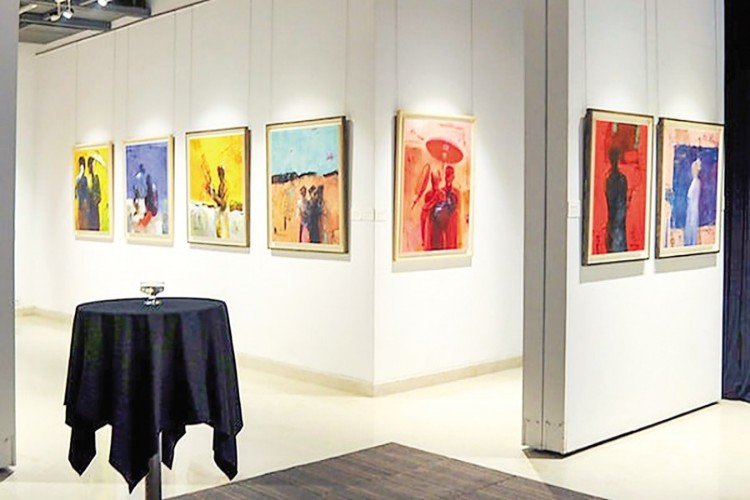
On the ground floor of the safeguarded enveloped Bay’s Edgewater building, resides a gallery home to emerging artists trying to solidify their aims of becoming the next generation of Ranabi or Kanak Chanpa Chakma. The gallery breathes life into the quiet aspirations of painters, sculptors, and mixed-media creators who yearn not just for recognition, but for resonance-art that reflects in the hearts of those who pause long enough to listen.
It would be a surprise to think of Dhaka as an uncatering city for artistic expression. Indeed, pockets of creativity thrive in the city’s alleyways, studios, and cultural hubs, defying the clamour of traffic and commerce with quiet confidence. However, for those politically divided by events in the city, the art exhibition serves as a platform for art to reach those who seek to curate and decorate their belongings.
In this sanctuary, politics momentarily recedes, replaced by lines, colours, and textures that speak a universal language of emotion and memory.
There is a computer storing every detail of the purchases made, from the date and price to the provenance and medium in the gallery. This meticulous record-keeping ensures that the legacy of each piece is honoured long after it leaves the gallery walls.
The store room stores frames, tools, shelves, racks, and cabinets-silent collaborators in the curation process, each item contributing to the seamless transition of art from studio to exhibition.
The lighting is thoughtfully calibrated through the glass doors, casting a gentle glow that enhances rather than overwhelms, allowing the pigments to shimmer with authenticity. And the architecture of the interior is masterfully designed in every corner and way, with clean lines and neutral palettes that never compete with the art but instead elevate it into the realm of the sublime.
The gallery is a successful host to exhibitions that attract people from all walks of life-students sketching in notebooks, diplomats in tailored suits, curious tourists, and lifelong collectors with discerning eyes.
Given the pricing of an artwork available for purchase in the gallery, a connoisseur will hardly be able to walk away.
The accessible yet dignified price points-starting at a flat 15,000 BDT-democratise art ownership without compromising on quality or vision.
The gallery is a space of multiple wonders. Not only does it soothe the mind with its design and interior, but it also offers artworks at a distinguished price rate starting at flat 15,000 BDT. It is extraordinary to find such a place present in Dhaka’s most upscale and vibrant zone.
One look at an artwork by artists like Ziaur Rahman or Anamuz Zahid will put the final nail in the coffin of decision-making. Their brushstrokes seem to hold secrets-of monsoon rains, of ancestral villages, of dreams deferred and rediscovered. Artist Ajoy Sannyal’s Shampan or Return to Home reminds us of Bangladesh’s beautiful landscapes, unique and distinctive, offering serenity and rendezvous in one.
The more captive ones, by comparison, are usually sold out-snapped up by patrons who understand that some visions are too rare to wait for. However much a buyer or collector strives, the artworks look as if they are as much a part of our life as we are theirs, and set the mise-en-scène of our togetherness in time, which otherwise fleet away into the unknown.
The wonders never cease as the shining lights over the display of art create a transformative experience, reminding one of the riverine rural rusticity of Bangladesh-of fishermen casting nets at dawn, of clay huts nestled between palm trees, of festivals where colour spills onto every surface.
Although affording a trip to Saint Martin’s Island is almost the same as arranging a trip to the neighbouring countries, one sight at Shampan or the Moon Boat series will fill the heart with peace. These works don’t merely depict places; they evoke states of being-calm, longing, nostalgia, belonging.
The art pieces speak, like the slow glide of a moonlit boat on the Buriganga, or the muted call of a distant rickshaw bell at dusk, the mind drifts into realms where silence speaks louder than form.
During Christmas Eve, winter lights twinkle above the manicured lobbies, casting a festive glow that harmonises with the gallery’s ambient serenity. At the building’s entrance, security envelops Edge Gallery, carving out a contemplative haven for art-safe, serene, and shielded from the city’s relentless pace.
Across its thoughtfully designed spaces, unfold a dynamic hide-and-seek play of light piercing through the glass-made divisions and separating the corners of the gallery’s floor in the daytime. Shadows shift with the sun, offering new perspectives on familiar works, ensuring that no two visits are ever quite the same.
The most recent exhibition, kicking off in October, celebrated emerging artists grouping up for a collective display. 9+ONE hosted the transition of time folding into art, where the future met the present in a dialogue of brush and canvas.
The event was a sequel to its first part, featuring nine new artists stepping into the present, while the eighteen from the first iteration remain as the “+ONE,” symbolising continuity and legacy.
The amalgamation of emerging and veteran artists in the exhibition Jolokabbo 5 featured artworks by 54 watercolourists, each interpreting the theme of water-its fluidity, memory, and necessity-with startling originality.
Experienced artists also host solo exhibitions in the gallery, their retrospectives drawing crowds eager to witness decades of artistic evolution in a single room.
Edge’s vision is to dissolve the distance between art and those who seek it. Through its digital platform, the gallery thoughtfully preserves and curates past exhibitions, offering connoisseurs a rich virtual archive that mirrors the care and intention of its physical space.
Artworks are meticulously organised by artist and genre, ensuring that the online experience resonates with the same depth, clarity, and inspiration as a visit to the physical gallery. Exhibitions like these have been a steadfast advocate for artists-nurturing creative voices, amplifying their work, and fostering meaningful connections between art and society.
Guided by a belief that culture shapes consciousness, the exhibition strives to weave art into our everyday life, enabling greater empathy, awareness, and imagination in the communities it serves.
In a world increasingly defined by haste and fragmentation, art stands as a gentle yet powerful reminder: that beauty endures, that stories matter, and that art-when given space and respect-can heal, challenge, and transform.