Weekly Bangla Mirror | Bangla Mirror, Bangladeshi news in UK, bangla mirror news

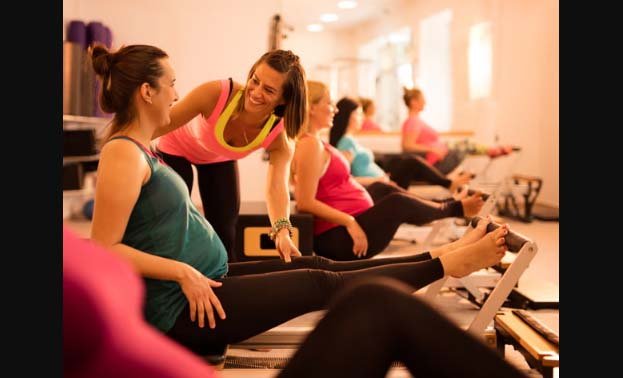
Ihave noticed something new in my London neighbourhood. Amid the sea of nail salons, vape shops and purveyors of fried chicken, sleek, opaque-fronted premises are popping up everywhere. There are several within 15 minutes of my home.
At weekends, you can spot clusters of devotees heading to these mysterious, vaguely aspirational temples of self-care, AKA reformer pilates studios. Many of these devotees conform to an aesthetic popularised on TikTok via hashtags such as #pilatesprincess. There is definitely a uniform: pink athleisure, Rhode phone cases and oversized pastel-coloured Stanley tumblers, jokingly referenced on Instagram as “emotional support” bottles. It is a trend that prompted New York magazine to run an article under the headline “Why Pilates Keeps Pissing People Off”: the workout has become inseparable from a very strict idea of womanhood.
Whatever the truth of that, it is certainly not putting people off. Pilates has occupied the top slot around the world for three consecutive years on fitness booking app ClassPass, which reported that bookings in 2025 were up 66% year on year. This represents big business. Together, the UK pilates and yoga market is worth £1.1bn. Thanks to celebrity endorsements, including from Margot Robbie, Dua Lipa and Bella Hadid, demand for all forms of pilates remains high. However, it is reformer pilates, which requires specialised studio equipment, that is the most popular. Data from applications made to the business insurance provider Protectivity between 2024 and 2025 revealed that applications from reformer pilates instructors showed the biggest rise across all startups, with applications up 948% year on year.
Kate Manfredi is a former fashion buyer who opened a reformer pilates studio in Nottingham last November. “I discovered mat pilates in my local village hall eight years ago,” she says. “It’s performed on the floor using your body weight for resistance. I liked it, but it was only when I plucked up the courage to go to a reformer studio in 2023 that I got really hooked.”
The reference to courage might sound odd to someone who has never ventured inside a reformer studio. Imagine an S&M dungeon crossed with a reject pile of contraptions from Dragons’ Den. Studios are filled with beds with bizarre-looking straps, pulleys and bars. The equipment uses adjustable spring resistance to provide a core workout. It is a nightmare for an uncoordinated person like me, who struggles to follow instructions and also confuses their left and right. After doing mat pilates for years, I did give it a go at my local gym but I couldn’t keep up with what was going on in a packed class.
“Reformer looks intimidating, with all the equipment that you have no idea how to use,” says Manfredi. “You think everybody else in the class is going to know what they are doing. Everything on Instagram is about looking perfect, little crop tops and tiny bodies. I wanted to create a welcoming space for women who feel they have a normal body and average fitness and maybe haven’t exercised for years. I have 100 members and only three are men. I think the appeal for women is you see great results without having to exercise in a space with a load of gym bros.”
So what’s driving the boom? A big selling point is the idea that pilates has a quasi-miraculous power to transform your body and posture without the need to break much of a sweat. Its inventor, Joseph Pilates, claimed: “In 10 sessions, you’ll feel the difference; in 20 sessions, you’ll see the difference; and in 30 sessions, you’ll have a whole new body.” It’s that promise of a new body that is driving countless pilates challenges on social media.
A German circus performer and boxer, living in the UK during the onset of the first world war, Pilates wasn’t an obvious candidate for a fitness influencer. However, when he was deemed an “enemy alien” and sent to an internment camp on the Isle of Man in 1915, he invented “contrology”, a sequence of repetitive movements across mat and apparatus that allowed people to stay fit in a confined space.
He invented a number of contraptions to stretch and strengthen the body, including the Spine Corrector, Ladder Barrel, Wunda Chair and Ped-O-Pul. A possibly apocryphal tale has it that his earliest attempt at the reformer machine was created by attaching springs to the prison’s hospital beds so that patients could tone their muscles even when injured. Pilates targets deep core muscles to protect the spine, crucial for improving balance, avoiding injury and reducing back pain.
Manfredi witnessed her own transformation. “From mat pilates, I started to build core strength and I could see my abdominals for the first time. But it was reformer that changed the shape of my legs and arms and toned everything up. It’s working against the resistance of the equipment that gives you that.”
It was the lure of changing her physique that led Megan Macgregor, an early adopter of pilates, to give it a try in 2000. Now a studio owner, teacher and qualified physiotherapist based in Renfrew, Scotland, she used to work in Sydney as an intellectual property lawyer. “I’d noticed celebrities such as Madonna and The Matrix star Carrie-Anne Moss crediting pilates with transforming their bodies. They looked astonishing, and I thought, well, I’d like to look astonishing too. The studio I went to wasn’t anything flash but it was run by an eminent teacher, Cynthia Lochard, a former dancer with New York City Ballet. They had all these strange bits of equipment. As soon as I left the first session I felt taller. I didn’t look different, but I felt different.”
Soon, Macgregor was a convert. She started eating more healthily and joined another studio that offered yoga as well as pilates, and ended up attending four classes a day. “I got totally sucked into what I looked like. After a year, I was featured in a glossy magazine showing my transformation.” Perhaps inevitably, she decided to train as a teacher. In 2017, she moved back to her native Scotland and opened her studio, where she teaches pilates and yoga. She is also on the board of the Pilates Teacher Association (PTA).
The PTA is on a mission to protect the public from potentially under-qualified teachers and to preserve the pilates method from being changed out of all recognition. It recently issued a statement voicing concerns about the way reformer pilates is being taught. “A critical distinction must be made between highly qualified comprehensive pilates teachers and those offering limited or misclassified services, such as … reformer fitness.”
Macgregor says: “I think a lot of people go to a reformer studio or to a mat class without being taught the method. They do all the exercises and then get a sore neck. That’s if they’re lucky. If they’re not lucky, they end up putting their back out and come and see me as a physio. I run courses to introduce people to the method.”
Macgregor stresses that pilates is really about helping people to move with control and precision. She says it gives people a framework for moving well and often, whether that is in day-to-day exercise, their chosen sport, or rehabilitation.
It is easy to forget, amid the froth of pilates marketing, that one of its most useful applications is in recovery from injury. Angelina Nizzardi is a Bedfordshire-based health coach. She started pilates after a devastating climbing accident in 2020 in Italy. “I was half an hour from base camp and I slipped sideways on some loose gravel. It was a sheer drop to my right so I twisted to stop my body from going over the edge, but in the process lost my footing and fell. A helicopter had to winch me to safety.”
Her left leg and foot were shattered in multiple places and after surgery in Rome, she returned to the UK for rehab. She was told that she was unlikely to walk normally again. “I was determined to prove them wrong. A friend offered me a free pass to a reformer studio. I never looked back. It’s been incredible and I can now walk unaided.” Nizzardi credits her recovery purely to pilates. A systematic review, published in 2017, of 23 studies looking at the effectiveness of pilates found that 19 of them had shown it was a beneficial rehabilitation tool.
Nizzardi explains how reformer pilates helped her to build strength back into her muscles without weight-bearing exercise. “There had been severe muscle wastage in my calf and thigh. As soon as I started this, the strength started to come back. It was so encouraging. The only thing is it was really expensive, £25 a class. I just managed to afford to do it three times a week. Luckily, our local authority gym installed an affordable reformer studio and then I was able to go every other day.”
Although she still has extreme stiffness in her leg in the morning, after a class the effect is immediate. “I can flex and bend my leg. The classes at my original studio were very small. I think you do need a high level of attention if you’ve got an injury. It might all sound like a fad but it’s been a complete life-saver for me.”
Someone else who has seen the rehab benefits of reformer pilates is Carolina Are, an academic and professional pole dancer. “Pole dancing is quite a high-impact activity. My osteopath advised me to start cross-training because I had problems with my knees and my back. I started integrating pilates into my workouts and it has been a gamechanger. It changed my posture and reduced my lower-back pain. The training of both sides of the body equally and building strength and flexibility has also been really helpful in balancing my body out.”
Are attends classes at a studio in Hackney, east London, once a week. She says it took her a few attempts to find the right place. “Some studios are full of people taking selfies, which isn’t a vibe I like. They’re only going there to show off.”
She is uniquely qualified to comment on the impact of social media because, by day, she is a fellow at the London School of Economics where her area of research is social media and online harm. “All sorts of people attend my studio – elderly men, pregnant women, people of all backgrounds, gender identities, race and age. Yet the type of person you see doing pilates online tends to be a very thin, white woman. My research showed how algorithms tend to discriminate in the way that they make certain people more visible. If you are a plus size, if you have a disability, you’re not going to be recommended to people’s feeds as much as the cisgender white person. So that’s why the hashtag #pilatesprincess is so dominant.”
There are signs, too, that this idealised aesthetic has filtered into the manosphere-adjacent space. Earlier this year, a Love Is Blind contestant sparked outrage when he broke up with a 39-year-old doctor with the body-shaming comment that he prefers “women who do pilates every day”. Similar sentiments are to be found on TikTok, such as one video saying: “The biggest green flag by far for a girl is if she goes to pilates. Every single pilates girl I’ve ever met is wifey material. I don’t know what it is about pilates but it’s one of the most wholesome things a girl can do.”
Are says: “It’s sinister, these manosphere-type individuals stating that the pilates body is the ideal woman’s body. It’s not up to men to say what a woman’s body should look like. And all this discourse around the body takes away from the benefits of pilates.”
Rosey Davidson, a sleep consultant, agrees, and blames social media for promoting unrealistic expectations. As an influencer with an Instagram following of 380,000, she has been offered free sessions by studios. “I’ve seen loads of influencers posting from these studios. They give pilates a glamorous image and promote this myth that reformer will stretch you out and magically give you longer limbs. I mean, that’s not how basic biology works, is it?”
I, too, have read the suggestion that pilates will somehow create muscle elongation and sculpt slender, defined limbs without adding bulk. Is this likely, or even possible? I put the question to Stuart Gray, professor of muscle and metabolic health at the University of Glasgow. “If what people mean by that is that you can get leaner, ie build some muscle and lose some fat, then, yes, that is possible, but it’s not a particular benefit of reformer pilates per se. You could get broadly comparable benefits from other forms of exercise (Bodypump, resistance training, swimming etc). But, if you like reformer pilates, then go for it. The best form of exercise is the one you will do and stick to. So if the hype helps keep people motivated, then this is not a bad thing necessarily. But there is nothing particularly special about it.”
Try telling that to the hordes of people heading to a new studio that has opened near me. The window is emblazoned with motivational slogans and details of bargain pricing for classes available 365 days a year. Intrigued as to how it could find teachers willing to work on Christmas Day, let alone customers, I checked it out online. Turns out the reason it can make such tempting offers is simple – there are no instructors. In fact, there are no staff onsite at all. Instead, in a dystopian twist, users swipe in to be met by a row of beds facing giant screens. Participants follow along to video modules and audio cues, finding their own way. Pilates must be spinning on his Wunda Chair.