Weekly Bangla Mirror | Bangla Mirror, Bangladeshi news in UK, bangla mirror news

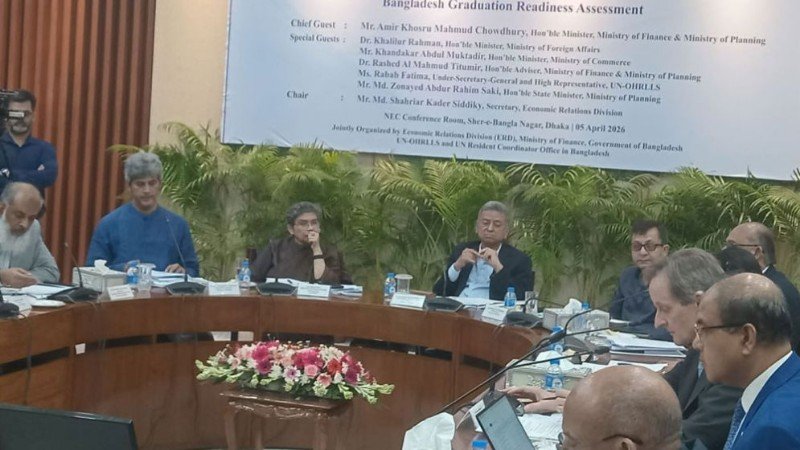
Bangladesh is not yet fully prepared to graduate from the list of Least Developed Countries (LDCs), Finance and Planning Minister Amir Khasru Mahmud Chowdhury has said.
He warned that mounting economic pressures and structural weaknesses could complicate the transition.
Speaking to reporters after a multi-stakeholder consultation at the NEC Conference Room in Sher-e-Bangla Nagar on Sunday (5 April), the minister identified rising external debt, increasing domestic liabilities, and reliance on high-interest borrowing as major risks facing the economy.
The remarks followed the presentation of an independent assessment by UN-OHRLLS, which reviewed Bangladesh’s readiness for graduation.
“Given the current economic realities, we are not fully prepared yet,” the minister said, adding that gaps in financial management and institutional capacity remain key concerns.
He cautioned that prolonged global disruptions-particularly in energy markets and supply chains-could have lasting consequences for the economy. The effects, he noted, would extend beyond the energy sector to essential goods, adding pressure to inflation.
“Energy prices have increased significantly worldwide. Bangladesh is trying to absorb the impact, but sustaining this over the long term will not be possible,” he said.
The government, he added, is seeking to avoid sudden financial shocks for citizens. However, continued fiscal support-especially through energy subsidies-could ultimately translate into higher costs for consumers if pressures persist.
Describing the current situation as one of “managing daily pressures,” the minister said most macroeconomic indicators are under strain. Efforts are underway to stabilise the economy, but rising import dependence, global price volatility, and subsidy burdens are intensifying fiscal challenges.
To support a smooth transition, he emphasised the need for structural reforms and stronger institutions. “We are working to build a resilient economic foundation through coordinated policy actions,” he said.
The minister also noted that Bangladesh has the option to defer its LDC graduation timeline, providing additional time to strengthen key economic indicators. If reforms are implemented effectively during this period, graduation could become both achievable and sustainable.
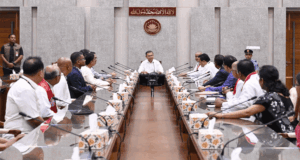
The consultation was attended by senior policymakers, including Foreign Minister Dr Khalilur Rahman, Commerce Minister Khandaker Abdul Muktadir, economic adviser Dr Rashed Al Mahmud Titumir, and UN Under-Secretary-General Rabab Fatima.