Weekly Bangla Mirror | Bangla Mirror, Bangladeshi news in UK, bangla mirror news
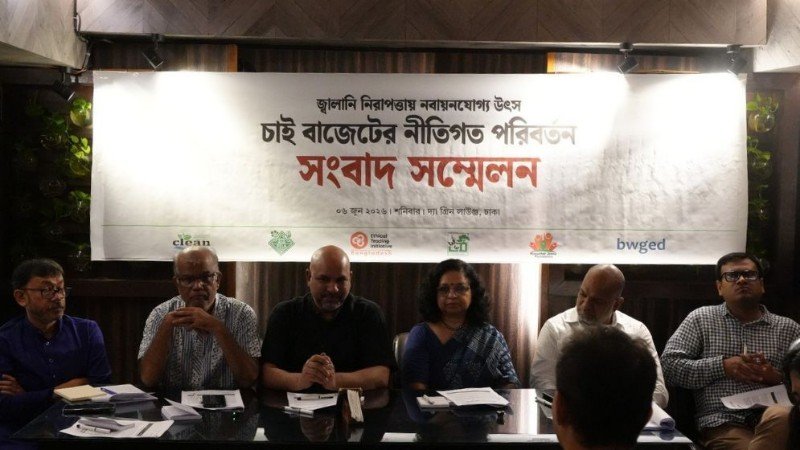
Civil society organisations (CSOs) have urged the government to introduce major tax reforms and establish a Tk25,000 crore green financing facility in the upcoming national budget to accelerate renewable energy development and strengthen Bangladesh’s energy security.
Speaking at a press conference titled “Renewable Energy for Energy Security: Policy Shifts Needed in the National Budget” in Dhaka on Saturday, energy experts, environmental leaders, and civil society representatives said Bangladesh risks remaining trapped in costly fossil fuel imports, rising power generation costs, and economic vulnerability without decisive policy changes.
The event was jointly organised by the Coastal Livelihood and Environmental Action Network (CLEAN) and the Bangladesh Working Group on Ecology and Development (BWGED), with co-organisers including the Bangladesh Environmental Lawyers Association (BELA), Ethical Trading Initiative Bangladesh, Lawyers for Energy, Environment and Development (LEED), and Manusher Jonno Foundation.
The speakers called for reducing all taxes, duties, and VAT on renewable energy equipment to a symbolic 1% for the next decade, arguing that the current tax burden of 27% to 61% is discouraging investment in clean energy technologies.
They also proposed the creation of a Tk25,000 crore revolving fund under the Bangladesh Bank to provide low-interest financing of less than 5% for renewable energy projects.
According to the speakers, Bangladesh currently has only 1,679MW of installed renewable energy capacity, including hydropower, despite having an estimated combined solar and wind energy potential of around 132,000MW.
They noted that renewable energy taxes contribute less than 0.05% of total government revenue, while each megawatt of solar power can save approximately Tk31.1 million annually in fuel imports and reduce carbon emissions by around 1,180 tonnes.
The CSOs also recommended introducing rooftop solar subsidies of at least Tk25,000 per kilowatt, with additional support for women-led and indigenous community projects.
Other proposals included mandatory battery energy storage systems in new utility-scale renewable projects, activation of corporate power purchase agreements, and the introduction of a progressive carbon tax.
CLEAN Chief Executive Hasan Mehedi said continued dependence on imported fossil fuels would deepen economic instability and increase exposure to global fuel price shocks.
“Renewable energy must be prioritised in the upcoming budget through tax reform, financial incentives, and strategic policy support,” he said.
Bangladesh Sustainable and Renewable Energy Association (BSREA) President Mostafa Al Mahmud said that investment in renewable energy was essential to ensure an uninterrupted power supply, support industrial growth, and create employment opportunities.
LEED Research Director Shimonuzzaman added, “The gap between renewable energy targets and actual investment remains significant. Without strong fiscal and policy support, the energy transition will not be achievable.”
ETI Bangladesh Director Munir Uddin Shamim stressed the strategic importance of energy sovereignty. He said, “Energy sovereignty is now inseparable from national sovereignty. The upcoming national budget must reflect election commitments by prioritising renewable energy expansion.”
The speakers warned that continued policy support for fossil fuels, coupled with limited incentives for renewables, would increase electricity generation costs, put pressure on foreign exchange reserves, and undermine the country’s climate commitments.
They stressed that scaling up domestic renewable energy could reduce dependence on imports, create jobs, strengthen economic resilience, and support Bangladesh’s long-term energy security goals.