Weekly Bangla Mirror | Bangla Mirror, Bangladeshi news in UK, bangla mirror news
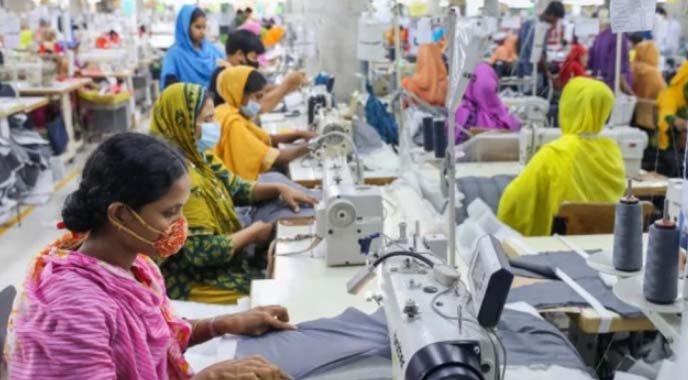
Collected Photo
Rapid advances in artificial intelligence (AI), automation and technology-driven production could put nearly 1.22 million jobs in Bangladesh’s ready-made garment (RMG) industry at risk, with women expected to bear the brunt of the disruption, according to a new report by the Centre for Policy Dialogue (CPD).
Released on Wednesday, the report warns that unless Bangladesh adopts comprehensive policy measures, technological transformation could significantly reshape the country’s labour market over the next two decades.
It estimates that around 60 per cent of women employed in the RMG sector could lose their jobs by 2041.
The findings were presented by Dr Towfiqul Islam Khan, Research Director at CPD, during a virtual webinar titled ”Changing Nature of Work: Foresight on the Future of Work in the Global South.”
Labour Market Under Pressure
According to the report, Bangladesh is entering a critical phase as it prepares for graduation from the Least Developed Country (LDC) category while simultaneously confronting the growing impact of automation, AI, the digital economy, climate change, and shifts in global trade patterns.
CPD estimates that approximately 1.3 million jobs disappeared in Bangladesh in 2024, with nearly 90 per cent of those losses affecting women workers.
Dr Khan said policymakers are struggling to keep pace with the rapidly changing employment landscape. He noted a significant mismatch between the skills produced by the country’s education system and those demanded by the labour market.
Currently, less than 20 per cent of secondary-level students are enrolled in Technical and Vocational Education and Training (TVET), while public spending on education and skills development remains only 1.3 per cent of GDP, limiting the country’s ability to prepare workers for future employment.
Structural Challenges
CPD Distinguished Fellow Dr Debapriya Bhattacharya said the global labour market is undergoing a profound transformation, driven by AI and automation.
He attributed Bangladesh’s policy challenges to institutional legacies as well as persistent mismatches between labour market demand and workforce skills. Geographic disparities and shortages of skilled workers have further complicated the transition, he added.
The report notes that while manufacturing output has continued to grow, employment in the sector has remained largely stagnant at around 8.1 million workers. Meanwhile, the services sector employs roughly 25 million people, but much of that employment remains informal, insecure, and characterised by low productivity.
Global Trends and Bangladesh
Citing projections by the World Economic Forum, the report says AI and automation are expected to create 11 million new jobs globally by 2030, while simultaneously eliminating around 9 million existing jobs. As a result, countries’ future competitiveness will depend largely on how effectively they adapt their workforce to technological change.
CPD analysed 27 national and global drivers of change to develop four possible labour market scenarios for 2035. Across all scenarios, the report identifies five common trends:
Digitalisation will be irreversible.
Employment will increasingly shift toward higher-value service sectors.
Skills development systems will continue to lag behind market demand.
Global economic shocks will remain a persistent risk.
Success will depend largely on the strength and effectiveness of state institutions.
Policy Gaps
The report identifies four major weaknesses in Bangladesh’s current policy framework:
No comprehensive legal or institutional framework for platform and gig economy workers.
Insufficient consideration of automation’s impact in labour and industrial policymaking.
Skills development programmes that fail to reflect actual labour market demand.
A lack of clear implementation roadmaps for most employment-related policies.
CPD Recommendations
To address the emerging challenges, CPD recommends a series of reforms, including:
Modernising technical and vocational education based on industry demand.
Introducing lifelong reskilling and upskilling programmes.
Linking industrial incentives to employment generation.
Increasing investment in education and workforce development.
Establishing a comprehensive Labour Market Information System (LMIS).
Expanding social protection for platform and gig economy workers.
Adopting inclusive employment strategies for women, youth, and persons with disabilities.
A Critical Juncture
CPD concludes that Bangladesh’s labour market stands at a pivotal moment. Without building a future-ready workforce, implementing effective labour market reforms, and demonstrating sustained political commitment, the country may struggle to convert future economic growth into sustainable and inclusive employment in the age of artificial intelligence and automation.