Weekly Bangla Mirror | Bangla Mirror, Bangladeshi news in UK, bangla mirror news

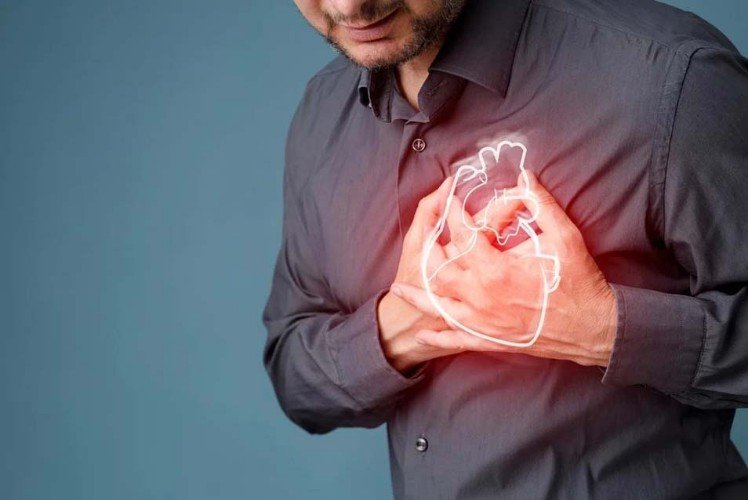
An artificial intelligence system co-developed by researchers at Mohamed bin Zayed University of Artificial Intelligence can predict who is at risk of dying from heart disease up to 12 years in advance — by analysing just two weeks of blood sugar data.
Published recently in Nature, the study was co-led by MBZUAI Professor Eran Segal. It shows that continuous glucose monitors — small wearable devices commonly used by people with diabetes — can detect hidden health risks years before symptoms appear.
The AI model, called GluFormer, identified 69 per cent of cardiovascular deaths within its highest-risk group, while recording zero deaths in the lowest-risk group.
“Traditional blood tests act like a single still frame,” Segal said. “GluFormer analyses the entire feature film of your metabolic life.”
The system tracks glucose readings every 15 minutes, capturing subtle patterns that one-off blood tests routinely miss.
Describing ‘risk trajectories’
The timing of the research is especially relevant to the UAE. In an earlier report by Khaleej Times, RAK Hospital noted that nearly 40 per cent of adults and 40 per cent of children in the UAE are affected by obesity, contributing to a rise in chronic conditions such as diabetes, heart disease, and cancer.
GluFormer was trained on more than 10 million glucose measurements collected from 10,812 participants, most of whom did not have diabetes. Rather than focusing on isolated readings, the AI learned to detect what researchers describe as “risk trajectories” — patterns that show how the body manages energy during daily life, including after meals and during sleep.
“By watching the entire metabolic movie instead of a single snapshot, we can see which direction someone’s health is moving in,” Segal explained. Based on these patterns, the system grouped individuals by risk. Over the 12-year period prediction, the contrast was stark: the most resilient group recorded no cardiovascular deaths, while the highest-risk group accounted for nearly seven in ten deaths, despite appearing stable in standard blood tests.
The analysis also revealed limitations in existing diagnostic tools. Forty per cent of participants classified as “normal” using traditional fasting glucose tests showed glucose patterns consistent with prediabetes when monitored continuously. “Even if a single snapshot looks fine, the broader metabolic picture can tell a very different story,” Segal said.
Fast, accurate predictions
For predictive accuracy, participants needed to wear a glucose monitor for just 10 to 14 days. From that short window, the AI generated personalised risk forecasts. In comparative testing, GluFormer outperformed HbA1c — the current clinical standard — at predicting which prediabetic individuals would go on to develop diabetes, identifying 66 per cent of future cases.
Beyond cardiovascular risk, the model was also able to forecast indicators related to visceral fat, kidney function, liver health, and lipid profiles several years in advance, based solely on glucose dynamics. “These patterns reflect much more than sugar,” Segal noted. “They offer a high-resolution picture of overall metabolic health.”
A more advanced version of the system integrates dietary data alongside glucose readings, allowing researchers to simulate how specific foods affect individual metabolism. When meal data was included, prediction accuracy around eating patterns improved for more than 90 per cent of participants.
The long-term vision involves creating a “digital twin” of a person’s metabolism — a virtual model that can simulate how lifestyle changes might alter future health outcomes. However, Segal stressed that widespread clinical use is still some distance away. “The science is validated, but healthcare systems today are still built around snapshot-style testing,” he said.
Adopting such technology would require further clinical trials and new hospital infrastructure capable of handling continuous data streams. Because the UAE is directly involved in this research, Segal said local institutions are well positioned to participate in future validation studies as predictive medicine moves closer to real-world use.