Weekly Bangla Mirror | Bangla Mirror, Bangladeshi news in UK, bangla mirror news

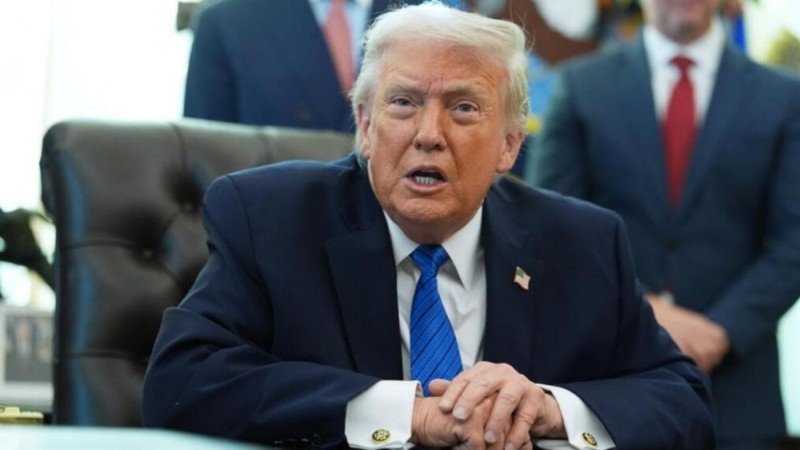
The US and Iran have agreed to hold talks in Oman on Friday (February 6) officials for both sides said, even as they remained at odds over Washington’s insistence that negotiations include Tehran’s missile arsenal and Iran’s vow to discuss only its nuclear program.
The delicate diplomatic effort comes amid heightened tensions as the US builds up forces in the Middle East and regional players seek to avoid a military confrontation that many fear could escalate into a wider war.
Differences in recent days over the scope and venue for the talks have raised doubts whether the meeting would take place, leaving open the possibility that US President Donald Trump could carry out his threat to strike Iran.
What does the US want?
All US administrations ultimately have the same goal – for Iran to not have a nuclear weapon.
Trump has said as much, several times.
Former US diplomat, Alan Eyre, who was part of the nuclear negotiating team from 2010-2015 told Reuters, that the strategy to reach that goal has changed and that after the Iran-Israel attacks in June 2025, “the US negotiating position got more maximalist”.
Iranian sources told Reuters last week that Trump had demanded three conditions for the resumption of talks: zero enrichment of uranium in Iran, limits on Tehran’s ballistic missile programme and an end to its support for regional proxies.
Trump, warned on Monday (February 2) that “bad things” would probably happen if a deal could not be reached with Iran.
What Iran Wants
Iran has long said all three US demands are unacceptable infringements of its sovereignty, but two Iranian officials told Reuters its clerical rulers saw the ballistic missile programme, rather than uranium enrichment, as the bigger obstacle.
An Iranian official said there should not be preconditions for talks and that Iran was ready to show flexibility on uranium enrichment, which it says is for peaceful, not military purposes.
In June, the United States struck Iranian nuclear targets, joining in at the close of a 12-day Israeli bombing campaign and Iran struck back at Israel with missiles and drones.
Iran said it replenished its missile stockpile after the war with Israel last year, warning it would unleash its missiles if its security is under threat.
“Iran is strategically the weakest it’s ever been,” Eyre said.
“It’s very concerned that if it shifts its historic red lines even a little… that will be like chum in the water, attracting more and more sharks,” he added.
Iran also hopes for an agreement that could help lift Western sanctions over its nuclear programme that have ravaged its economy – a major driver of last month’s unrest.
“But I think Iran takes it as an operating assumption, they’re not going to get that from this US,” Eyre said.
“Iran is seeking to enter negotiations in the hopes of forestalling or preventing a US military attack.”
How does this differ from Venezuela?
In January, the United States captured Venezuelan President Nicolas Maduro in an audacious raid and whisked him to New York to face drug-trafficking charges.
As part of the dramatic overnight operation that knocked out electricity in parts of Caracas and included strikes on military installations, US Special Forces captured Maduro in or near one of his safe houses, Trump said. Maduro and his wife, Cilia Flores, were transported to a US Navy ship offshore before being flown to the US
In Venezuela, the US was able to achieve something by removing just Maduro, which wouldn’t be possible in Iran by removing Supreme Leader Ayatollah Ali Khamenei, according to Eyre.
“We saw this when, during last year’s Israel-Iran war, Israel assassinated almost all of the top military leadership of Iran. Iran just replaced them.”
He said it’s likely a replacement would be found for Khamenei.