Weekly Bangla Mirror | Bangla Mirror, Bangladeshi news in UK, bangla mirror news
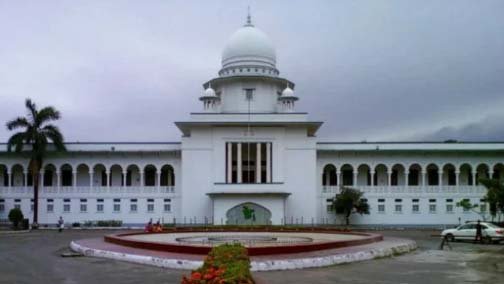
Supreme Court. Photo: Collected
The Appellate Division of the Supreme Court today (9 July) upheld the High Court verdict that declared several provisions introduced through the Constitution’s 15th Amendment illegal, including the abolition of the caretaker government system.
The five-member bench of the Appellate Division, headed by the chief justice, delivered the verdict this morning, dismissing the appeals challenging the High Court judgment.
Following the verdict, Attorney General Ruhul Quddus Kazal said that the Appellate Division of the Supreme Court had dismissed the appeal against the High Court’s ruling, thereby upholding the earlier judgment.
He said, “The High Court’s decision remains in force. As a result, the authority to repeal Article 7B of the Constitution, reinstate the caretaker government system and the referendum, and enforce fundamental rights will remain exclusively with the Supreme Court, in line with the High Court’s ruling.”
The attorney general added that the High Court had also ruled that Parliament should decide on the other amendments introduced through the 15th Amendment to the Constitution.
Following the verdict, at a media briefing Lawyer Shishir Manir said that the Appellate Division had upheld the High Court’s ruling.
As a result, the four provisions that the High Court had declared unconstitutional under the 15th amendment remain unconstitutional.
He said, “All other issues arising from the amendment have been left for Parliament to decide.”
“The first of the four provisions concerns Articles 7A and 7B of the Constitution. These articles stipulated that certain constitutional provisions could not be amended and that any attempt to alter them would amount to constitutional treason. The High Court had ruled these provisions unconstitutional, and the Appellate Division has upheld that finding,” Shishir Manir added.
He also said the High Court had restored the constitutional provision for holding referendums.
“The Appellate Division’s judgment means that the referendum provision has now been reinstated,” he added.
He further said that the High Court had struck down the amendment that empowered lower courts to hear writ petitions under Article 44(2) of the Constitution.
“The Appellate Division upheld that ruling, meaning only the High Court Division will retain jurisdiction to hear writ petitions,” he added.
“The fourth issue concerns the caretaker government system.”
Manir said that the 15th amendment had abolished the caretaker government provisions, but the High Court declared that abolition unconstitutional.
“The Appellate Division has upheld that decision, removing any constitutional obstacle to the restoration of the caretaker government system,” Manir added.
He further that matters relating to state policy and constitutional principles including the Preamble and Articles 8, 9, 11, 12 and 25 have been left entirely to Parliament.
He said this significantly increases Parliament’s responsibility, adding that it will now be for lawmakers to determine how to proceed with constitutional reforms, including those proposed under the July Charter.
“Apart from the four issues settled by the courts, all remaining constitutional questions have effectively been left open for Parliament to address,” Shishir Manir added.
According to him, the judgment means that four key provisions have been declared unconstitutional while all remaining matters have been left to the discretion of the National Parliament.
The 15th Amendment was passed by the Jatiya Sangsad on 30 June 2011 and received presidential assent on 3 July 2011.
The amendment abolished the caretaker government system, granted constitutional recognition to Sheikh Mujibur Rahman as the Father of the Nation, increased the number of reserved parliamentary seats for women from 45 to 50, restored secularism and freedom of religion, and reinstated nationalism, socialism, democracy and secularism as the fundamental principles of state policy.
It also classified the unconstitutional seizure of state power as treason punishable by the maximum penalty and amended the constitutional provision on parliamentary elections by requiring polls to be held within the 90 days preceding the expiry of parliament’s term instead of within the 90 days following its dissolution.
In August 2024, five eminent citizens, including Badiul Alam Majumdar, filed a writ petition before the High Court seeking the annulment of the amendment. On 19 August that year, the High Court issued a rule asking why the amendment should not be declared inconsistent with the Constitution.
Later, BNP Secretary General Mirza Fakhrul Islam Alamgir, Jamaat-e-Islami Secretary General Mia Golam Parwar, Gono Forum and several individuals and organisations joined the proceedings as interveners. Freedom fighter Md Mofazzal Hossain also filed a separate writ petition.
Following hearings, the High Court on 17 December 2024 struck down several provisions, including those abolishing the caretaker government system, Articles 7A and 7B, Article 44(2) relating to enforcement of fundamental rights, and the repeal of the referendum provision under Article 142.
Badiul Alam Majumdar and others, Md Mofazzal Hossain, and Mia Golam Parwar subsequently sought leave to appeal. Counsel for the petitioners argued before the Appellate Division that the 15th Amendment should be annulled in its entirety.
Today’s verdict upholds that ruling and brings back key constitutional provisions that had been removed under the amendment.