Weekly Bangla Mirror | Bangla Mirror, Bangladeshi news in UK, bangla mirror news

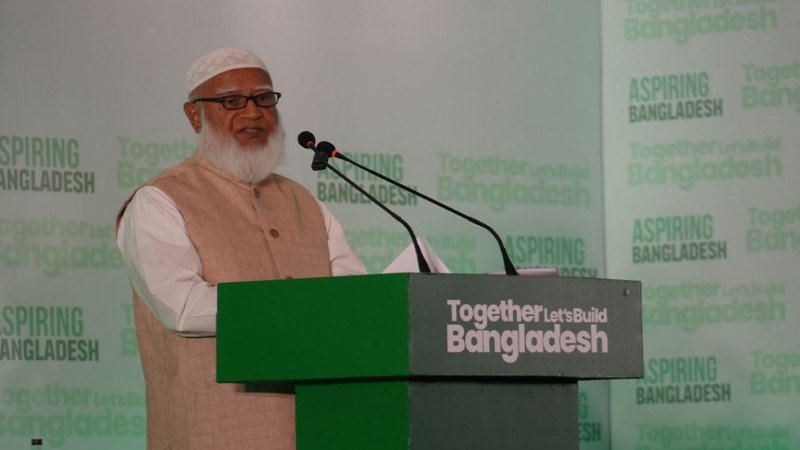
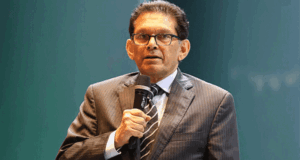
Ahead of the national election scheduled for 12 February, Bangladesh Jamaat-e-Islami Ameer Dr Shafiqur Rahman has unveiled a political and economic roadmap for building a new and prosperous Bangladesh.
He said the country’s primary challenge is no longer survival but ensuring stability. The envisioned “New Bangladesh,” he said, will be founded on justice and dignity, with a strict zero-tolerance policy against corruption. It will also ensure women’s participation in all sectors and be built through partnerships among the state, private sector and international community.
Shafiqur Rahman presented the roadmap on Tuesday (20 January) at Policy Summit 2026, attended by diplomats, political leaders, academics, entrepreneurs, civil society representatives and journalists.
He described Bangladesh’s independence as a long and unfinished struggle for political freedom, economic emancipation and human dignity. The aspirations behind liberation from colonial rule in 1947 and the independence achieved through the 1971 Liberation War centered on social justice and economic freedom. However, he noted that even after more than five decades, those promises remain only partially fulfilled.
According to the Jamaat leader, governance failures and authoritarian practices over the past 17 years have weakened democratic institutions, reduced accountability and narrowed citizens’ voices. He pointed out that in July 2024, the public—especially the youth—once again rose to reclaim their rights and future.
“We have crossed a dark chapter of fascist rule and now stand at a crucial turning point toward democratic transformation,” he said, warning that significant challenges still remain.
On the economy, Shafiqur Rahman observed that although growth has occurred, the quality of employment has declined. Rising unemployment and inflation have made daily life difficult for ordinary people. Most workers are engaged in informal, insecure and low-income jobs. Educated youth struggle to transition from education to employment, while women continue to face barriers to opportunities.
He stressed that economic success should not be measured solely by growth, but by people’s security, dignity and ability to plan their futures.
Calling Bangladesh a land of immense potential, he said the country’s greatest asset is its people. Both domestic workers and expatriate Bangladeshis are sustaining the economy. Remittances, he added, are not just financial contributions but also a source of skills and global experience.
Highlighting women’s roles, Shafiqur Rahman said sustainable development is impossible without their full participation, calling it both a matter of justice and economic necessity.
He reiterated that a zero-tolerance policy against corruption would be enforced, claiming that ministries previously led by Jamaat had set examples of clean and efficient governance.
Concluding his speech, he said the party’s goal is to build a new Bangladesh based on justice, dignity and prosperity, and that the sacrifices of the July martyrs would not go in vain.