Weekly Bangla Mirror | Bangla Mirror, Bangladeshi news in UK, bangla mirror news
Recent research has highlighted significant shortcomings in the enforcement of tobacco control laws in Bangladesh, despite strong public awareness and support for smoke-free environments.
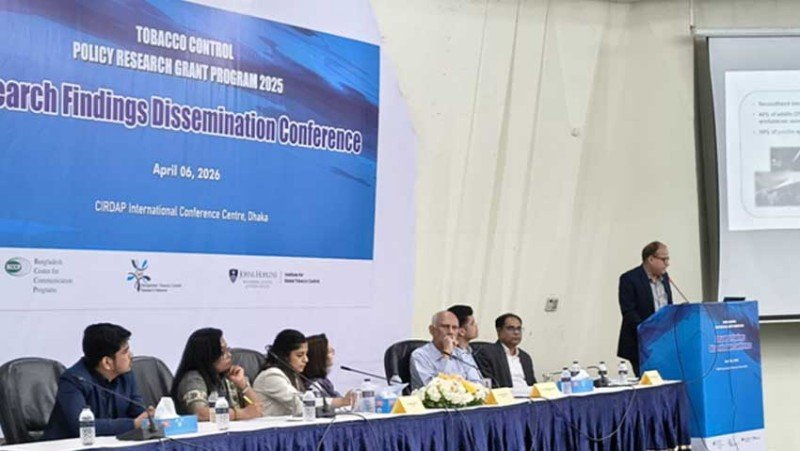
The findings were presented at a dissemination conference organized by Bangladesh Center for Communication Programs (BCCP) and Bangladesh Tobacco Control Research Network (BTCRN), in collaboration with Institute for Global Tobacco Control (IGTC).
The event took place at CIRDAP International Conference Centre on Monday.
Researchers presented seven studies that revealed widespread violations of smoke-free laws in public places such as railway stations and trains. These violations were largely attributed to weak enforcement and unclear responsibilities among authorities.
The studies also found that tobacco depiction on over-the-top (OTT) platforms frequently lacks proper health warnings, contributing to the normalization of tobacco use, especially among young people.
In educational institutions, the sale of tobacco products; particularly single sticks, continues near campuses, along with promotional activities, despite existing restrictions.
The smokeless tobacco sector remains largely unregulated, with informal production, weak licensing systems, and fragmented oversight across the supply chain. Although e-cigarettes are restricted, they remain accessible through informal and illicit channels, with many young users influenced by social media.
Speaking as chief guest, Sheikh Momena Moni, Additional Secretary of Health Services Division, said tobacco use causes more than 161,000 deaths annually in Bangladesh.
She emphasized its role in preventable diseases such as cancer, cardiovascular conditions, stroke, and chronic respiratory illnesses.
She also highlighted the Smoking and Tobacco Products Usage Control Amendment Ordinance 2025, which introduced stricter measures, including bans on e-cigarettes, electronic nicotine delivery systems and heated tobacco products.
The ordinance also prohibits tobacco sales within 100 meters of schools, hospitals, clinics, playgrounds and parks, and mandates that 75% of tobacco packaging carry graphic health warnings, up from the previous 50%.
Joanna Cohen, Director of IGTC, stressed that smoking is entirely preventable and warned that without stronger policy action, the tobacco industry will continue exploiting regulatory gaps and targeting vulnerable groups, particularly youth.
Meanwhile, Rajesh Narwal, Deputy WHO Representative to Bangladesh, described tobacco-related deaths as a preventable public health crisis, noting that at least 10 people die every 30 minutes in the country due to such diseases.
The session was chaired by Mohammad Shorif Uddin, Vice Chancellor of Green University of Bangladesh. Around 250 participants, including representatives from government agencies, universities, development partners, and the media, attended the event.