Weekly Bangla Mirror | Bangla Mirror, Bangladeshi news in UK, bangla mirror news

Russia has significantly increased its efforts to acquire Western technology and defense-related information as international sanctions continue to strain its war-driven economy, according to senior European intelligence officials.
Officials from Sweden, Finland and Estonia told The Associated Press that Russian intelligence services are using a range of methods, including front companies, intermediaries and cyber operations, to obtain restricted technologies and industrial equipment. They said Moscow is particularly focused on securing advanced machinery, software, research and dual-use technologies that can support both civilian and military applications.
Swedish Security Service deputy head of operations Christoffer Wedelin said Russia has been targeting Sweden’s defense sector and advanced research projects, including technologies linked to the Gripen fighter aircraft. He added that Moscow is also seeking camera and laser technologies developed for civilian use that could potentially be adapted for military systems.
According to Finnish Security and Intelligence Service director Juha Martelius, Russia is pursuing expertise in areas such as space, quantum, Arctic and marine technologies. He noted that access to advanced computer technology and software updates for industrial machinery remains a priority for Moscow.
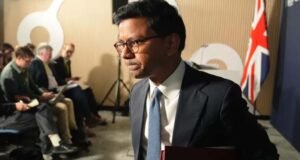
British intelligence chief Anne Keast-Butler recently accused Russia of persistently targeting the United Kingdom and its European allies through technology theft, sabotage plots and other hostile activities.
Authorities in Sweden recently arrested two individuals suspected of violating sanctions through a Turkey-based company that allegedly shipped machine tools to Russia.
European intelligence officials also warned of growing cyber threats. Wedelin said Russia has become more willing to take risks and appears less concerned about being identified after cyber operations. He cited a cyberattack on a Swedish power plant last year that failed after security systems detected the intrusion.
The officials suggested that Russia’s increasingly aggressive intelligence activities may reflect concerns about the country’s economic outlook. Estonia’s Foreign Intelligence Service chief Kaupo Rosin said a large share of Russia’s economy is now devoted to supporting the war, while sanctions and military spending continue to create financial pressure.
Although rising oil revenues have provided some relief, Rosin argued that they are unlikely to resolve Russia’s broader economic challenges. He warned that continued Western pressure could contribute to a financial crisis later this year.
Rosin also said intelligence assessments indicate growing concern among some Russian officials over the costs of the war in Ukraine, while reports of an imminent “total victory” have largely disappeared from internal discussions.
Despite these challenges, Finnish intelligence chief Martelius cautioned against assuming that economic difficulties will necessarily lead to political change in Russia, noting that the country operates under very different political dynamics than Western democracies.