Weekly Bangla Mirror | Bangla Mirror, Bangladeshi news in UK, bangla mirror news
Collected Photo
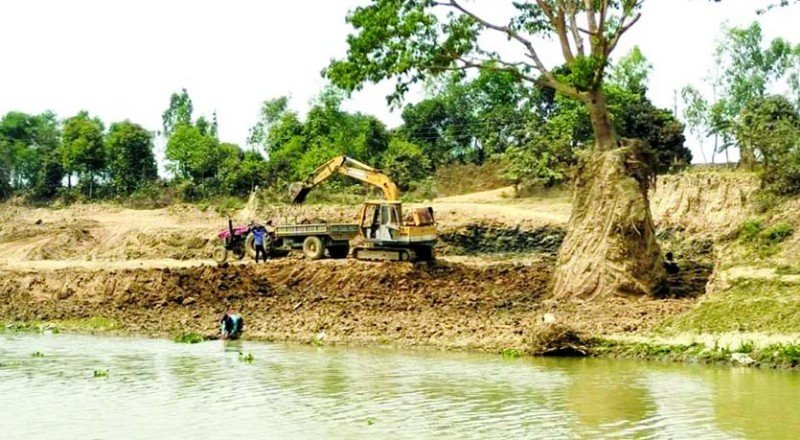
Indiscriminate sand extraction from areas outside the designated lease boundary is threatening more than 25 villages along the Surma River in Sylhet’s Zakiganj and Kanaighat upazilas, according to local residents.
Villagers alleged that large quantities of sand were being extracted illegally using hydraulic dredgers, causing severe riverbank erosion and putting homes, farmland, roads, markets, schools, mosques and flood-control embankments at risk.
Similar allegations of destructive sand mining have also emerged from the Jadukata River area in Tahirpur upazila of Sunamganj, where residents said riverbanks, agricultural land, bamboo groves, trees and residential properties were being damaged.
The riverbanks near tourist destinations, including the Jadukata River and Shimul Bagan, are also facing serious erosion, locals said.
The situation is reportedly particularly severe in Ghagtia village, where several families have already left their homes, villagers said.
According to local residents, the affected villages include Sharifabad, Konagram, Nayagram, Chakgram, Burhanpur, Baraigram, Failgram, Dighirpar, Kakura, Singarpar, Golaghat, Dattagram, Godar Bazar, Dalahani, Bhatji Gram, Umarganj, Baghar Bazar, Dakshin Baradesh, Kayasthagram, Chandrapur, Chalitabari, Patra and Jhingabari.
Residents alleged that sand worth crores of taka was being removed from non-leased sections of the river every day, worsening erosion along both Zakiganj and Kanaighat.
The home of Maruf, a low-income resident of Chak village under the Shahgali area of Zakiganj, is now on the verge of being swallowed by the Surma River.
“Many people have already left the area. I have nowhere to go with my wife and three small children,” Maruf said.
Residents said four hydraulic dredgers were being used in the area and that sand worth around Tk 80 lakh was being extracted daily and transported in 20 to 22 large steel-bodied vessels.
The water-supply pipeline established by a local cooperative society is also at risk of being damaged by erosion, they said.
According to sources and local residents, a sand quarry in the Nayagram area on the southern side of the Surma River in Zakiganj was leased for Tk 1.64 crore.
However, villagers alleged that people associated with the leaseholder were extracting sand not only from the leased section but also from Kayasthagram in Kanaighat and several other areas outside the approved boundary.
They said the extraction had already intensified riverbank erosion in several locations.
The allegations against the leaseholder could not be independently verified from the documents available for this report.
Residents of Dakshin Baradesh and Kayasthagram villages under Banigram Union in Kanaighat said important flood-control embankments on both sides of the Surma River were also at risk.
They warned that continued extraction could weaken or destroy the embankments, leaving surrounding communities more vulnerable to flooding.
Villagers submitted a written application through the Sylhet deputy commissioner on Wednesday, seeking intervention from the deputy commissioner and five ministries-the Ministry of Power, Energy and Mineral Resources, Ministry of Water Resources, Ministry of Environment and Forest, Ministry of Shipping and Ministry of Land.
They had also submitted a written complaint to the district administration on July 30 against Mizanur Rahman, Habibullah, Lokman, Shahin Molla, Halim Ahmed, Alam Ahmed, Kamrul Islam, Habib Ahmed, Helal, Jakaria, Kabir Ahmed, Duna Mia, Misbah.
Following the complaint, the deputy commissioner directed the upazila nirbahi officers of Zakiganj and Kanaighat to take urgent action, according to the residents.
The upazila administration subsequently placed red flags to identify the leased area and warned the leaseholder against extracting sand beyond the approved boundary.
However, residents alleged that the extraction continued despite the warning.
They claimed that the operators were using different tactics to avoid detection, including extracting sand from non-leased areas between 3:00am and 9:00am and keeping the dredgers inactive during the daytime.