Weekly Bangla Mirror | Bangla Mirror, Bangladeshi news in UK, bangla mirror news
Bangla Mirror Desk:
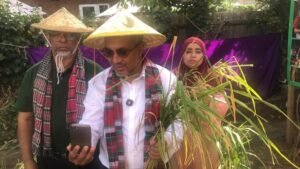
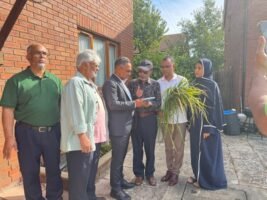
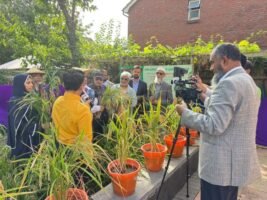
LONDON, September 7, 2026: Bangladesh High Commission Acting High Commissioner Dr. Md. Nazrul Islam visited an experimental rice cultivation project in Beckton, East London, on Monday, where international chef and Beckton resident Azam Khan is cultivating rice in his home garden.
The Abed- Azam Rice Cultivation Project is experimenting with rice seeds developed by Bangladeshi scientist Abed Chowdhury. The initiative aims to explore whether rice varieties traditionally associated with warmer climates can be cultivated successfully under the United Kingdom’s cooler and different agricultural conditions.
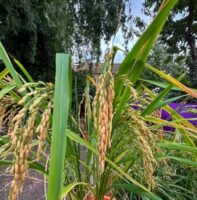
During his visit, Dr. Md. Nazrul Islam inspected the cultivation activities, discussed the progress of the project with those involved and learned about the challenges and prospects of growing rice in the UK.
Project officials said the initial results have been encouraging, despite the UK’s relatively cool climate and the limited availability of land suitable for rice cultivation. They stressed, however, that further scientific trials are required before any conclusions can be drawn regarding yields, varietal performance or the commercial feasibility of rice production in the UK.
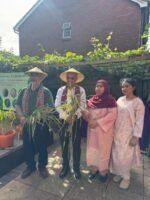
Dr. Nazrul Islam praised the initiative as an interesting attempt to explore agricultural possibilities under the UK’s distinct climatic and environmental conditions. Discussions during the visit also covered land suitability, future trials and the scope for further research.
According to project officials, identifying suitable land would be an important next step. If the rice variety performs consistently under UK conditions, small-scale home-garden experiments could potentially provide a basis for larger field trials. However, factors including temperature, day length, irrigation, soil composition, drainage and production costs would need to be carefully assessed.
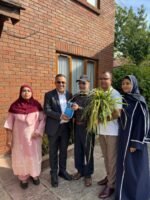
There has also been reported interest in the potential for rice cultivation in the UK from a research laboratory at the University of Oxford and Sainsbury’s. However, detailed information about any formal research programme or institutional involvement has not yet been made public. Therefore, no confirmed assessment can currently be made of the extent or nature of their involvement in the project.
Agricultural experts say that establishing the feasibility of rice cultivation in the UK would require scientifically controlled trials over several growing seasons, together with independent assessment of yields and plant characteristics. Regulatory and practical issues—including seed registration, plant-health requirements, water management and any approvals required for commercial production—would also need to be addressed.
Project officials believe successful rice cultivation on UK soil could open new possibilities for agricultural innovation within the Bangladeshi diaspora. They also hope the initiative will encourage greater interest among the UK’s Bangladeshi community in traditional agriculture, food heritage and innovative approaches to cultivation.
The Beckton project is currently experimental, and its organisers emphasise that further research and field trials will be necessary to determine whether rice can be cultivated reliably and economically on a larger scale in the UK.