Weekly Bangla Mirror | Bangla Mirror, Bangladeshi news in UK, bangla mirror news

The government has embarked on an extensive set of reforms to transform the country’s Small and Medium Enterprise (SME) sector into a central force driving national economic growth.
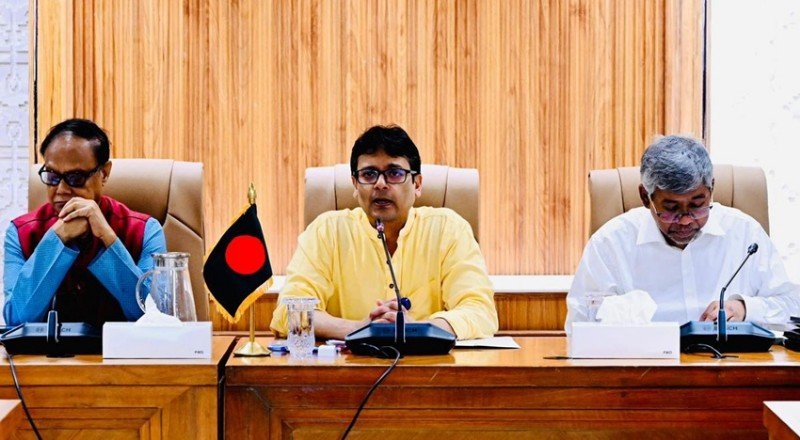
In recent months, the Investment Coordination Committee has convened four consecutive meetings aimed at accelerating policy reforms and removing barriers that have long hindered SME development.
The meetings were attended by Lutfey Siddiqi, Chief Adviser’s Special Envoy for International Affairs and Chair of the Committee, Dr Ahsan H. Mansur, Governor of Bangladesh Bank, Md Abdur Rahman Khan, Chairman of National Board of Revenue (NBR), along with senior representatives from both public and private sectors.
Participants at the meetings emphasized the need for direct involvement of SME entrepreneurs in policy formulation to ensure their effective integration into the mainstream economy.
Among the measures already implemented are the removal of the rule requiring exporters to deposit 10 percent of foreign order proceeds in banks and a proposal from the SME Foundation to allocate each business entity an annual foreign currency quota of USD 3,000, which has been forwarded to Bangladesh Bank for approval.
At a key meeting held on 9 October 2025 at Bangladesh Bank, chaired by Dr Ahsan H. Mansur, several major decisions were adopted. These included developing new SME-friendly financial products through a joint workshop by the SME Foundation and Bangladesh Bank’s SME & Special Programs Department, reviewing the existing SME Master Circular to assess its effectiveness, conducting a feasibility study on providing loans of up to Tk 500,000 without trade licenses and exploring the possibility of adjusting interest rates at the client level to make refinancing schemes more appealing.
Earlier, on 28 August 2025, the Committee met at Chief Adviser’s Office to identify major challenges faced by SMEs, including delays in payments, customs complications, licensing obstacles, and limited access to finance.
A follow-up meeting on 21 September 2025 at the SME Foundation allowed entrepreneurs to present their concerns directly, resulting in a list of recommendations for relevant ministries.
Another online session on 8 October 2025 connected SME entrepreneurs from across the country to gather additional feedback and suggestions.
Implementation of key measures is already underway. The NBR has strengthened monitoring to simplify sample clearance procedures, while Bangladesh Bank is working to enable SME entrepreneurs to receive payments through digital wallets, similar to the privileges currently enjoyed by the ICT sector.
The central bank has also instructed SSL Commerce and other banks to ensure prompt deposit of online sales proceeds and has taken steps to incorporate both B2B and B2C models into export policies for online marketplace transactions.
Further initiatives include awareness campaigns on SME policies, proposals for a special foreign currency card for entrepreneurs and plans by the Bangladesh Foreign Trade Institute (BFTI) to publish SME sector reports for international buyers.
The Chief Adviser’s Office and the SME Foundation are also coordinating efforts to develop a Standard Operating Procedure (SOP) to promote exports through Bangladeshi embassies abroad.
Recent trade and financial reforms have also been introduced to facilitate business operations for SMEs. The government has raised the limit for advance payments without bank guarantees from USD 10,000 to USD 20,000, increased the ERQ account ceiling from USD 25,000 to USD 50,000 and allowed export transactions on open account terms with insurance coverage from local firms.
The NBR has further simplified the HS Code verification process, so tariff assessments will now be accepted if the first four digits of the eight-digit code match.
Commenting on the reform drive, Lutfey Siddiqi said, “The core objective of these reforms is to enhance dynamism in the economy. SMEs collectively contribute immensely to our economic activity, though their voices are often not as loud as those of large corporations. We must help SME entrepreneurs become more dynamic and make their operations easier at every stage; from financing to payments and logistics. The government must act as a facilitator, not as a barrier.”
An emergency meeting of the Investment Coordination Committee was also held on 9 October 2025 at Bangladesh Bank Conference Room, chaired by Dr Ahsan H. Mansur, with Lutfey Siddiqi and Md Abdur Rahman Khan attending as special guests.