Weekly Bangla Mirror | Bangla Mirror, Bangladeshi news in UK, bangla mirror news

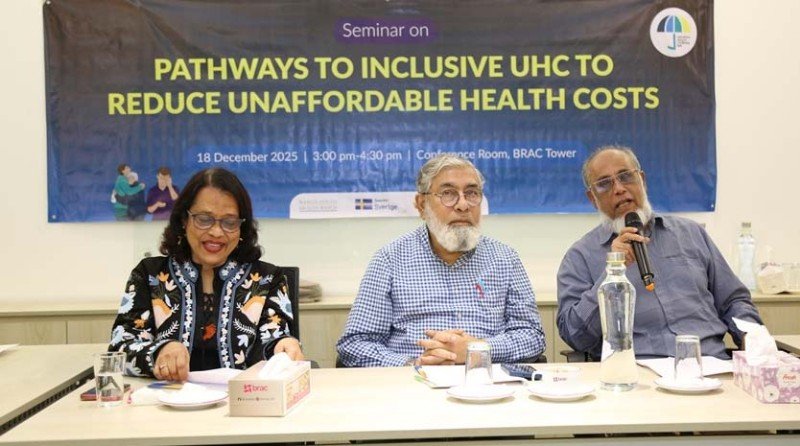
Bangladesh Health Watch, in collaboration with BRAC James P Grant School of Public Health (JPGSPH), BRAC University, organised a seminar titled “Addressing Inequality in Health Care in Bangladesh: Pathways to Inclusive UHC to Reduce Unaffordable Health Costs” on Tuesday afternoon at BRAC Tower in the capital’s Mohakhali.
The event brought together leading policymakers, academics and public health experts to examine persistent inequities in the country’s health system and to outline practical reforms toward inclusive Universal Health Coverage (UHC).
The seminar was opened by Shaikh Masudul Alam, Programme Director of Bangladesh Health Watch, who welcomed participants and underscored the importance of evidence-based dialogue to address rising out-of-pocket health expenditures.
Dr AM Zakir Hussain, Chairman of Community Clinic Trust, presented key findings from the Bangladesh Health Sector Reform Commission Report, offering an overview of the current status of UHC in the country.
His presentation emphasized a people-centred and equity-driven approach to health system strengthening, with particular focus on women, children and vulnerable populations. The report calls for the expansion of comprehensive maternal, child, and reproductive health services; including infertility care, post-abortion care, sexually transmitted disease management, neonatal intensive care (SCANU) and child development services, across all district and referral hospitals.
Public health expert Dr Khaleda Islam highlighted gender-responsive UHC as a critical yet unfinished agenda in Bangladesh. She noted that despite progress in maternal, newborn, child and adolescent health, entrenched gender-related barriers continue to limit equitable access to healthcare.
She also pointed to supply-side challenges, including gaps in service availability, quality of care, and health workforce capacity, particularly at primary and referral levels.
Prof Syed Abdul Hamid of the Institute of Health Economics, University of Dhaka, stressed that achieving UHC requires empowering citizens to claim their health rights, motivating health workers through incentives and recognition, and making health investment politically compelling by clearly demonstrating its social and economic returns.
A panel discussion, moderated by Dr Taufique Joarder, Associate Professor at the SingHealth Duke-NUS Global Health Institute, featured prominent health policy experts.
Panelists included Prof Syed Masud Ahmed of BRAC JPGSPH, Dr Zahirul Islam, Health Advisor at the Embassy of Sweden, Prof Sabina Faiz Rashid of BRAC University and Dr Halida Hanum Akhter, Chairman of Bangladesh Red Crescent Society.
The discussion focused on policy gaps, equity challenges, and feasible pathways for reform to reduce financial hardship and improve access to quality health services.
The seminar aimed to contribute to the national discourse on Universal Health Coverage by drawing attention to systemic inequalities and proposing actionable strategies to ensure that all citizens can access essential health services without suffering financial distress.