Weekly Bangla Mirror | Bangla Mirror, Bangladeshi news in UK, bangla mirror news

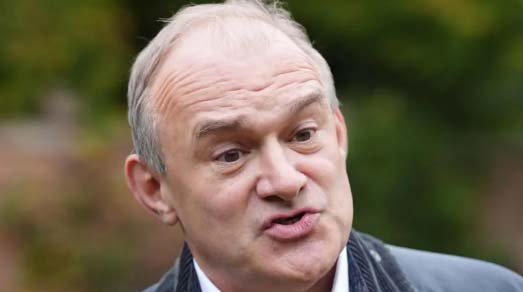
Liberal Democrat leader Sir Ed Davey has said nearly 10 million people could see their democratic right to vote “ripped away” if proposed delays to some local elections in England go ahead.
Sir Ed has written to the Equalities and Human Rights Commission to ask if it will investigate what he called “the government’s cavalier approach to our elections”.
Last week, the government indicated it would agree to postpone polls if local authorities requested it by mid-January.
Labour has said it is responding to concern from some councils that they lack the capacity to run elections while implementing major reforms to how local government is organised.
There has also been unease from some councils about spending money on elections for councillor positions that will shortly be abolished as part of the overhaul.
Last year, the government set out plans for the biggest reorganisation of local government in England in 50 years.
This included promising a mayor for every region and merging areas where there are currently two tiers of local authority by 2028.
In February, the government said nine areas could postpone their 2025 elections until 2026 in order to prepare for the restructuring.
Subsequently, ministers asked all 63 councils affected by the reorganisation if they required a delay to elections due in May 2026.
In a statement released on Thursday, the last day before the parliamentary Christmas recess, Local Government Minister Alison McGovern said “multiple councils” had requested a postponement.
So far, councils in Hastings and East and West Sussex have confirmed they have asked for a delay.
Other councils have told the BBC they will consider the subject in the new year and make their decision ahead of the government’s 15 January deadline.
Writing to the Equalities and Human Rights Commission, Sir Ed said: “Article 3 of the first protocol of the Human Rights Act spells out in black and white the right to free elections.
“Removing elections altogether, entirely unnecessarily, is in clear breach of this principle – can you therefore confirm your plans to investigate the government’s cavalier approach to our elections?”
Lib Dem home affairs spokesperson Lisa Smart told BBC Radio Four’s Today programme on Monday that it was “hard to see how this is as anything other than an attempt to stitch things up by people who don’t think they’re going to do a lot of winning in May”.
She argued that the delays would mean some councillors staying in post for an unusually long time.
“People should have a say on who elects them – it can’t possibly be right that councillors are elected – in some cases – for what’s looking like a seven-year term.
She said she had not spoken to the Liberal Democrat leaders of the affected councils but that she was “not aware” of any calling for a delay.
The elections that do go ahead in May will be a crunch point in the political calendar, with the results expected to be a big factor on whether Prime Minister Sir Keir Starmer or Conservative leader Kemi Badenoch face leadership challenges.
Reform UK has also objected to the delays and has said it will table a Private Members’ Bill to force the government to hold the elections in May. The bill would be highly unlikely to become law.
The party’s head of policy, Zia Yusuf, said: “We are inviting every member of parliament in the House of Commons who believes in democracy to support this bill, including the Tories. Ultimately, this is a cross-party issue.”
The Conservatives have accused the government of being “scared of the voters”, but Badenoch said she would not stop Tory-led councils from requesting a postponement.
“We need to listen to what they are saying, but in my view we should just have all these elections and be done with it,” she told the BBC on Thursday.
The Electoral Commission, which oversees elections in the UK, has also expressed concern.
The watchdog’s chief executive Vijay Rangarajan said there was “a clear conflict of interest in asking existing councils to decide how long it will be before they are answerable to voters”.
Responding to the Electoral Commission’s statement, the government said it was taking a “locally-led approach” to potential delays, adding that authorities themselves were “in the best position to judge the impact of postponements on their area”.
“These are exceptional circumstances where councils have told us they’re struggling to prepare for resource-intensive elections to councils that will shortly be abolished, while also reorganising into more efficient authorities that can better serve local residents,” a spokesperson added.