Weekly Bangla Mirror | Bangla Mirror, Bangladeshi news in UK, bangla mirror news

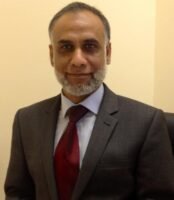
By Shafiqul Haque:
An Inevitable and Historic Moment
There are moments in history when individuals and circumstances appear to find each other almost instinctively. These are moments when the demands of time converge with the moral stature of a particular person.
In the political journey of Bangladesh, the period following the July uprising represented precisely such a historic crossroads. It was a time marked by uncertainty, institutional fragility, and deep national anxiety.
In that context, Dr. Muhammad Yunus’s acceptance of responsibility as Chief Adviser to the interim government was not merely an administrative arrangement; it was a historic act that transcended procedural necessity. It reflected moral courage, personal sacrifice, and an extraordinary sense of national responsibility.
At the time of the July uprising, Dr. Yunus was outside Bangladesh. He was engaged in international responsibilities and global initiatives and was not directly involved in the rapidly unfolding political developments within the country. It is important to underline that he did not seek this position, nor did he harbor any personal ambition to assume such responsibility. Leading an interim government in a politically volatile environment—burdened with limited constitutional authority and overwhelming public expectations—was neither comfortable nor appealing by any measure.
Yet the student leaders who stood at the forefront of the July uprising, along with representatives of civil society and various responsible national stakeholders, were united in one conviction: during such a crisis, only a neutral figure with unquestionable moral authority and international credibility could guide the nation toward stability. It was under this compelling pressure of national necessity that Dr. Muhammad Yunus ultimately agreed to assume the role. This decision was not driven by a desire for power or personal recognition; rather, it stood as a powerful example of self-sacrificing leadership, taken in the service of the nation.
Responsible Leadership Under Limited Authority
As Chief Adviser of the interim government, Dr. Yunus was required to operate within a set of extremely restrictive realities. Time was limited, constitutional authority was carefully circumscribed, and political divisions within the country were deep and intense. Under such conditions, even a minor miscalculation could have plunged the nation into greater instability and uncertainty.
In this challenging environment, Dr. Yunus’s leadership was marked by restraint, prudence, and an unwavering commitment to ethical principles. He understood the temporary and transitional nature of the role and acted accordingly. Never did he attempt to use his position to enhance personal prestige, consolidate political influence, or position himself for long-term power.
Instead, his primary objectives remained clear and consistent: to maintain the continuity of state administration, to ensure that governance mechanisms continued to function effectively, and to preserve Bangladesh’s credibility and dignity in the international arena.
His emphasis on dialogue, patience, and inclusive consultation, along with his deliberate avoidance of confrontation, played a critical role in steering the country away from a potentially severe national crisis. Through calm judgment and moral discipline, he demonstrated that leadership does not require forceful authority, but rather clarity of purpose and integrity of action.
A Symbol of Leadership Beyond Formal Power
To evaluate Dr. Muhammad Yunus solely through the lens of his role as Chief Adviser of an interim government would be to significantly underestimate the scope and depth of his contribution. He belongs to a rare group of global figures who are capable of representing a nation’s values, aspirations, and moral voice even without holding formal state power.
Through his pioneering work in microcredit and social business, Dr. Yunus fundamentally reshaped global thinking on poverty alleviation and economic inclusion. He demonstrated that development is not confined to state institutions or corporate frameworks alone, but can emerge from empowering individuals at the grassroots level. His work offered tangible proof that trust, dignity, and opportunity can serve as powerful tools for social transformation.
The identity of this Nobel Peace Prize–winning Bangladeshi global citizen cannot be confined to any political office or government position. It is the result of decades of relentless effort, ethical consistency, and a deeply humanistic worldview. His influence extends beyond borders and institutions, reaching into global debates on development, justice, and human dignity.
A Trusted and Respected International Voice
In contemporary global politics, there are very few individuals who possess the ability to represent a nation internationally while remaining outside formal structures of power. Dr. Muhammad Yunus stands as one of these rare exceptions. His credibility and acceptance among institutions such as the United Nations, the European Union, the World Bank, international universities, development agencies, and global policy-making circles are beyond question.
Of particular significance is the fact that, since Bangladesh’s independence, Dr. Muhammad Yunus is arguably the only head of government who has been able to engage with India on the basis of equality, self-respect, and moral confidence—speaking, as it were, “eye to eye.” This position was not achieved through loud nationalism, confrontational rhetoric, or aggressive diplomacy. Rather, it emerged from his personal stature, international respectability, and decades of experience in global leadership.
As a result, policymakers in India also regard him as a credible, serious, and dignified interlocutor—an achievement that remains rare and highly significant in the history of Bangladesh’s diplomacy. Importantly, this acceptance does not derive from holding a government office. It has been earned through integrity, ethical consistency, and an unwavering commitment to human empowerment.
As Bangladesh moves toward the formation of a future elected government, serious reflection is required on how this accumulated moral capital can be effectively utilized in the national interest. Dr. Yunus’s global standing represents an asset that should not be overlooked or underutilized.
Potential Role as an International Envoy
Dr. Muhammad Yunus could serve Bangladesh with distinction as an International Special Envoy or Ambassador-at-Large. In such a role, he could significantly enhance the country’s global image, attract responsible and ethical foreign investment, and articulate Bangladesh’s position more forcefully on critical global challenges.
Issues such as climate change, poverty alleviation, migration, displacement, and humanitarian crises demand credible moral leadership. Dr. Yunus’s voice, grounded in lived experience and international trust, could elevate Bangladesh’s presence in these global conversations and strengthen its role as a responsible member of the international community.
Personal Experience and Administrative Insight
Dr. Yunus’s leadership is not merely a subject of theoretical admiration; it has been demonstrated through lived experience. Following his receipt of the Nobel Peace Prize, when he visited the United Kingdom and later returned to Bangladesh, a large reception was organized in his honor. This event was jointly arranged by the British Bangladeshi community and the Tower Hamlets Council.
At that time, I was serving as the Mayor of Tower Hamlets Council and had the privilege of acting as both the convener and chair of the reception. The spontaneous participation and genuine affection expressed by people from the United Kingdom’s multicultural society left a deep impression on Dr. Yunus. That moment further reinforced his standing not merely as a Bangladeshi figure, but as a truly global humanitarian leader.
I myself have spent nearly two decades in administrative leadership within the United Kingdom’s local government system. This experience has given me a deep and practical understanding of the challenges associated with good governance, institutional reform, and accountability-based management. I firmly believe that if such administrative values and global best practices can be more effectively integrated into Bangladesh’s governance framework, the country’s democratic institutions and reform processes will be significantly strengthened.
Moral Leadership in a Time of Global Crisis
The world today is beset by multiple, overlapping crises: climate change, widening economic inequality, armed conflict, forced displacement, and large-scale humanitarian disasters. These challenges cannot be addressed solely through military strength or economic power. They require moral leadership, ethical clarity, and a deeply human-centered approach.
In this global context, the ideas, experiences, and leadership philosophy of Dr. Muhammad Yunus are especially relevant. If Bangladesh can position itself on the world stage with him as a leading moral voice, it would represent more than a diplomatic achievement. It would stand as a powerful example of ethical leadership rooted in human dignity and social justice.
Power is temporary and often fleeting. Respect, trust, and international credibility, however, are earned over long periods of dedication and principled action. Dr. Muhammad Yunus has earned such respect through tireless work, personal sacrifice, and unwavering ethical commitment.
The time has come to rise above narrow partisan considerations and recognize him as a national asset. Dr. Muhammad Yunus can represent Bangladesh’s voice and values even outside formal power. Recognizing and embracing this reality would demonstrate genuine political foresight and maturity for the nation.
Writer
Advocate Shafiqul Haque
Former Mayor, Tower Hamlets Council
London, United Kingdom