Weekly Bangla Mirror | Bangla Mirror, Bangladeshi news in UK, bangla mirror news

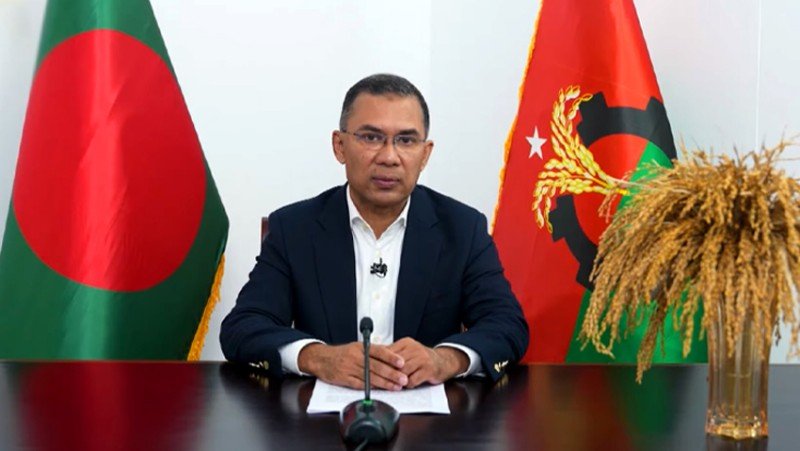
Bangladesh Nationalist Party (BNP) Chairman Tarique Rahman on Monday described the upcoming February 12 national election as a “historic moment” to restore the people’s ownership of the state, pledging sweeping political and economic reforms, including the creation of 10 million jobs, unemployment allowances, and a family welfare card for every household.
In a nationally televised address to the nation, Tarique outlined the BNP’s election manifesto and long-term vision for rebuilding the country, saying the party is committed to ensuring political empowerment, economic justice, and inclusive development for all citizens.
He said Bangladesh has reached a critical democratic turning point after years of authoritarian rule, during which, he claimed, people were deprived of their voting rights, political freedoms, and constitutional entitlements. Referring to the February 12 polls as a “defining opportunity,” Tarique said the election would allow citizens to reclaim their democratic rights through free and fair voting.
“After prolonged struggles and immense sacrifices, the people now stand at the threshold of reclaiming their rightful ownership of the state. This election is not just about choosing a government; it is about restoring democracy, dignity, and justice,” he said.
Tarique paid tribute to those who lost their lives during anti-government movements, including the 2024 mass uprising, in which he said more than 1,400 people were killed and at least 3,000 injured.
He expressed condolences to the families of the victims and said their sacrifices must guide the nation toward building a just and humane society.
Highlighting the BNP’s economic agenda, Tarique announced a target of creating 10 million jobs at home and abroad through comprehensive reforms in the banking, insurance, capital market, and industrial sectors.
He said the party would prioritize regional economic development, attract domestic and foreign investment, and expand technical and vocational training to transform unemployed youth into skilled human resources.
Under the plan, he said, colleges, madrasas, and universities would offer free skills development, freelancing, and outsourcing training, enabling young people to secure high-paying jobs both domestically and internationally. Special emphasis would be placed on the information technology sector, including artificial intelligence, cybersecurity, data processing, and semiconductor industries, with an annual target of creating 200,000 direct and 800,000 indirect jobs.
To address unemployment, Tarique announced that educated job seekers would receive monthly financial allowances for six months to one year, or until they secure employment. Citing official statistics, he said Bangladesh currently has more than 2.7 million unemployed people, including nearly 900,000 university graduates, many of whom are between 15 and 29 years old and not engaged in education, employment, or training.
In a major social welfare pledge, Tarique said the BNP would introduce a family card for every household, issued in the name of the female head of the family. In the first phase, low-income and marginalized families would receive monthly financial assistance of Tk 2,500 or equivalent food support. He said the program aims to promote women’s economic empowerment and ensure social protection for vulnerable households.
Tarique also reaffirmed the party’s commitment to women’s education and empowerment, vowing to continue free education for women up to postgraduate level, expand women’s participation in policymaking, and increase employment opportunities in both formal and informal sectors.
He announced plans to establish women’s welfare centers at the upazila level, introduce women-only electric transport services, ensure daycare and breastfeeding facilities in workplaces, and build hygienic public restrooms in major cities. He also pledged strict enforcement of laws against harassment, cyberbullying, violence, and sexual crimes, with exemplary punishment for offenders.
On agriculture, Tarique emphasized that farmers’ welfare is central to national development. He announced plans to introduce a farmer card to provide agricultural information, financial assistance, and institutional support. He said ensuring fair wages, safe working conditions, and employment opportunities for agricultural workers would be a priority, adding that productive labor is the key to building a self-reliant and prosperous Bangladesh.
In the education sector, Tarique said the BNP would reform the national curriculum to include compulsory technical and vocational training from the secondary level, along with the introduction of a third language alongside Bangla and English, to enhance students’ global employability.
He said the reforms aim to reduce school dropout rates and equip students with practical skills to meet future economic challenges.
Addressing healthcare, Tarique announced plans to recruit 100,000 community health workers, 80 percent of whom would be women, to provide primary healthcare services at the grassroots level. He said the initiative would focus on preventive care, early diagnosis, and basic treatment to improve public health outcomes nationwide.
Tarique also outlined plans for public administration reform, pledging to restore constitutional governance, depoliticize state institutions, and ensure merit-based recruitment and promotion. He said the BNP would implement a national pay scale for government employees and strengthen accountability, transparency, and the rule of law.
On migrant workers, Tarique said the BNP would introduce a “Probashi Card” to protect expatriate Bangladeshis’ rights, prevent harassment at airports, and safeguard their investments. He also pledged low-interest loans to help skilled workers migrate for employment without having to sell land or property.
Reaffirming BNP’s stance on religious harmony, Tarique said the party believes in peaceful coexistence, stressing that “religion is personal, but the state belongs to everyone.” He vowed to ensure security, dignity, and equal rights for all citizens, regardless of faith, ethnicity, or belief.
In concluding remarks, Tarique appealed to voters across all walks of life to support the BNP and its election symbol, the sheaf of paddy, saying the party is ready to shoulder the responsibility of rebuilding Bangladesh. He acknowledged past mistakes, sought forgiveness, and pledged to govern with accountability, integrity, and dedication to public welfare if elected.
“This election is a chance to rebuild our democracy, restore people’s rights, and shape a secure and prosperous future for the next generation. Together, we want to build the Bangladesh of tomorrow,” he said.