Weekly Bangla Mirror | Bangla Mirror, Bangladeshi news in UK, bangla mirror news

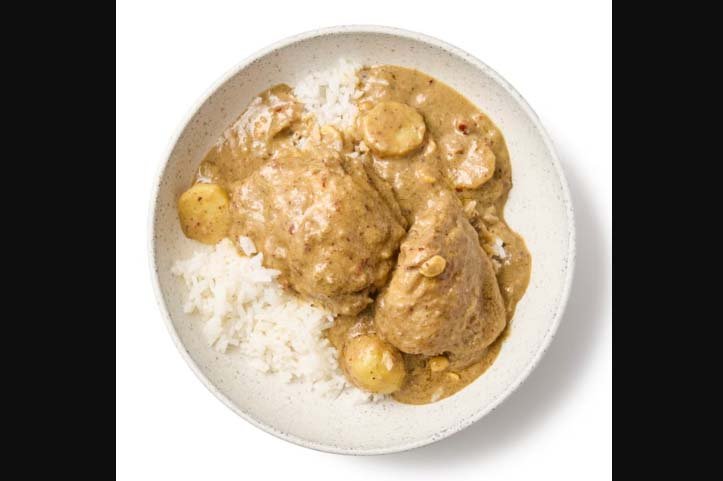
Bickering pleasantly over the menu in a Thai restaurant with my family recently, I realised I was unable to explain exactly what a gaeng massaman was, beyond the fact it was probably a safe bet for those concerned about the three chillies next to the green curry (a dish I first tackled for this column back in 2010). The gap in my repertoire was explained later when I opened David Thompson’s pink bible of Thai Food and learned that “a mussaman curry is the most complex, time-consuming Thai curry to make”. The fact the esteemed Australian chef also describes it as “the most delicious” is scant comfort given I’ve just promised my editor I’ll make at least six of the things … but then I remember how incredibly tasty it is, and knuckle down to my research.
Though the first recipe dates from 1899, massaman, whose name suggests an association with the country’s Muslim minority, probably dates back to the 17th century, and reflects either Persian or Malaysian influence, or perhaps that of the Indian and Middle Eastern spice traders who travelled through southern Thailand on their way to China. It’s unusual in its use of dried spices like cumin and cinnamon, bay leaves and cloves alongside more classic Thai aromatics like lemongrass and galangal to create a richly savoury gravy that cloaks the protein and potatoes like a warm hug direct from Bangkok. Straightforward enough if you have a Thai specialist nearby, it’s still more of a weekend project than a weeknight dinner, but a very worthwhile one nonetheless.
The curry paste
The time-consuming part here is the paste, which, thanks to the additional dry spices, has a longer ingredient list than, say, a red or green curry version. The basic idea is the same, however, so once you’ve assembled everything you need, there’s not much more to it. That said, “as massaman curry paste is basically red curry paste PLUS some spices”, to quote Pailin Chongchitnant, the chef and author behind Hot Thai Kitchen, you can save yourself some time by using a ready-made red curry paste, as Meera Sodha suggests in her vegan weeknight version. (According to Chongchitnant, most commercial massaman curry pastes skimp on the pricier spices, which is why she doesn’t recommend them.)