Weekly Bangla Mirror | Bangla Mirror, Bangladeshi news in UK, bangla mirror news

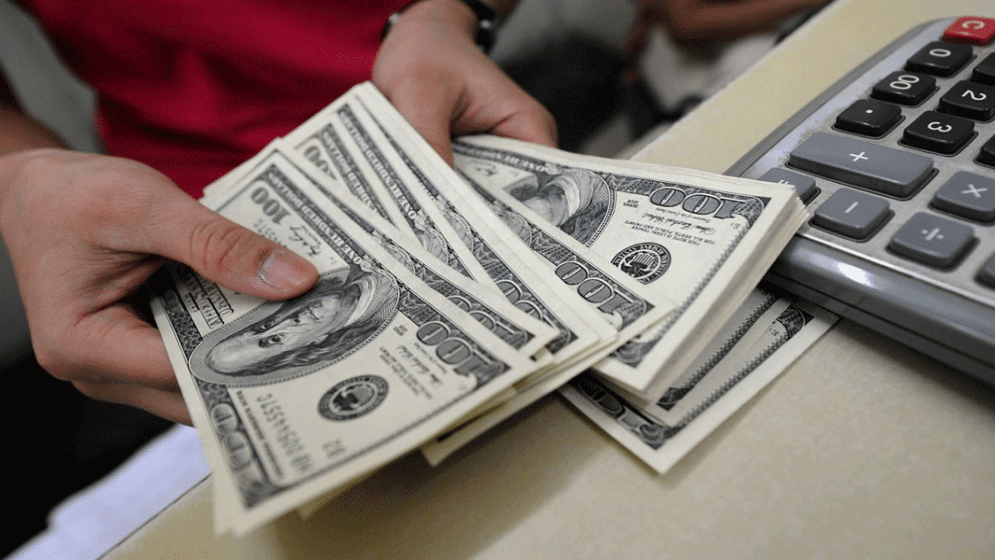
Approximately US$68.3 billion was illicitly transferred out of Bangladesh over a 10-year period from 2013 to 2022 through fraudulent practices in international trade, according to a latest report published on Thursday (26 March) by the Washington-based research organisation Global Financial Integrity (GFI).
The report states that the money was moved abroad mainly through trade mis-invoicing, a practice in which false information about the price or quantity of imported and exported goods is provided. This typically involves over-invoicing imports and under-invoicing exports to evade taxes, shift profits, or facilitate capital flight.
According to GFI data, Bangladesh ranks among the top 10 developing countries in Asia in terms of discrepancies in trade values linked to such illicit financial flows.
The analysis also found that a significant portion of Bangladesh’s illicit financial outflows occurred through trade with developed countries. Of the total discrepancy, around $33 billion was linked to transactions with the United States and European countries.
The report observed that Bangladesh’s exposure to such financial risks is not limited to regional trade but is closely tied to global supply chains. Export-oriented sectors and import-dependent industries were found to be particularly vulnerable to such practices.
While the scale of Bangladesh’s losses is significant compared to other South Asian countries, it remains much lower than that of India. During the same period, India reportedly experienced a record $1.06 trillion in illicit outflows through trade mis-invoicing.
In Sri Lanka, meanwhile, a trade discrepancy of around $24 billion was identified in transactions with developed countries. However, the impact of such outflows has been more severe in Sri Lanka due to its fragile economic condition.
Looking at the broader regional picture, the report noted that in 2022 alone, developing countries in Asia lost approximately $169 billion through trade-related illicit financial flows. Although large economies such as China, Thailand, and India top the list, the problem remains widespread across both large and small economies.
The study further warned that such unethical practices have become deeply entrenched in many Asian economies, with no clear signs of decline over the past decade.