Weekly Bangla Mirror | Bangla Mirror, Bangladeshi news in UK, bangla mirror news
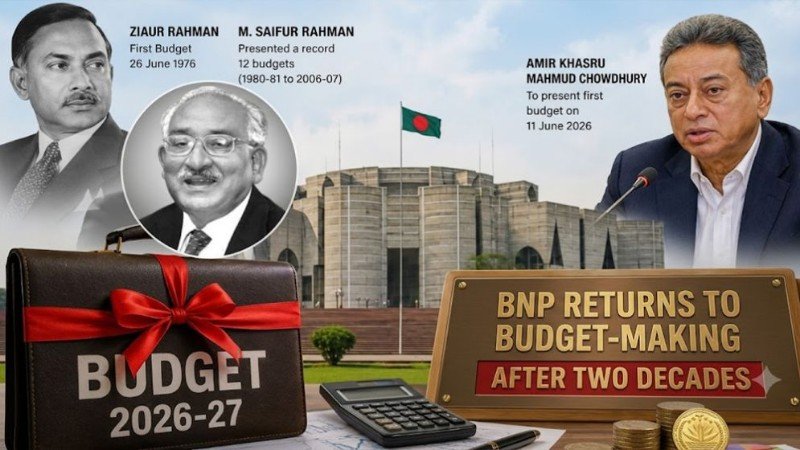
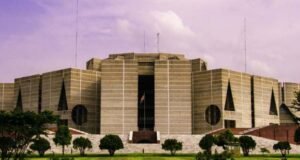
After nearly two decades away from direct budget formulation, the Bangladesh Nationalist Party (BNP) is set to return to one of the most important responsibilities of governance — presenting the national budget. The budget for the 2026-27 fiscal year, scheduled to be unveiled in parliament on Thursday, marks not only a new economic roadmap but also the revival of a political legacy closely associated with some of Bangladesh’s most significant economic reforms.
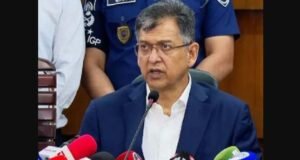
Finance and Planning Minister Amir Khasru Mahmud Chowdhury is expected to place a proposed budget of approximately Tk938,000 crore before the Jatiya Sangsad. The occasion carries special significance for the BNP, which last presented a national budget on 6 June 2006 under the stewardship of the late M. Saifur Rahman, one of the country’s most influential finance ministers.
A Legacy of Economic Reform
The BNP’s budgetary history is deeply intertwined with the career of M Saifur Rahman, who remains a towering figure in Bangladesh’s economic landscape. Widely credited with introducing market-oriented reforms, trade liberalisation and fiscal modernisation, Saifur Rahman played a pivotal role in integrating Bangladesh into the global economy.
His record of presenting 12 national budgets remains one of the most remarkable achievements in the country’s parliamentary history. Economists and policy analysts continue to regard many of his reforms as foundational to Bangladesh’s economic transformation.
Among his most notable achievements was the introduction of Value Added Tax (VAT), a major step towards modernising the country’s tax system and boosting government revenue. He also implemented structural reforms aimed at reducing aid dependency and promoting private-sector-led growth.
In 2003, Saifur Rahman introduced a fully market-based exchange rate system for the Bangladeshi Taka against the US Dollar, a move that was considered bold and progressive at the time.
The BNP’s Budget Journey
The party’s association with budget-making dates back to the post-independence era. BNP founder and former President Ziaur Rahman presented Bangladesh’s first budget on 26 June 1976. He subsequently announced two more budgets before appointing Mirza Nurul Huda as finance minister in 1979.
Following Ziaur Rahman’s assassination, M Saifur Rahman emerged as the principal architect of the party’s economic policies. His first budget, presented for the 1980-81 fiscal year, stood at Tk3,768 crore.
When the BNP returned to power in 1991, Saifur Rahman resumed his role as finance minister and introduced a Tk16,373 crore budget, reflecting the country’s growing economic ambitions. Over the following years, he spearheaded reforms that helped reshape Bangladesh’s economic framework.
His final budget in 2006 amounted to Tk69,740 crore and established the record of 12 budget presentations in parliament.
Years Away from the Treasury Bench
Following the end of the BNP government in 2006, Bangladesh entered a prolonged period of political transition. The caretaker government presented two budgets before the Awami League assumed power in 2009.
During the Awami League era, former finance minister Abul Maal Abdul Muhith presented ten consecutive budgets between the 2009-10 and 2018-19 fiscal years. Although Muhith’s total number of budgets also reached 12, Saifur Rahman retained the distinction of being the first person to achieve the milestone.
The political landscape shifted dramatically after the student-led mass movement of July 2024, which resulted in the fall of the Awami League government. An interim administration governed the country for nearly 18 months.
During that period, former finance adviser Dr Salehuddin Ahmed presented the budget for FY2025-26, amounting to Tk 790,000 crore. Interestingly, Salehuddin Ahmed had previously served as governor of Bangladesh Bank during Saifur Rahman’s tenure as finance minister.
A New Chapter Under Amir Khasru
The BNP returned to power following its victory in the 13th National Parliamentary Election on 12 February 2026. Five days later, Amir Khasru Mahmud Chowdhury took charge as finance and planning minister.
Known for his previous experience as commerce minister between 2001 and 2004 and his role as a member of the BNP National Standing Committee, Amir Khasru now faces the challenge of steering the country’s economy at a time of both opportunity and uncertainty.
Less than four months after assuming office, he is preparing to present one of the largest budgets in Bangladesh’s history. The proposed Tk 938,000 crore budget is expected to focus on economic recovery, investment, employment generation, inflation management and long-term growth.
Significance Beyond Numbers
The upcoming budget carries importance beyond its financial allocations. It symbolises the BNP’s return to economic policymaking after nearly twenty years and reconnects the party with a tradition established by Ziaur Rahman and strengthened by M Saifur Rahman.
Including the FY2026-27 budget, the BNP will have presented 17 national budgets since independence, compared to 25 budgets presented during Awami League administrations.
While political parties may compete over numbers and achievements, economists agree that the influence of M Saifur Rahman’s economic reforms continues to shape Bangladesh’s fiscal and financial architecture. Many of the policies introduced during his tenure remain central components of the country’s economic management framework.
As Finance Minister Amir Khasru Mahmud Chowdhury rises to present the budget today, he will not only unveil a financial plan for the coming year but also mark the BNP’s return to a role it once played prominently in shaping Bangladesh’s economic future.