Weekly Bangla Mirror | Bangla Mirror, Bangladeshi news in UK, bangla mirror news
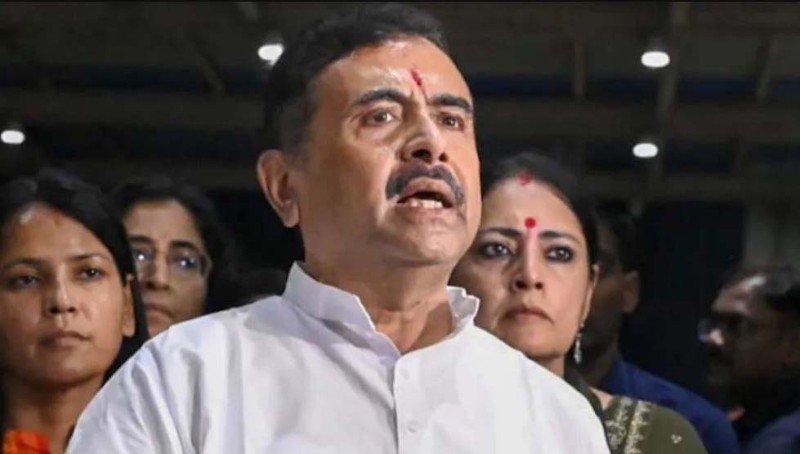
Chief Minister of West Bengal Suvendu Adhikari. Photo: Collected
The West Bengal legislative assembly on Monday passed two amendment bills to formally change Other Backward Classes (OBC) reservation laws and remove 77 Muslim communities from OBC lists as directed by the Calcutta high court in May 2024.
The amendments have also revised the reservation quota for OBCs from 10% to 7% and reorganised OBC categories. Also, a 1993 law applicable to the West Bengal Commission for Backward Classes has been amended.
These were ordered and notified by the Bharatiya Janata Party (BJP) government in May but the laws were not amended until now.
The West Bengal Backward Classes (Other than Scheduled Castes and Scheduled Tribes) Reservation of Vacancies in Services and Posts (Amendment) Bill, 2026, and the West Bengal Commission for Backward Classes (Amendment) Bill, 2026, were introduced by backward classes development minister Gourishankar Ghosh.
The May 18 order, a copy of which was seen by HT, kept only one list comprising 66 OBC communities that were “included in the state list of OBCs prior to 2010 for the purpose of availing reservation under article 16(4) of the Constitution of India.”
“The distribution of percentage of reservation as 10% for OBC (Category A) and 7% for OBC (Category B) were struck down,” the order said.
Among the Indian states, Nagaland and Arunachal Pradesh have no notified OBC community. In Punjab, the OBC quota stands at 12% while Chhattisgarh, Jharkhand, Madhya Pradesh and Uttarakhand all have 14% reservation for OBCs.
Also, a 1993 law applicable to the West Bengal Commission for Backward Classes relating to selection of OBCs was amended.
As of today, Bengal provides 45% reservation.
The reservation in West Bengal prior to this revision was Scheduled Caste or SC (22%) Scheduled Tribes or ST (6%) OBC-A (10%), OBC-B (7%) and a 3% reservation for people with disabilities irrespective of their presence in reserved or unreserved categories. The total reservation, however, was restricted to 45%, according to an order passed by the state on January 16, 2014.
After the revision of quota for OBCs the total reservation has dropped by 10%. These were ordered and notified by the Bharatiya Janata Party-led state government in May but the laws were not amended until now.
On Monday, the West Bengal Backward Classes (Other than Scheduled Castes and Scheduled Tribes) Reservation of Vacancies in Services and Posts (Amendment) Bill, 2026, and the West Bengal Commission for Backward Classes (Amendment) Bill, 2026, were introduced by backward classes development minister Gourishankar Ghosh.
Addressing the assembly, Ghosh said, “As directed by the high court, all communities included in the OBC list without any survey by the former (Trinamool Congress) government—solely to offer undue advantage to Muslims—have been removed. Only 66 communities added after surveys have been retained.”
“The West Bengal Commission for Backward Classes will conduct surveys on the actual status of OBCs. The previous government completely bypassed the Commission. The bills will also ensure that fake OBC certificates are not issued any more. This was rampant during the previous regime,” Ghosh said.
In May, days after coming to power in Bengal for the first time, the BJP government scrapped the OBC status awarded to 77 Muslim communities during the TMC regime and reduced the reservation quota for all OBCs to only 7%. Both of these were ordered by the Calcutta high court two years ago. The Suvendu Adhikari government issued the notification on May 18, citing the order the division bench of justices Tapabrata Chakraborty and Rajasekhar Mantha passed on May 22, 2024.
“The governor is pleased to inform accordingly that the State List of OBCs consists of the following sixty-six (66) classes to avail 7% reservation in the services and posts under the Government of West Bengal,” said the notification listing the 66 approved OBC communities. HT saw a copy of the document.
Specific Muslim communities retained in the new OBC list include the Jolah (Ansari Momin), Fakir, Pahadia Muslim, Hajjam (Muslim) and Chowduli (Muslim).
The deleted 77 communities include Muslim Nehariya, Muslim Haldar, Muslim Sanpui, Muslim Mali, Ghosi (Muslim), Muslim Darji/ Ostagar/ Idrisi, Muslim Rajmistri, Muslim Batiyara, Muslim Molla, Dhali (Muslim) and a host of others. All the deleted groups are Muslim.
The high court’s May 2024 order was passed after multiple hearings on petitions filed by three individuals and Atmadeep, a human rights organisation, between 2010 and 2020. The petitioners alleged that reservations under both OBC-A and OBC-B categories were awarded to many communities since 2011 – when TMC came to power for the first time – without any evaluation of their economic status.
In 2010, the Left government headed by then chief minister Buddhadeb Bhattacharjee announced 10% reservation in state government jobs for “economically, socially and educationally backward” or “most backward” Muslims who came under the OBC-A category. On the other hand, “Backward” Muslims. who come under the OBC-B category, enjoyed a 7 % reservation.
The 10% reservation for the OBC-A category was based on the recommendations of the National Commission for Religious and Linguistic Minorities headed by justice Ranganath Mishra whose report Parliament tabled in December 2009.
Of the 108 communities on the OBC (A and B) lists, 53 were Muslim till 2010. The 2024 high court order made strong remarks, triggering a political debate.
”This court is of the view that the selection of 77 classes of Muslims as Backward is an affront to the Muslim community as a whole. This Court’s mind is not free from doubt that the said community has been treated as a commodity for political ends. This is clear from the chain of events that led to the classification of the 77 classes as OBCs and their inclusion to be treated as a vote bank,” the verdict had said at the time.
On Monday, 186 MLAs voted in favour of the bills while 17 voted against them.
A section of rebel TMC MLAs led by Ritabrata Banerjee staged a walkout. “The bills should have been discussed before they were passed,” Indian Secular Front MLA Nawsad Siddiqui said.