Weekly Bangla Mirror | Bangla Mirror, Bangladeshi news in UK, bangla mirror news
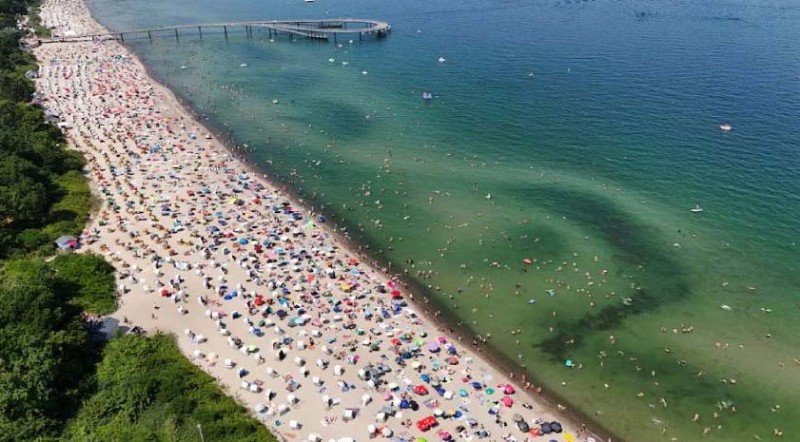
A drone view shows people at a beach as meteorologists forecast heat and record-breaking temperatures across the country in Timmendorfer Strand, Germany, June 27, 2026. Photo : Collected
A severe heatwave that has already claimed dozens of lives across Western Europe is tracking eastward, bringing sweltering conditions to Germany and Poland.
As originally reported by Reuters, temperatures in these regions are projected to approach 40 degrees Celsius (104 degrees Fahrenheit) over the weekend.
Prior to shifting east, the weather system baked Britain, France, and Switzerland with record-breaking June temperatures. In France, the intense heat is linked to dozens of fatalities spanning both young and elderly populations.
The heat is already establishing new regional benchmarks. According to preliminary data broadcast by ARD, Germany recorded a high of 41.3°C on Friday near Saarbruecken, along the French border.
“The heatwave is going to peak at the weekend, well over 40 degrees in some parts of Germany,” noted Karsten Brandt, a meteorologist for the forecasting platform Donnerwetter.de. Especially in southwestern Germany, parts of the country have already experienced a much hotter June than usual.
Strained Infrastructure and Public Disruptions
The persistent temperatures have severely disrupted public infrastructure across the continent, leading to buckling roads and swelling railway tracks. Regional effects include:
Disruptions to regional power generation and rail travel.
– Suspended school classes, postponed outdoor events, and sudden alcohol bans.
– Struggling hospitals and forced closures of cultural landmarks.
– Significant damage to farming and agriculture.
In Frankfurt, organizers for Sunday’s Ironman European Championship long-distance triathlon were forced to shorten both the running and cycling courses due to the heat.
Major transit operators are modifying services to mitigate infrastructure risks. Deutsche Bahn, Germany’s national railway, has permitted passengers to cancel long-distance travel bookings without charge into early next week. The rail company noted extreme strain on its systems from direct sun exposure, alongside elevated risks to overhead wires, tracks, and signals stemming from impending thunderstorms and wildfires.
The ‘Omega Block’ and Climate Factors
Meteorological tracking from the Reuters Climate Monitor indicates temperatures have surged up to 18°C above the seasonal average. This anomaly is driven by an Omega block ” a weather pattern that traps a bulging ball of hot air over a region for extended periods, with cooler air circulating on its fringes.
The World Meteorological Organization (WMO) projects the present heatwave will begin shifting by the end of the month, hitting Central Europe and the Balkans. In the near term, the most extreme heat is forecast to begin fading at the weekend, with heavy thunderstorms expected on Sunday.
Scientific consensus attributes the severity of the event to human activity. Scientists state that the heatwave would have been “virtually impossible” without manmade climate change, which has made this week’s night-time temperatures 100 times more likely than they would have been even two decades ago.
Consumer Impact in Northern Europe
The extreme weather has exposed vulnerabilities in regional housing stock. Most Northern European homes are built to keep heat in rather than temper it. Consequently, consumer behavior has shifted dramatically to compensate. Demand for electric fans has shot up, and Asian manufacturers of air conditioning units reported a European sales boom.